
















©The Author(s) 2025.
World J Nephrol. Dec 25, 2025; 14(4): 103649
Published online Dec 25, 2025. doi: 10.5527/wjn.v14.i4.103649
Published online Dec 25, 2025. doi: 10.5527/wjn.v14.i4.103649
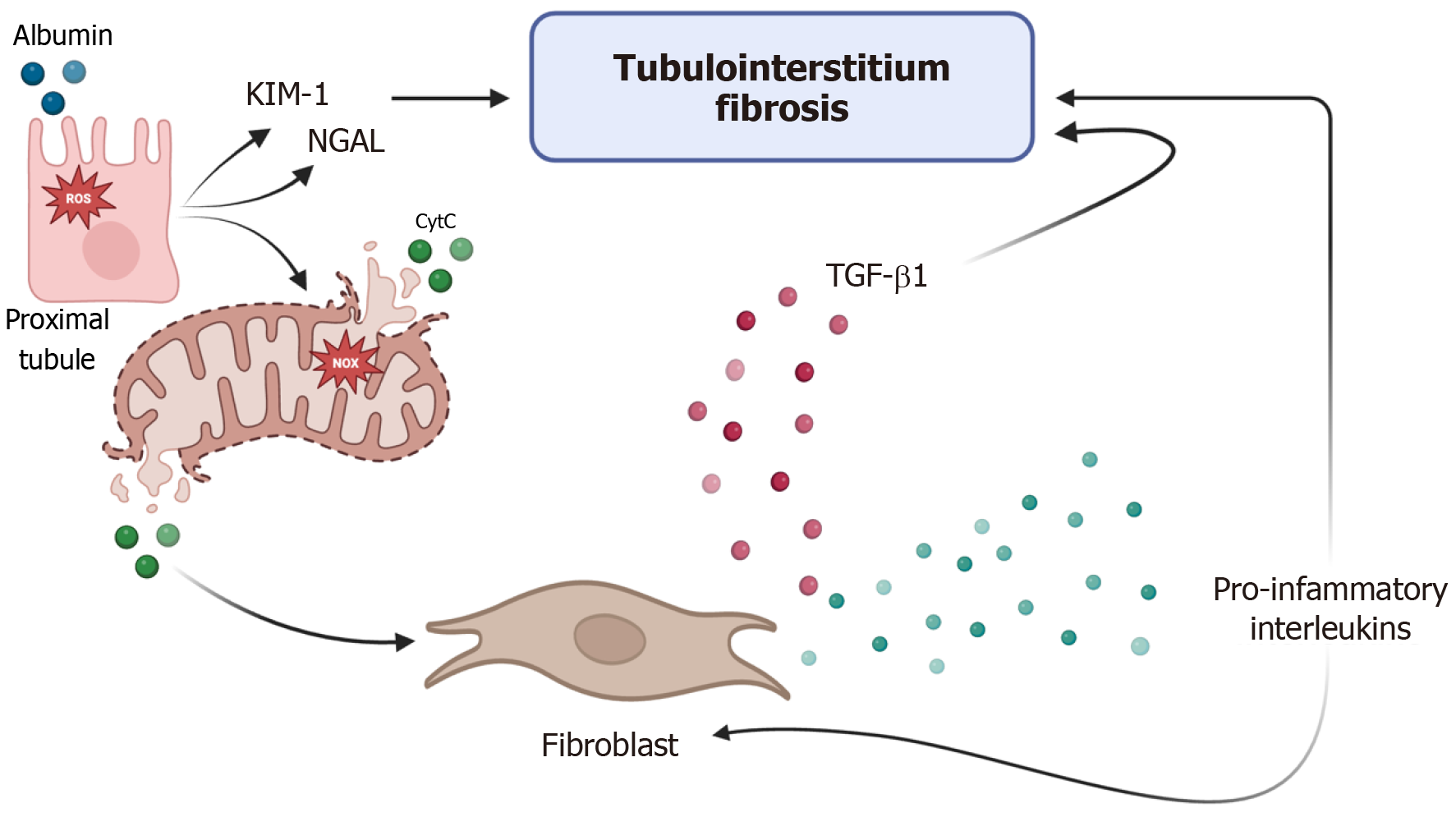
Figure 1 Proteinuria (particularly significant albuminuria) can alter the receptor-mediated endocytosis mechanism, thus favoring reactive oxygen species production, which induces mitochondrial dysfunction and activates the nicotinamide adenine dinucleotide phosphate oxidase pathway, thereby producing cytochrome C.
This figure was created in BioRender (Supplementary material). Cytochrome C can activate fibroblasts that release proinflammatory cytokines and profibrotic molecules such as transforming growth factor β1. The common final pathways include tubular atrophy and interstitial fibrosis, which cause progressive deterioration of kidney function. KIM-1: Kidney injury molecule-1; NGAL: Neutrophil gelatinase-associated lipocalin; TGF-β1: Transforming growth factor-β1.
- Citation: Alamilla-Sanchez M, Yama Estrella MB, Morales López EF, Delgado Pineda D. Predictive value of biomarkers for tubulointerstitial and glomerular interactions in diabetic nephropathy. World J Nephrol 2025; 14(4): 103649
- URL: https://www.wjgnet.com/2220-6124/full/v14/i4/103649.htm
- DOI: https://dx.doi.org/10.5527/wjn.v14.i4.103649