















Copyright: ©Author(s) 2026.
World J Psychiatry. Sep 19, 2026; 16(9): 119271
Published online Sep 19, 2026. doi: 10.5498/wjp.119271
Published online Sep 19, 2026. doi: 10.5498/wjp.119271
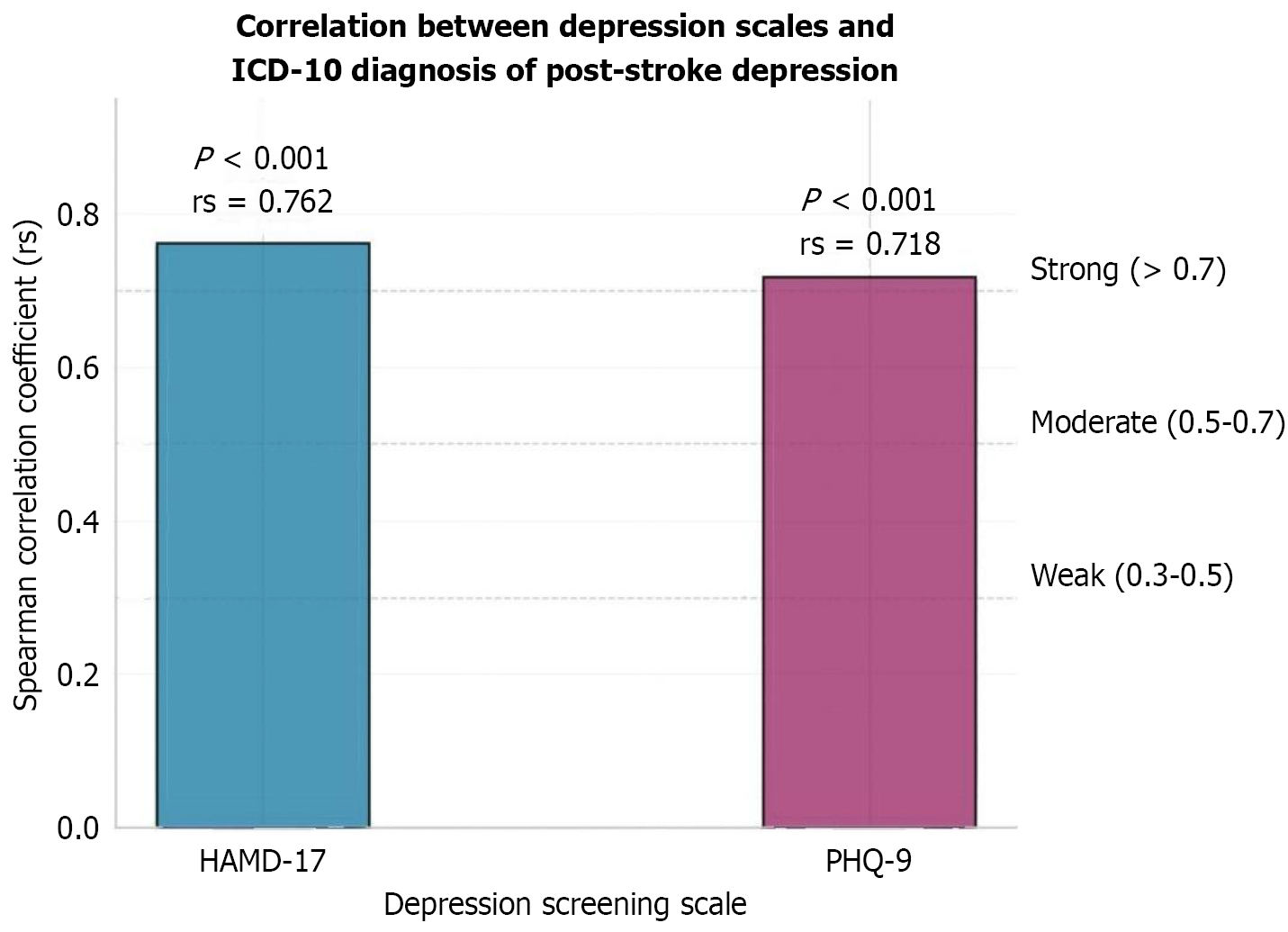
Figure 1 Spearman correlation analysis between depression screening scales and International Classification of Diseases, 10th Revision diagnosis.
Both 17-item Hamilton Depression Rating Scale and Patient Health Questionnaire-9 showed strong positive correlations with gold standard diagnosis (rs = 0.762 and 0.718, both P < 0.001). HAMD-17: 17-item Hamilton Depression Rating Scale; ICD-10: International Classification of Diseases, 10th Revision; PHQ-9: Patient Health Questionnaire-9.
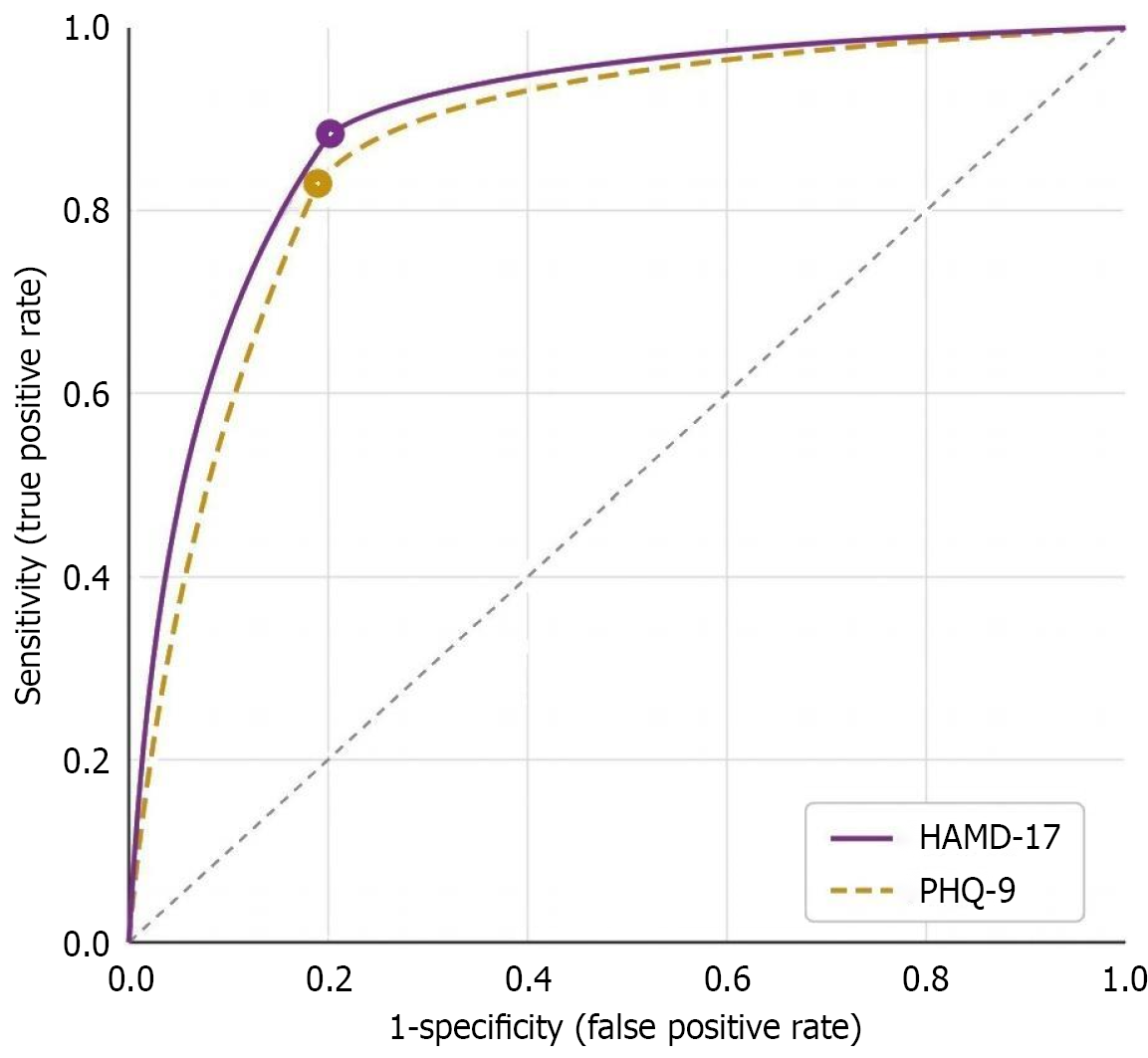
Figure 2 Receiver operating characteristic curves of 17-item Hamilton Depression Rating Scale and Patient Health Questionnaire-9 for diagnosing post-stroke depression.
Using International Classification of Diseases, 10th Revision structured clinical interviews as the gold standard, the diagnostic performance of both scales was evaluated. The area under the curve for 17-item Hamilton Depression Rating Scale (HAMD-17) was 0.891 (95%CI: 0.854-0.928) and for Patient Health Questionnaire-9 (PHQ-9) was 0.867 (95%CI: 0.826-0.908), with no significant difference (Z = 1.426, P = 0.154). The optimal cutoff value for HAMD-17 was 7 points (sensitivity is 88.4%, specificity is 79.8%), and for PHQ-9 was 7 points (sensitivity is 83.0%, specificity is 81.1%). Purple solid line represents HAMD-17, yellow dashed line represents PHQ-9, and black dashed line is the reference line. HAMD-17: 17-item Hamilton Depression Rating Scale; PHQ-9: Patient Health Questionnaire-9.
- Citation: Ma J, Gao HQ, Fan XP, Jian S, Zhao HL, He WL. Patient Health Questionnaire-9 and 17-item Hamilton Depression Rating Scale for detecting post-stroke depression in cerebral infarction. World J Psychiatry 2026; 16(9): 119271
- URL: https://www.wjgnet.com/2220-3206/full/v16/i9/119271.htm
- DOI: https://dx.doi.org/10.5498/wjp.119271