
















Copyright: ©Author(s) 2026.
World J Psychiatry. Aug 19, 2026; 16(8): 120501
Published online Aug 19, 2026. doi: 10.5498/wjp.120501
Published online Aug 19, 2026. doi: 10.5498/wjp.120501
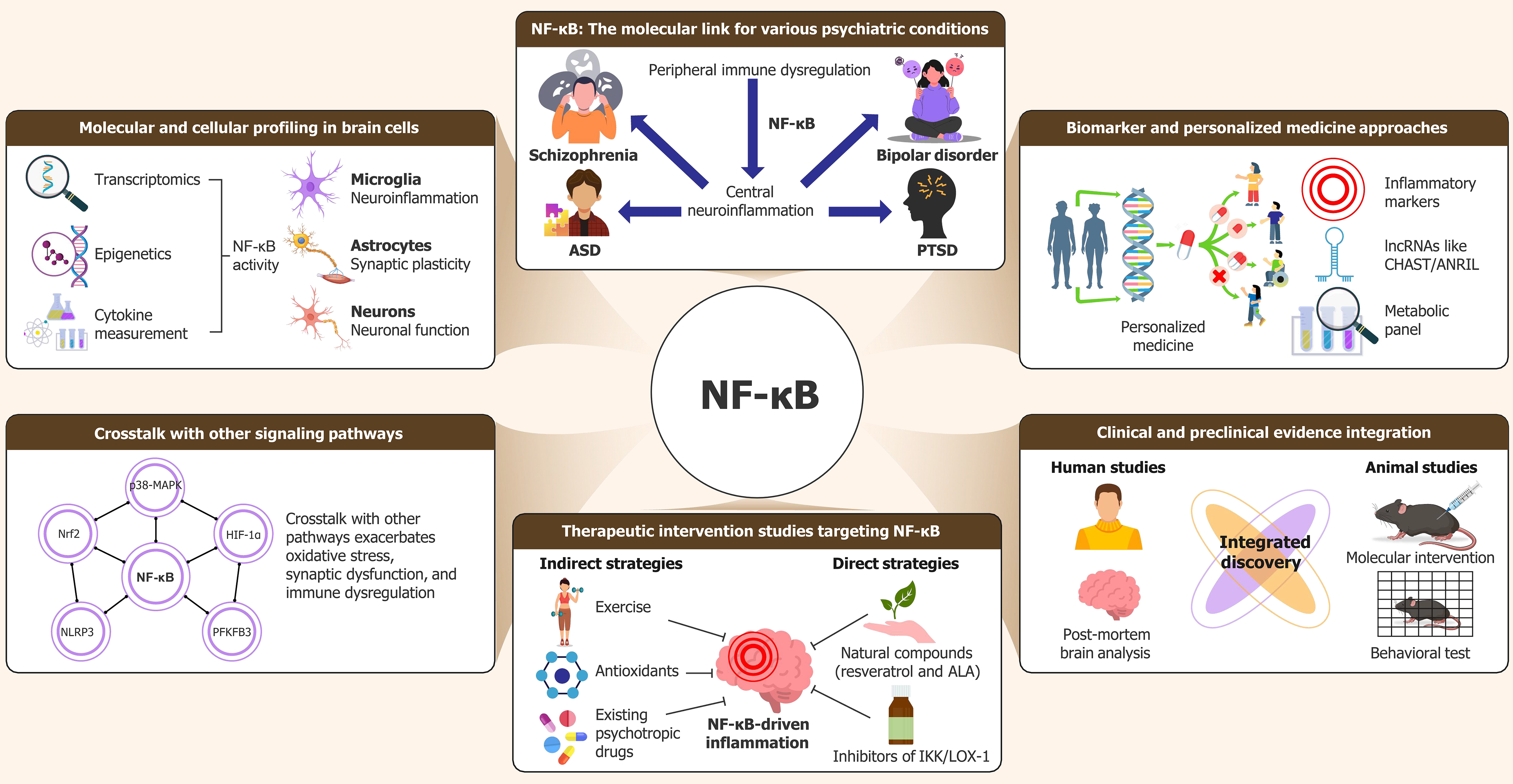
Figure 1 Central role of nuclear factor-κB in psychiatric disorders.
Nuclear factor-κB (NF-κB) acts as a key molecular link between peripheral immune dysregulation and central neuroinflammation in conditions including schizophrenia, post-traumatic stress disorder, bipolar disorder, and autism spectrum disorder. Its activation drives cell-type-specific responses in microglia, astrocytes, and neurons, and involves crosstalk with pathways such as nuclear factor erythroid 2-related factor 2 and NOD-, LRR- and pyrin domain-containing protein 3. Therapeutic strategies targeting NF-κB include indirect approaches like exercise and antioxidants, as well as direct inhibitors. Integration of clinical and preclinical evidence supports biomarker-driven personalized medicine. lncRNA: Long non-coding RNA; HIF-1α: Hypoxia-inducible factor 1-alpha; ALA: Α-linolenic acid; LOX-1: Like oxidized low-density lipoprotein receptor-1; NF-κB: Nuclear factor-κB; PTSD: Post-traumatic stress disorder; ASD: Autism spectrum disorder; Nrf2: Nuclear factor erythroid 2-related factor 2; NLRP3: NOD-, LRR- and pyrin domain-containing protein 3.
- Citation: Fan F, Wang B, Wang Q, Chen ZL, Li WF, Han F. Nuclear factor-κB as a key inflammatory mediator in psychiatric diseases: A narrative review. World J Psychiatry 2026; 16(8): 120501
- URL: https://www.wjgnet.com/2220-3206/full/v16/i8/120501.htm
- DOI: https://dx.doi.org/10.5498/wjp.120501