
















Copyright: ©Author(s) 2026.
World J Psychiatry. Aug 19, 2026; 16(8): 118378
Published online Aug 19, 2026. doi: 10.5498/wjp.118378
Published online Aug 19, 2026. doi: 10.5498/wjp.118378
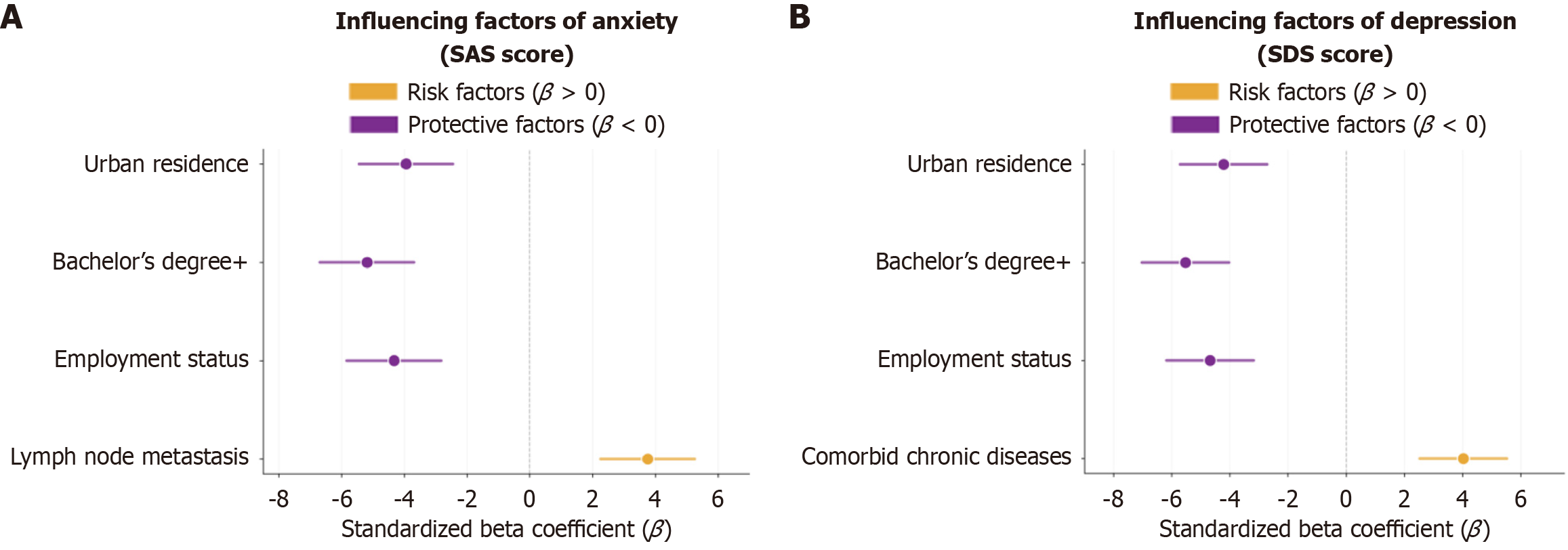
Figure 1 Multiple linear regression analysis of factors influencing postoperative anxiety and depression in breast cancer patients following total mastectomy.
A: Influencing factors of anxiety; B: Influencing factors of depression. Orange circles indicate risk factors (β > 0) and purple circles indicate protective factors (β < 0). Standardized beta coefficients (β) with corresponding P-values are shown for each variable. Both models demonstrated good fit (A: F = 32.86, P < 0.001, adjusted R2 = 0.742; B: F = 28.94, P < 0.001, adjusted R2 = 0.716). SAS: Self-Rating Anxiety Scale; SDS: Self-Rating Depression Scale.
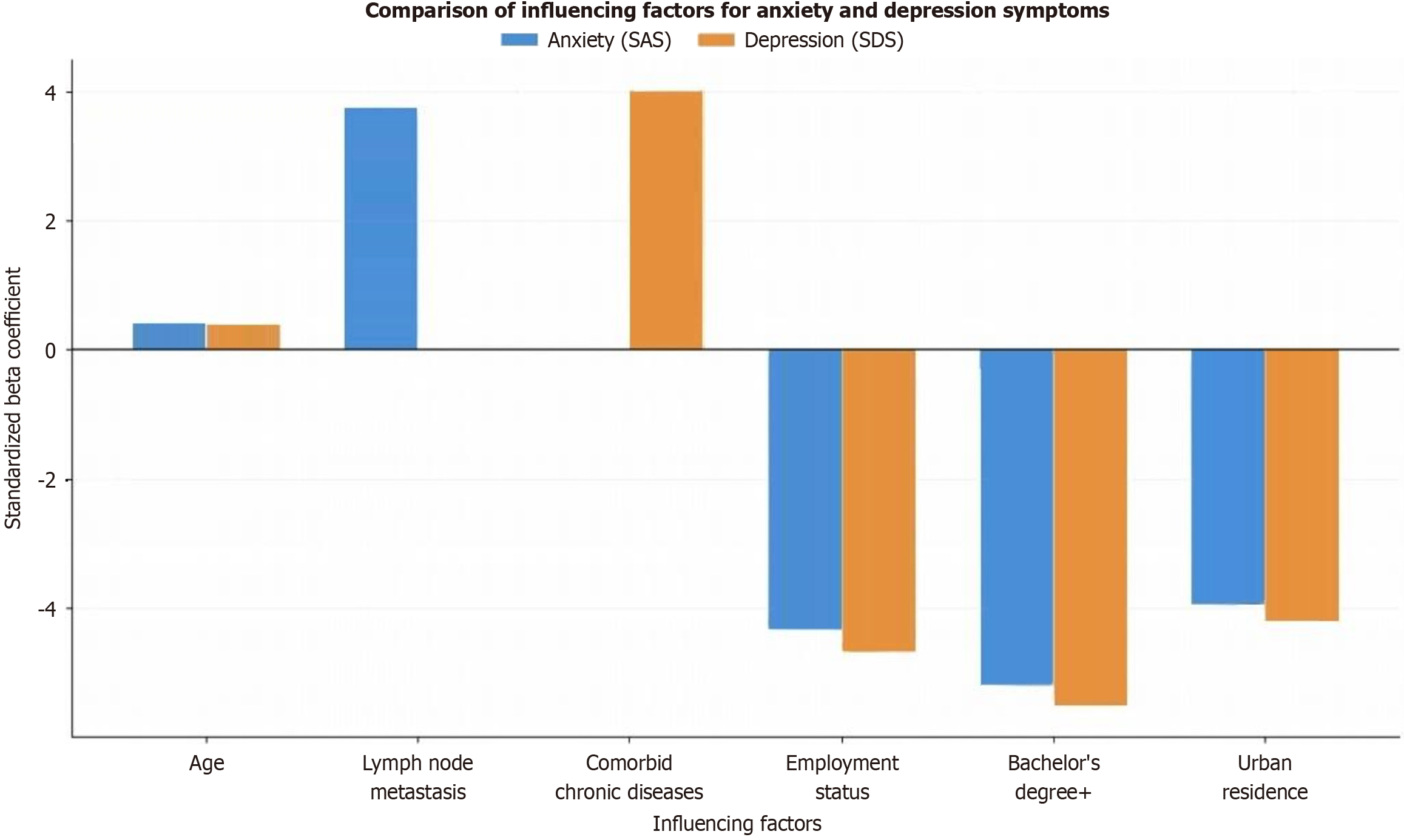
Figure 2 Comparison of standardized beta coefficients for factors influencing anxiety (Self-Rating Anxiety Scale, blue) and depression (Self-Rating Depression Scale, orange) symptoms.
Positive β values indicate risk factors, and negative β values indicate protective factors. Lymph node metastasis and comorbid chronic diseases were identified as risk factors, while employment status, bachelor’s degree or above, and urban residence were protective factors for both anxiety and depression (Self-Rating Anxiety Scale: F = 32.86, R2 = 0.742; Self-Rating Depression Scale: F = 28.94, R2 = 0.716). SAS: Self-Rating Anxiety Scale; SDS: Self-Rating Depression Scale.
- Citation: Sun XH, Shi WF, Cao XC. Association between postoperative anxiety and depression symptoms and willingness for breast reconstruction in breast cancer patients. World J Psychiatry 2026; 16(8): 118378
- URL: https://www.wjgnet.com/2220-3206/full/v16/i8/118378.htm
- DOI: https://dx.doi.org/10.5498/wjp.118378