
















Copyright: ©Author(s) 2026.
World J Psychiatry. Jul 19, 2026; 16(7): 117251
Published online Jul 19, 2026. doi: 10.5498/wjp.117251
Published online Jul 19, 2026. doi: 10.5498/wjp.117251
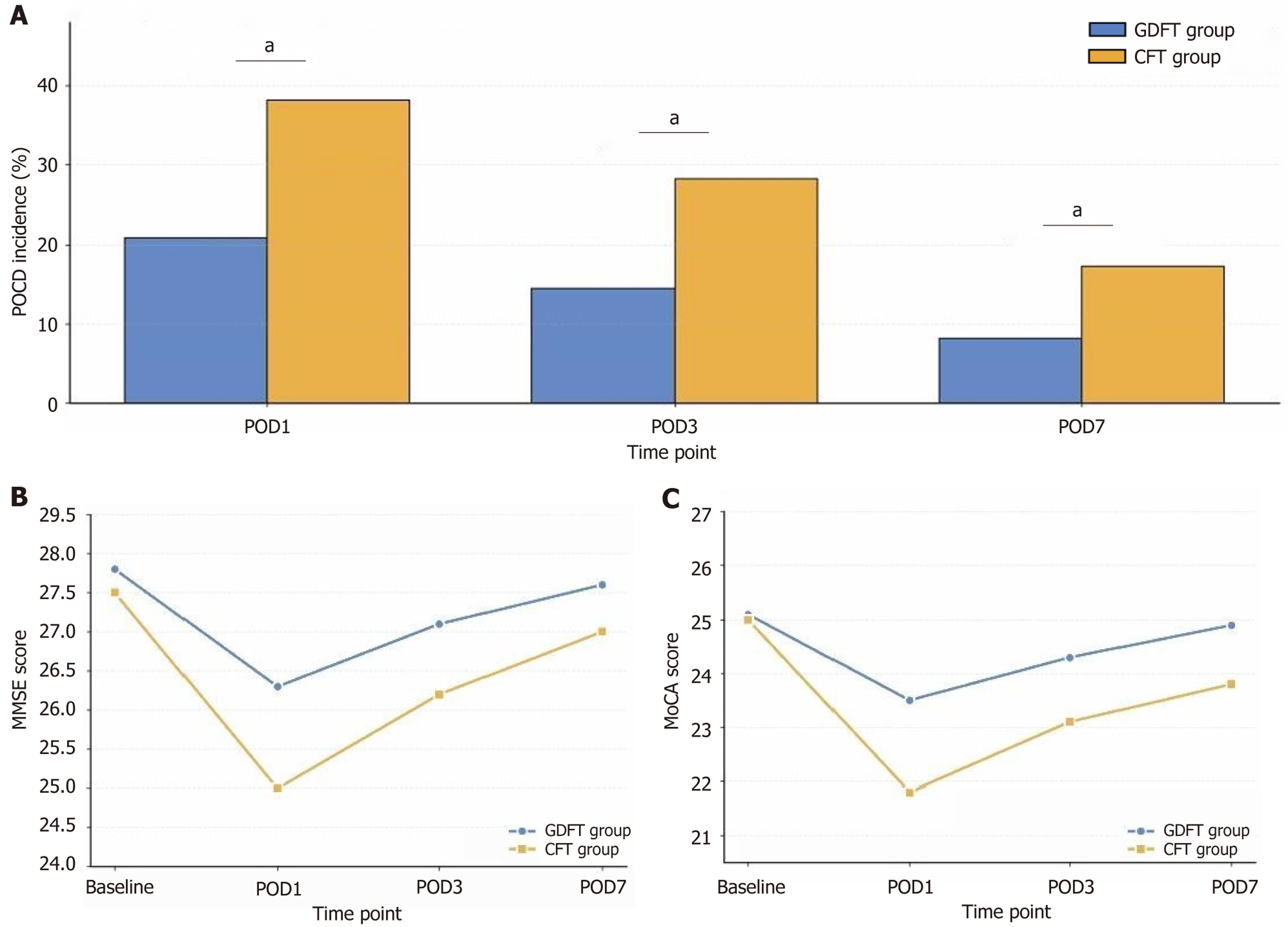
Figure 1 Comparison of postoperative cognitive function between goal-directed fluid therapy and conventional fluid therapy groups.
A: Incidence of postoperative cognitive dysfunction at postoperative day (POD) 1, POD3, and POD7. The goal-directed fluid therapy (GDFT) group showed significantly lower postoperative cognitive dysfunction incidence compared to the conventional fluid therapy group at all time points (POD1: 20.9% vs 38.2%, P = 0.005; POD3: 14.5% vs 28.2%, P = 0.011; POD7: 8.2% vs 17.3%, P = 0.035); B: Dynamic changes in Mini-Mental State Examination score. Both groups showed decreased scores on POD1, with the GDFT group demonstrating less decline and faster recovery. Repeated measures analysis of covariance revealed significant group effect (F = 12.35, P = 0.001), time effect (F = 78.92, P < 0.001), and interaction effect (F = 5.68, P = 0.004); C: Dynamic changes in Montreal Cognitive Assessment scores. Similar patterns were observed, with the GDFT group showing better preservation of cognitive function on POD1 (23.5 vs 21.8, P = 0.001) and more complete recovery by POD7. Asterisks indicate statistically significant differences between groups (aP < 0.05). CFT: Conventional fluid therapy; GDFT: Goal-directed fluid therapy; MMSE: Mini-Mental State Examination; MoCA: Montreal Cognitive Assessment; POCD: Postoperative cognitive dysfunction; POD: Postoperative day.
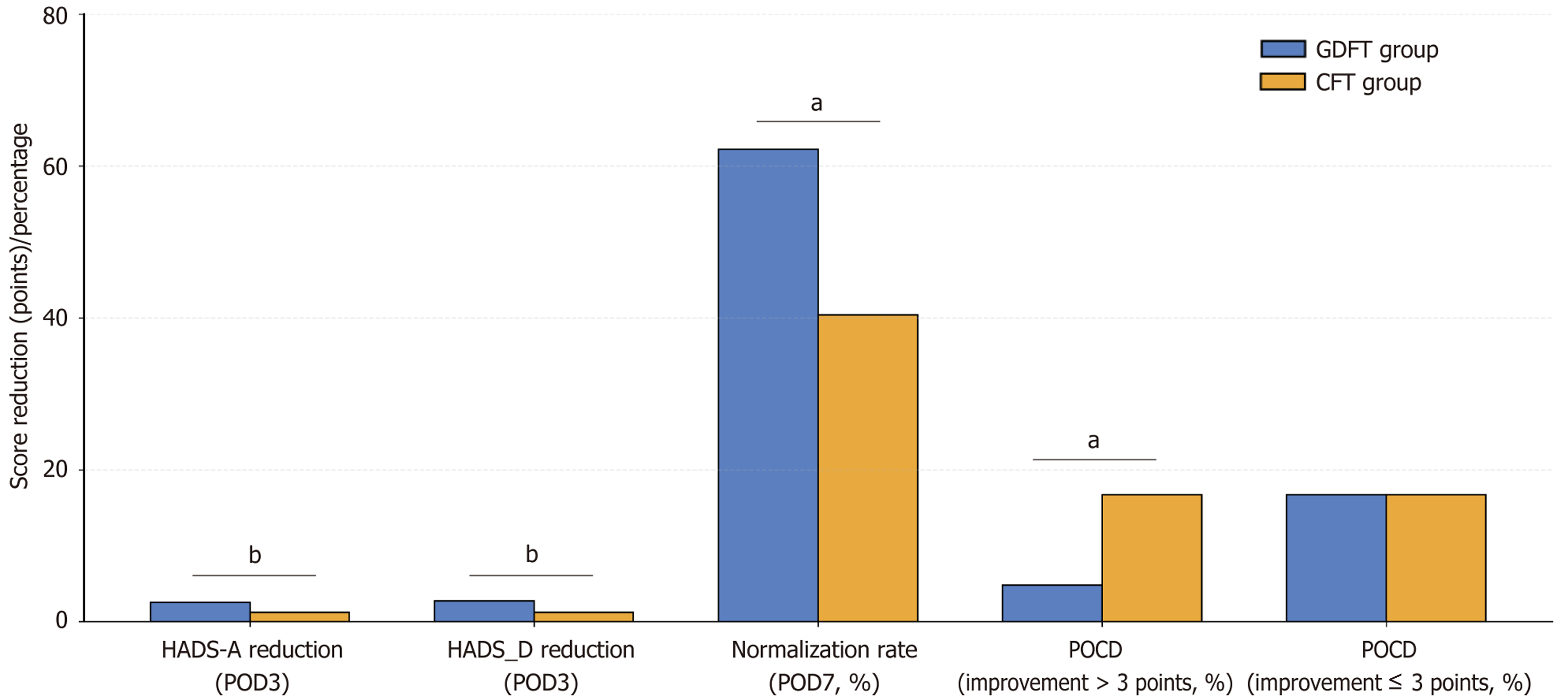
Figure 2 Effects of goal-directed fluid therapy on anxiety-depression status and cognitive improvement in elderly surgical patients.
Bar chart comparing goal-directed fluid therapy (GDFT) group (blue) and conventional fluid therapy group (yellow) across five outcome measures: (1) Hospital Anxiety and Depression Scale (HADS)-anxiety subscale score reduction at postoperative day (POD) 3; (2) HADS-depression subscale score reduction at POD3; (3) Normalization rate at POD7; and (4) Postoperative cognitive dysfunction improvement rates. GDFT group showed significantly greater reductions in both HADS-anxiety subscale (2.5 vs 1.2, P < 0.01) and HADS-depression subscale (2.7 vs 1.2, P < 0.01) scores. The GDFT group also demonstrated higher anxiety-depression normalization rate (62.2% vs 40.4%, P < 0.05) and lower postoperative cognitive dysfunction incidence with improvement > 3 points (4.8% vs 16.7%, P < 0.05). Error bars represent standard deviation. aP < 0.05, bP < 0.01. CFT: Conventional fluid therapy; GDFT: Goal-directed fluid therapy; HADS-A: Hospital Anxiety and Depression Scale-anxiety subscale; HADS-D: Hospital Anxiety and Depression Scale-depression subscale; POD: Postoperative day; POCD: Postoperative cognitive dysfunction.
- Citation: Li H, Teng JL, Yuan L, Han L. Goal-directed fluid therapy and cognitive outcomes in elderly surgical patients with anxiety and depression. World J Psychiatry 2026; 16(7): 117251
- URL: https://www.wjgnet.com/2220-3206/full/v16/i7/117251.htm
- DOI: https://dx.doi.org/10.5498/wjp.117251