
















Copyright: ©Author(s) 2026.
World J Psychiatry. Jun 19, 2026; 16(6): 115839
Published online Jun 19, 2026. doi: 10.5498/wjp.v16.i6.115839
Published online Jun 19, 2026. doi: 10.5498/wjp.v16.i6.115839
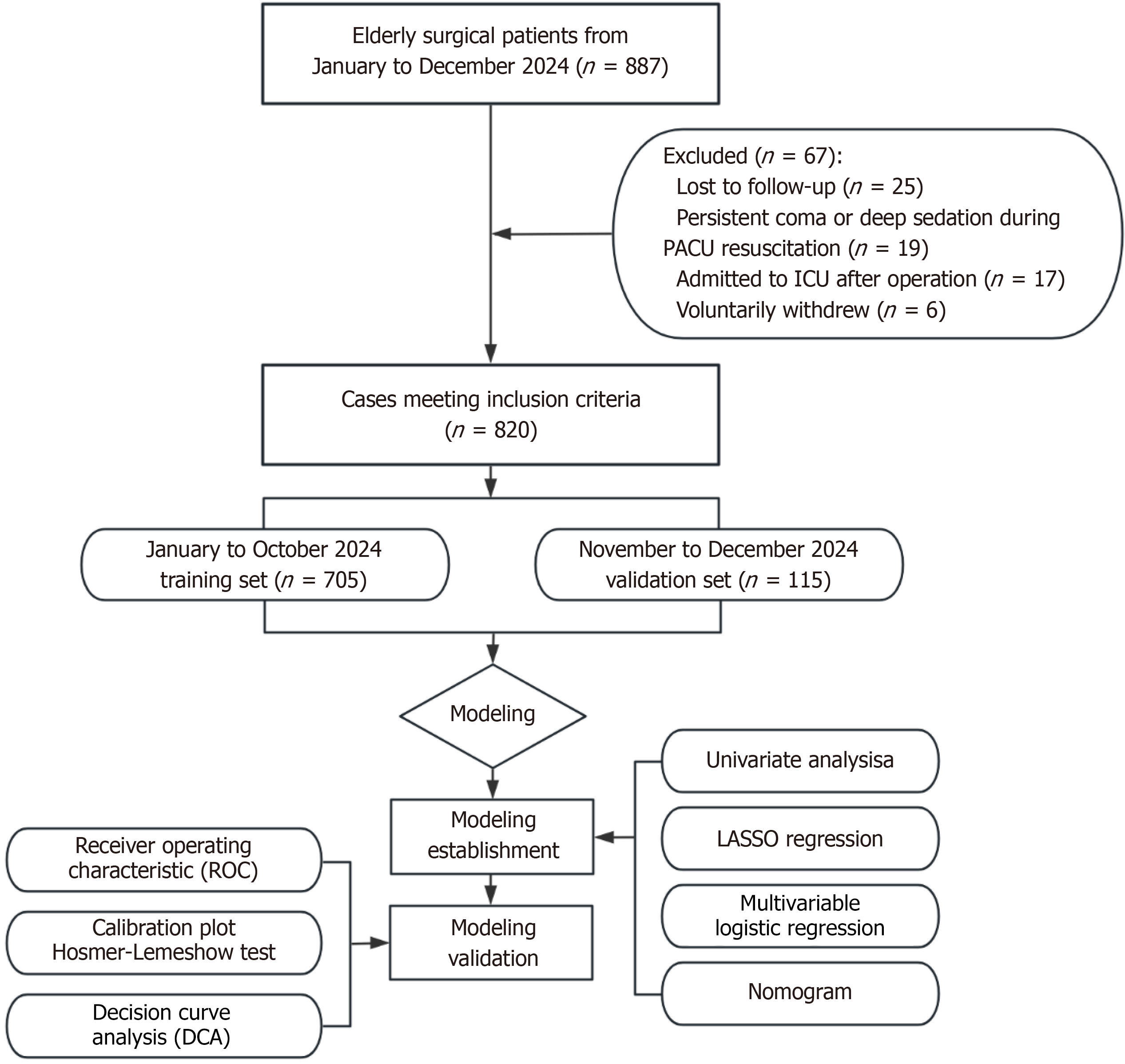
Figure 1 The study design flowchart.
PACU: Post-anesthesia care unit; ICU: Intensive care unit; ROC: Receiver operating characteristic; DCA: Decision curve analysis; LASSO: Least absolute shrinkage and selection operator.
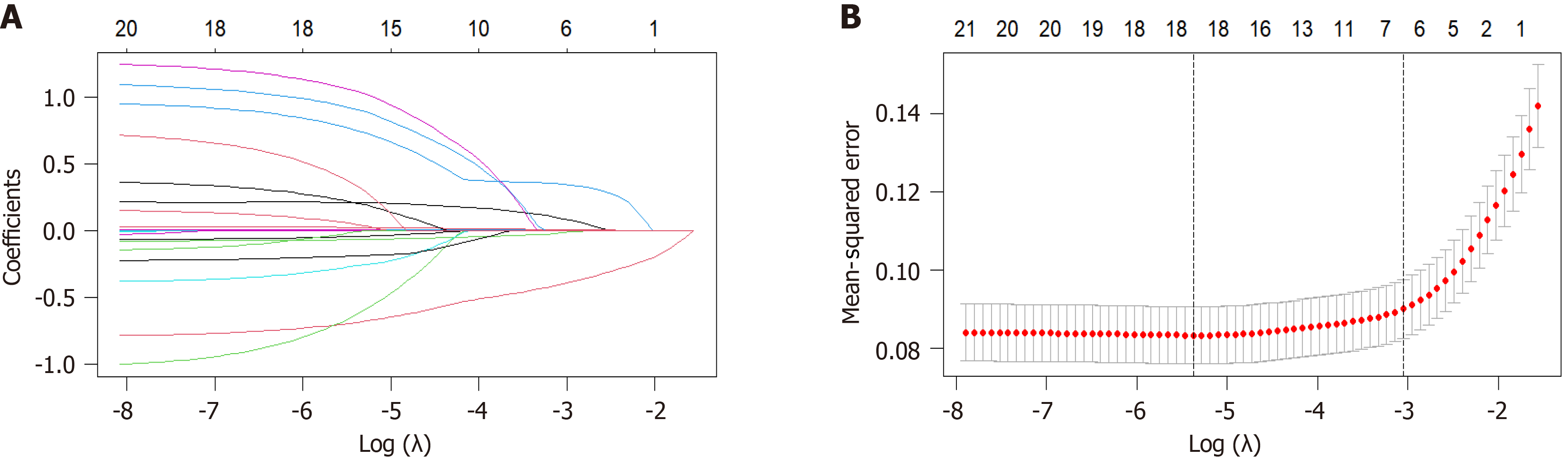
Figure 2 Least absolute shrinkage and selection operator regression analysis of the emergence delirium in older adult patients.
A: Least absolute shrinkage and selection operator (LASSO) regression coefficient curve for variables (a illustrates the coefficients of various variables as a function of λ. As the value of λ increases, many variable coefficients are progressively driven toward zero, highlighting the effectiveness of LASSO in variable selection); B: Results of LASSO ten-fold cross-validation (in B, the two vertical lines represent critical points in the model selection process. The left black vertical line, labeled “lambda.min”, corresponds to the value of λ that achieves the lowest mean squared error during tenfold cross-validation, indicating the model’s optimal predictive performance. The right black vertical line, labeled “lambda.1se”, represents the λ value obtained by adding one standard error to “lambda.min”. This choice aims to produce a more streamlined model that typically balances strong predictive capability with a reduced number of variables, thereby enhancing the model's practicality in clinical applications).
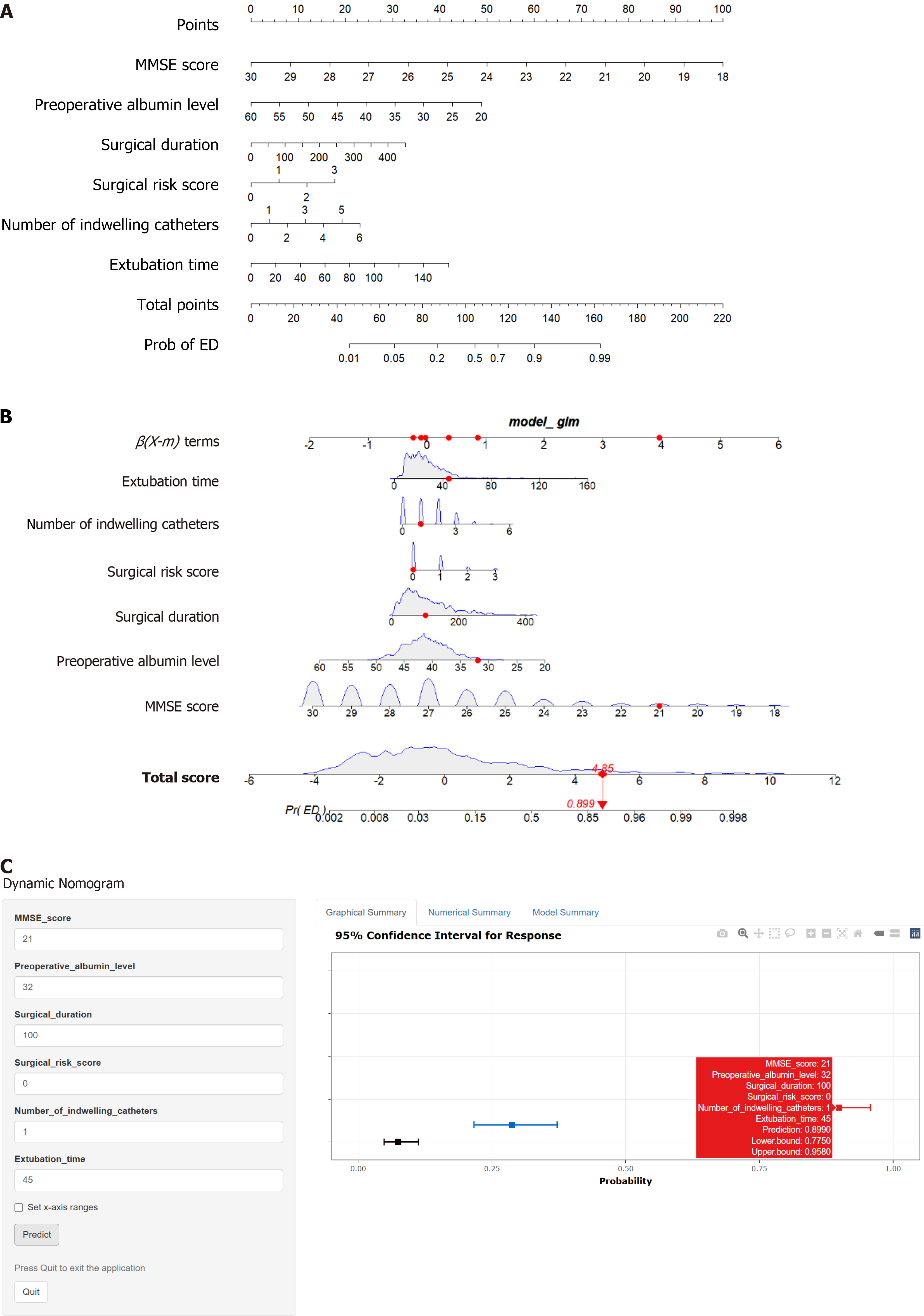
Figure 3 Different presentation forms of nomogram.
A: Nomogram for predicting the risk of emergence delirium (ED) in postoperative older adult patients; B: Example application of the nomogram for predicting the risk of ED in postoperative older adult patients; C: Example application of the web-based dynamic nomogram for predicting the risk of ED in postoperative older adult patients. MMSE: Mini-Mental State Examination; ED: Emergence delirium.
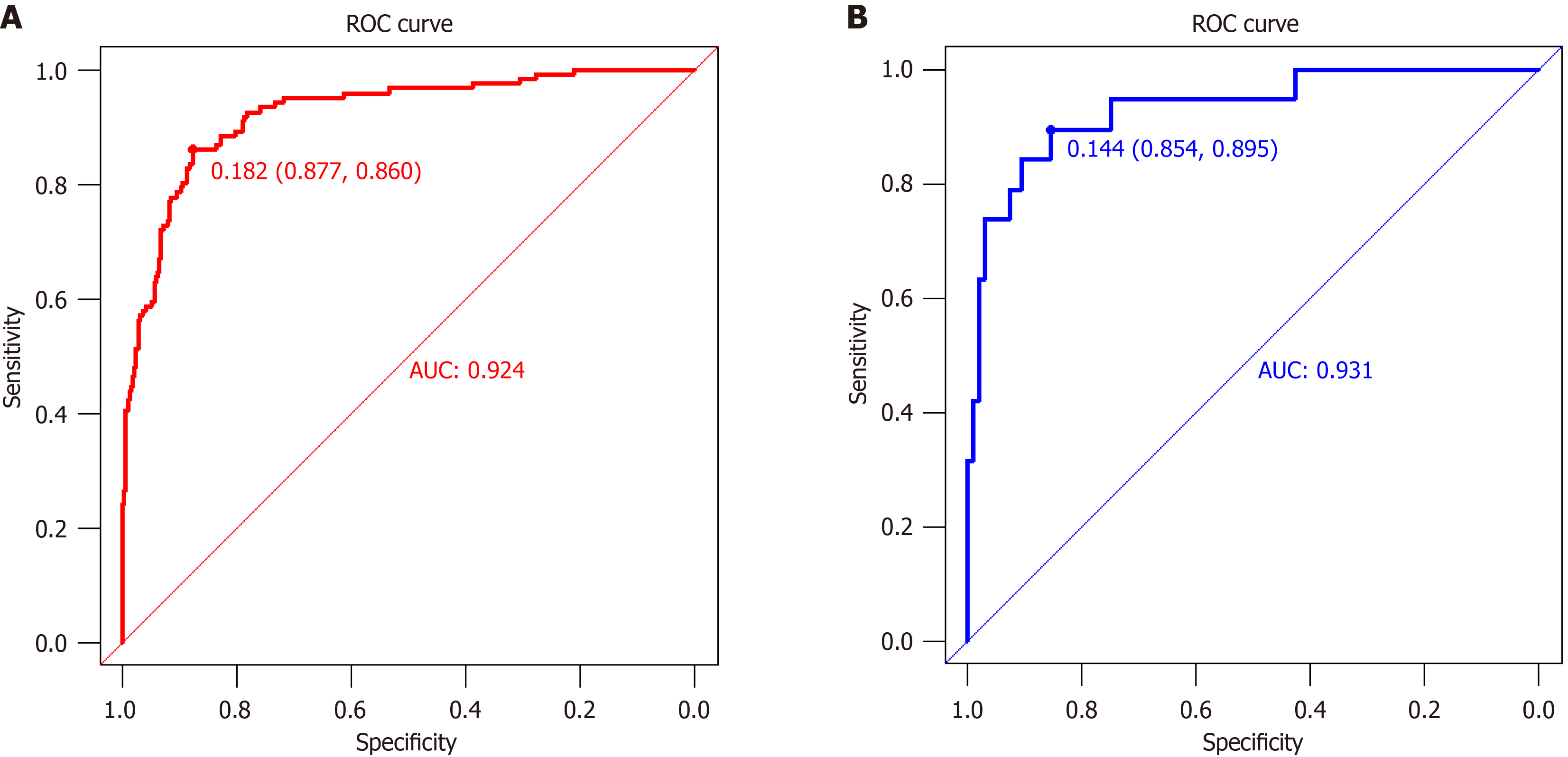
Figure 4 Receiver operating characteristic curve.
A: Receiver operating characteristic curve for the prediction model of emergence delirium in postoperative older adult patients; B: Receiver operating characteristic curve for the validation cohort of the prediction model for emergence delirium in postoperative older adult patients. ROC: Receiver operating characteristic; AUC: Area under curve.
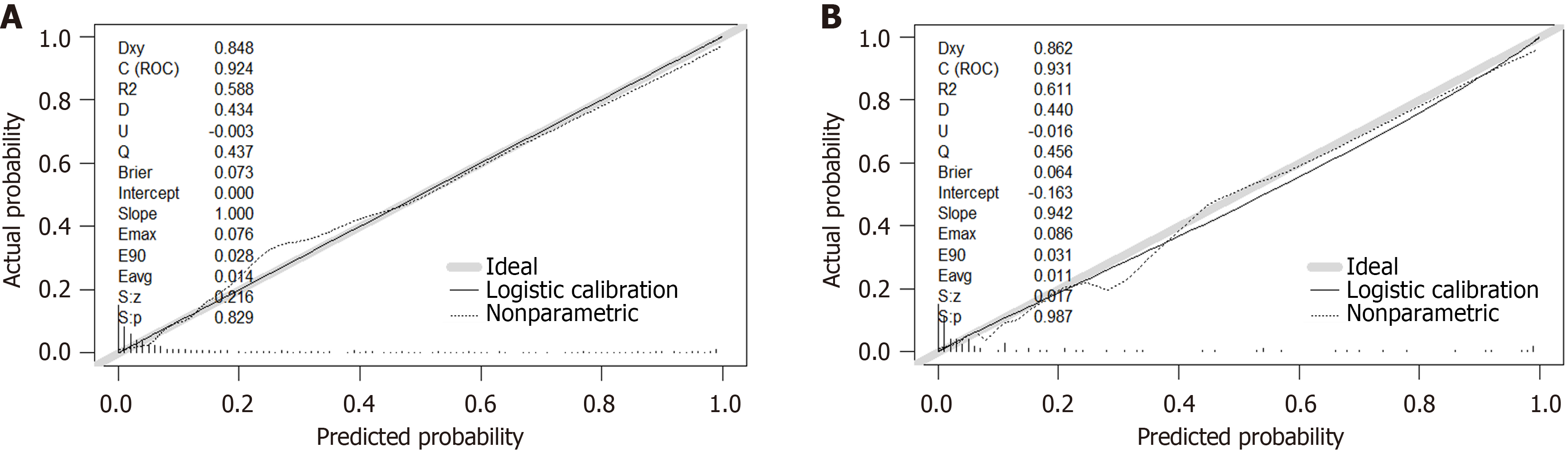
Figure 5 Calibration curve.
A: Calibration curve of the prediction model for emergence delirium in postoperative older adult patients; B: Calibration curve of the validation cohort for the prediction model of emergence delirium in postoperative older adult patients. ROC: Receiver operating characteristic.
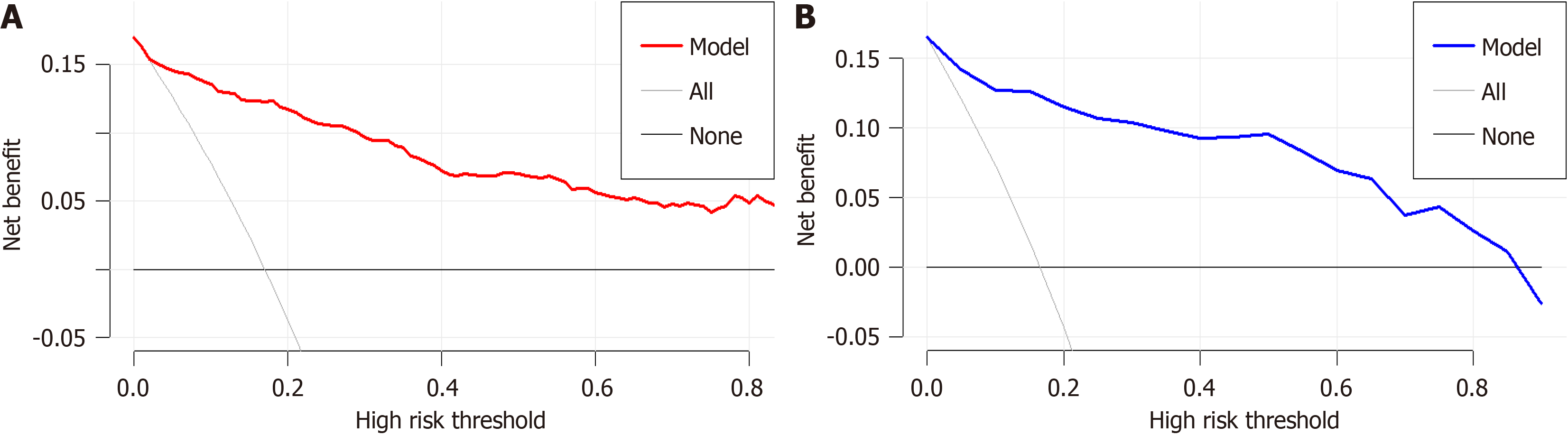
Figure 6 Decision curve.
A: Decision curve of the prediction model for emergence delirium in postoperative older adult patients; B: Decision curve of the validation cohort for the prediction model of emergence delirium in postoperative older adult patients.
- Citation: Xin Y, He B, Wei XH, Yan YL, Huang C, Gao CY, Wang S, Zhang GM, Li R, Wu Y. Construction and validation of a predictive model for the risk of emergence delirium in older adult patients. World J Psychiatry 2026; 16(6): 115839
- URL: https://www.wjgnet.com/2220-3206/full/v16/i6/115839.htm
- DOI: https://dx.doi.org/10.5498/wjp.v16.i6.115839