
















Copyright: ©Author(s) 2026.
World J Psychiatry. Dec 19, 2026; 16(12): 120242
Published online Dec 19, 2026. doi: 10.5498/wjp.120242
Published online Dec 19, 2026. doi: 10.5498/wjp.120242
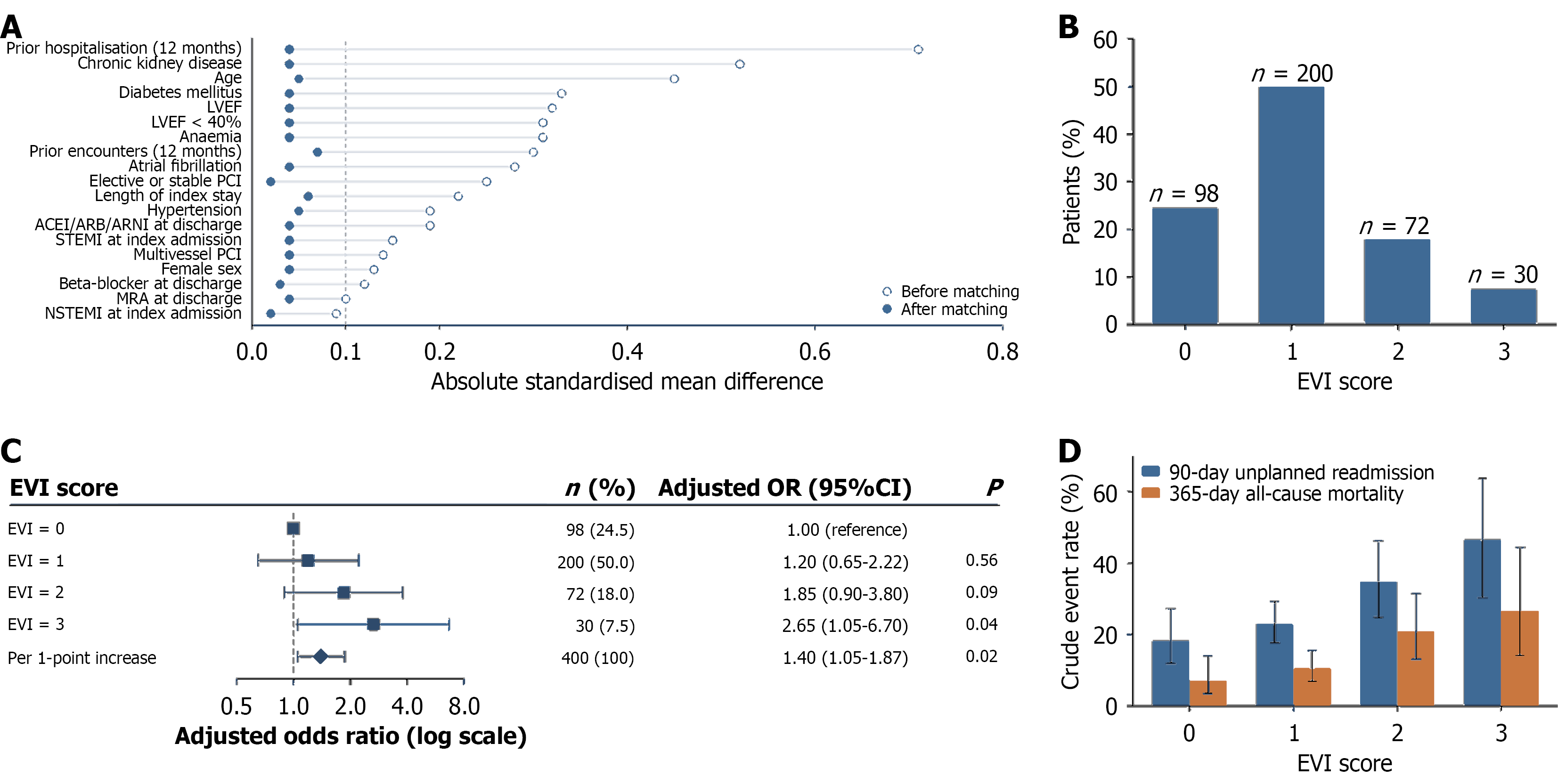
Figure 1 Distribution of psychosocial vulnerability, crude outcome gradient, adjusted dose-response association, and covariate balance in the full analytic cohort (n = 400).
A: Absolute standardised mean differences for all 19 baseline variables in Table 1 before (open circles) and after (filled circles) propensity score matching on the core covariate set; the dashed line marks the prespecified threshold of 0.10, and all post-matching values were ≤ 0.05; B: Distribution of electronic medical record-derived psychosocial vulnerability index (EVI) scores (0: n = 98; 1: n = 200; 2: n = 72; 3: n = 30); C: Adjusted odds ratios for 90-day unplanned readmission by EVI score relative to a score of 0, from multivariable logistic regression with the expanded covariate set (age, sex, left ventricular ejection fraction, chronic kidney disease, prior hospitalisation within 12 months, diabetes mellitus, hypertension, atrial fibrillation, anaemia, multivessel percutaneous coronary intervention, and percutaneous coronary intervention indication): (1) EVI 1, 1.20 (95%CI: 0.65-2.22); (2) EVI 2, 1.85 (95%CI: 0.90-3.80); (3) EVI 3, 2.65 (95%CI: 1.05-6.70); and (4) Odds ratio per 1-point increase, 1.40 (95%CI: 1.05-1.87), P for linear trend = 0.02. Confidence intervals are wide and overlap; the analysis is exploratory; D: Crude 90-day unplanned readmission (18.4%, 23.0%, 34.7%, 46.7%) and crude 365-day all-cause mortality (7.1%, 10.5%, 20.8%, 26.7%) by EVI score, with Wilson 95%CIs. EVI: Electronic medical record-derived psychosocial vulnerability index; LVEF: Left ventricular ejection fraction; OR: Odds ratio; PCI: Percutaneous coronary intervention; MRA: Mineralocorticoid receptor antagonist; NSTEMI: Non-ST-segment elevation myocardial infarction.
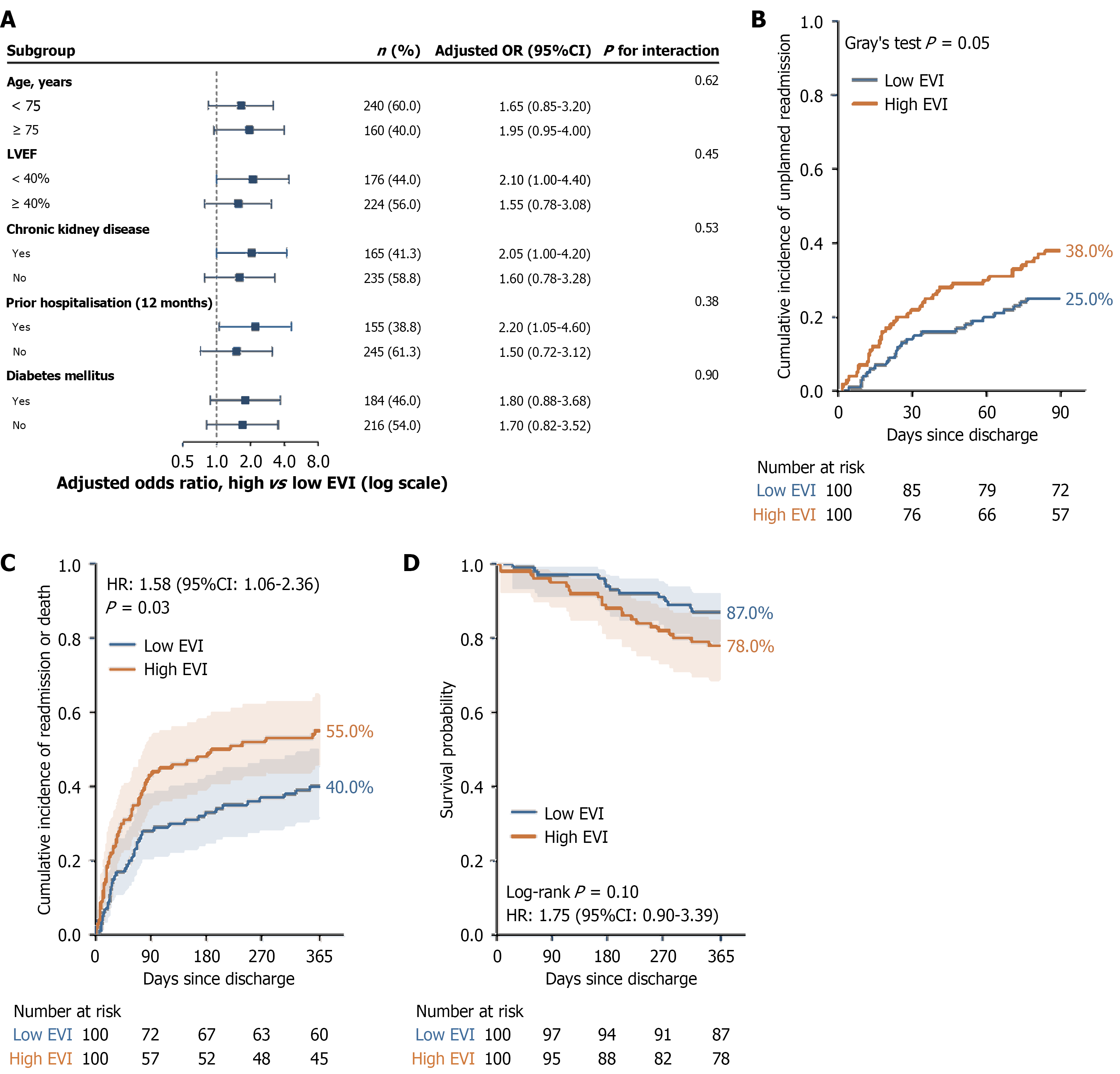
Figure 2 Outcomes in the propensity score-matched cohort and exploratory subgroup analyses in the full cohort.
A: Adjusted odds ratios for 90-day unplanned readmission, high vs low electronic medical record-derived psychosocial vulnerability index (EVI), within prespecified subgroups of the full cohort (n = 400), from multivariable logistic regression with the expanded covariate set and one multiplicative interaction term per subgroup variable; squares denote point estimates and horizontal bars 95%CIs. No interaction term reached significance; the subgroup analyses were underpowered for moderate effect modification and are exploratory; B: Cumulative incidence of first unplanned readmission within 90 days in the matched cohort (n = 200), with death before first readmission treated as a competing event (3 low EVI, 5 high EVI); cumulative incidence at day 90 was 25.0% in the low-EVI and 38.0% in the high-EVI group (Gray’s test P = 0.05); C: Cumulative incidence of the composite of unplanned readmission or death within 365 days in the matched cohort (40.0% vs 55.0%; HR = 1.58, 1.06-2.36; P = 0.03). Numbers at risk are shown below A-C and correspond to Supplementary Table 1; D: Kaplan-Meier estimates of 365-day overall survival in the matched cohort; shaded areas denote 95%CIs. Survival at 365 days was 87.0% in the low-EVI and 78.0% in the high-EVI group (stratified log-rank P = 0.10; stratified Cox hazard ratio = 1.75, 95%CI: 0.90-3.39). EVI: Electronic medical record-derived psychosocial vulnerability index; HR: Hazard ratio; LVEF: Left ventricular ejection fraction; OR: Odds ratio.
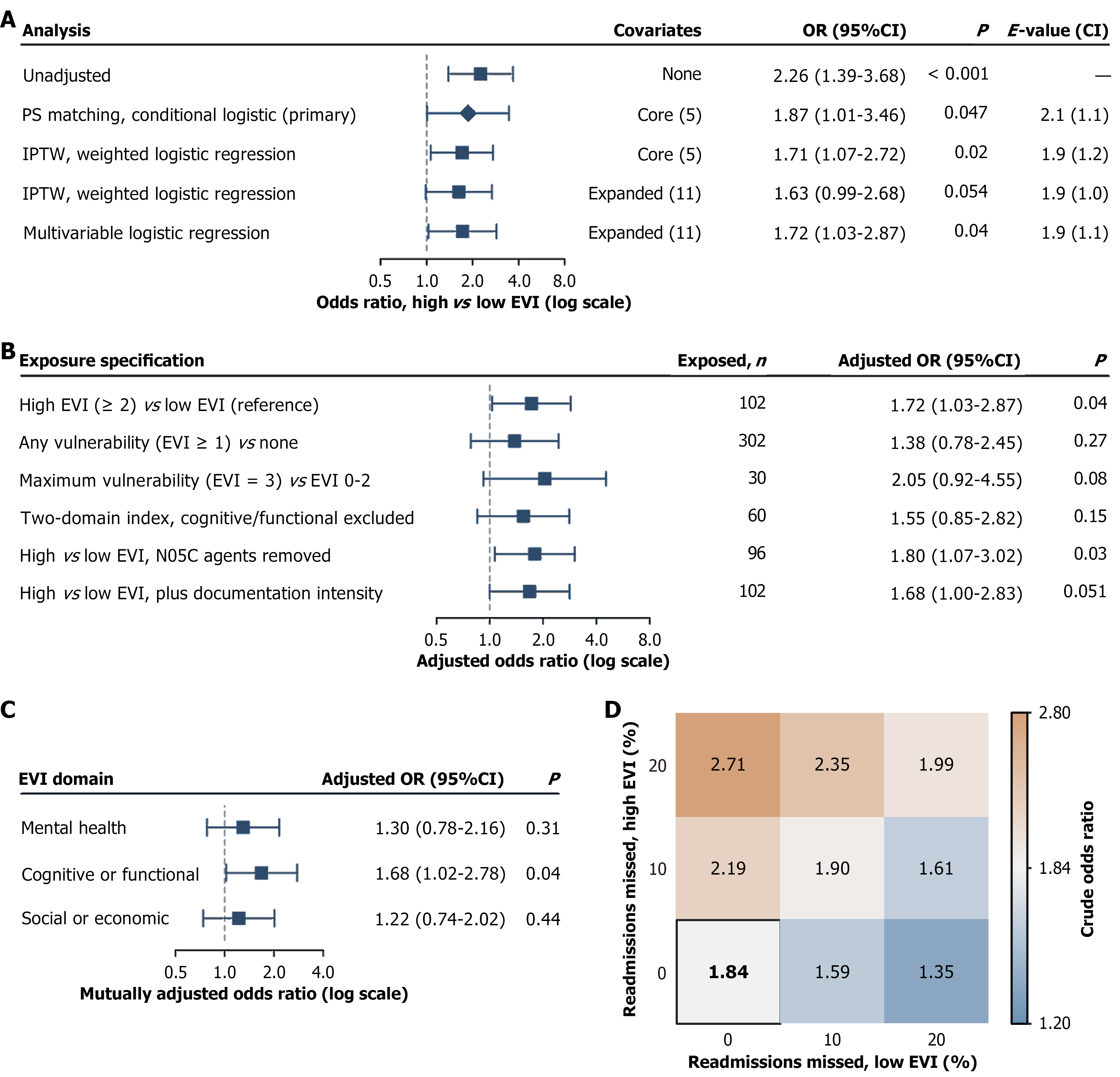
Figure 3 Robustness of the association between high electronic medical record-derived psychosocial vulnerability index and 90-day unplanned readmission.
A: Odds ratios (ORs) from five analytic approaches in the full (n = 400) or matched (n = 200) cohort, with the covariate set, P value, and E-values for the point estimate (and for the confidence limit closer to the null) shown alongside; the diamond marks the prespecified primary analysis (Supplementary Table 5); B: Mutually adjusted ORs for the three electronic medical record-derived psychosocial vulnerability index domains entered simultaneously in one multivariable model with the expanded covariate set (Supplementary Table 2); C: Adjusted ORs under alternative specifications of the exposure, each fitted in the same expanded multivariable model (Supplementary Table 3); D: Deterministic quantitative bias analysis: (1) Crude OR in the matched cohort recalculated under assumed proportions of true unplanned readmissions missed because they occurred at other institutions; and (2) The outlined cell is the observed value (Supplementary Table 3). All panels use a logarithmic axis with the dashed line at an OR of 1, and all analyses other than the primary analysis are exploratory. OR: Odds ratio; EVI: Electronic medical record-derived psychosocial vulnerability index; IPTW: Inverse probability of treatment weighting; PS: Propensity score.
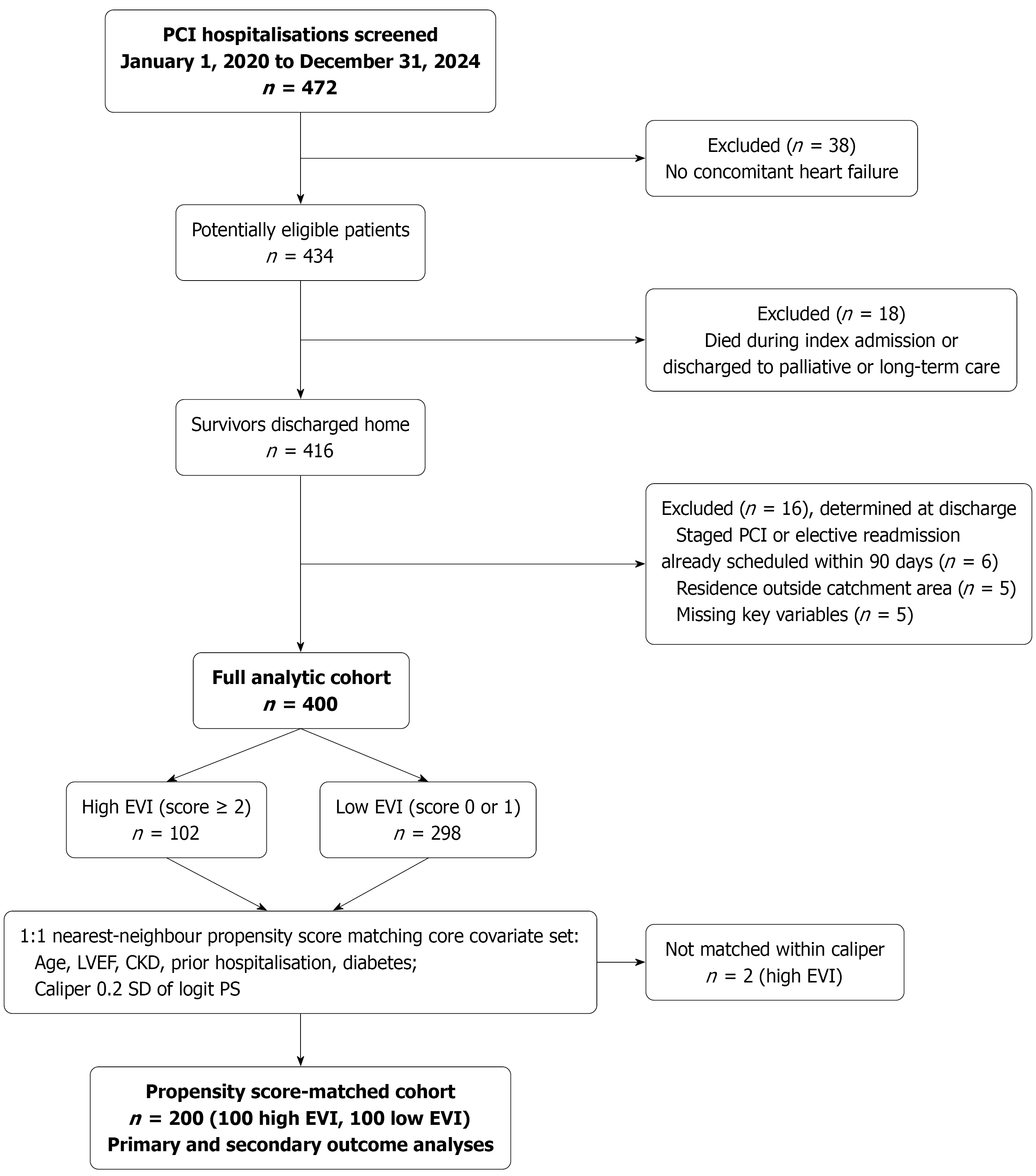
Figure 4 Study flow diagram.
Of 472 percutaneous coronary intervention hospitalisations screened between January 1, 2020 and December 31, 2024, 38 were excluded for absence of concomitant heart failure and 18 for in-hospital death or discharge to palliative or long-term care. Among 416 survivors discharged home, 16 were excluded on the basis of information available at discharge: A staged percutaneous coronary intervention or other elective readmission already scheduled within 90 days (n = 6), residence outside the hospital catchment area (n = 5), or missing key variables (n = 5), yielding a full analytic cohort of 400 patients. One-to-one nearest-neighbour propensity score matching on the core covariate set produced 100 matched pairs; 2 high-electronic medical record-derived psychosocial vulnerability index patients could not be matched within the caliper. CKD: Chronic kidney disease; EVI: Electronic medical record-derived psychosocial vulnerability index; LVEF: Left ventricular ejection fraction; PCI: Percutaneous coronary intervention; PS: Propensity score.
- Citation: Jin X, Wang Q, Mao FG, Tang YL, Wang XY. Electronic medical record-derived psychosocial vulnerability and unplanned readmission after percutaneous coronary intervention in heart failure. World J Psychiatry 2026; 16(12): 120242
- URL: https://www.wjgnet.com/2220-3206/full/v16/i12/120242.htm
- DOI: https://dx.doi.org/10.5498/wjp.120242