
















Copyright: ©Author(s) 2026.
World J Psychiatry. Dec 19, 2026; 16(12): 119373
Published online Dec 19, 2026. doi: 10.5498/wjp.119373
Published online Dec 19, 2026. doi: 10.5498/wjp.119373
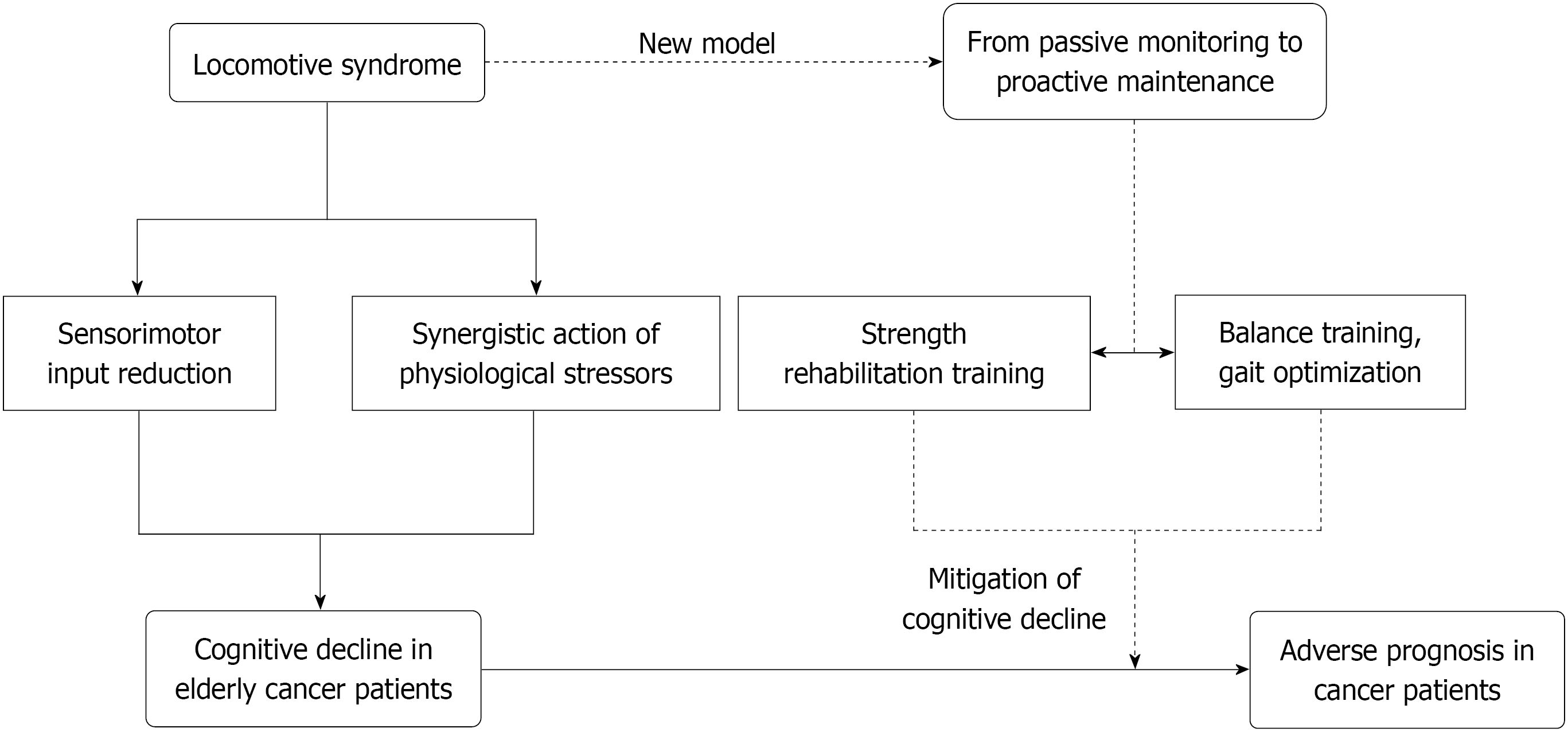
Figure 1 Conceptual framework linking locomotive syndrome with cognitive vulnerability in elderly cancer patients.
This schematic illustrates a conceptual model in which locomotive syndrome acts as an upstream vulnerability state contributing to cognitive decline in older cancer patients. Locomotive syndrome may influence brain health through two major pathways: Reduced sensorimotor input and the synergistic action of physiological stressors, both of which may increase neural vulnerability and accelerate cognitive decline. Cognitive impairment may subsequently contribute to poorer clinical outcomes in cancer patients. The model further highlights a potential shift from passive monitoring to proactive functional maintenance, emphasizing rehabilitation strategies such as strength training, balance training, and gait optimization to mitigate mobility impairment and reduce downstream cognitive risk. Solid arrows represent evidence-supported associations, whereas dashed arrows indicate hypothesized or conceptual pathways requiring further empirical validation.
- Citation: Duan JN, Zhang YN, Wang Y, Michael N, Xia M, Wang B. Locomotive syndrome as an upstream vulnerability state for cognitive decline in geriatric cancer patients. World J Psychiatry 2026; 16(12): 119373
- URL: https://www.wjgnet.com/2220-3206/full/v16/i12/119373.htm
- DOI: https://dx.doi.org/10.5498/wjp.119373