
















Copyright: ©Author(s) 2026.
World J Psychiatry. Oct 19, 2026; 16(10): 123255
Published online Oct 19, 2026. doi: 10.5498/wjp.123255
Published online Oct 19, 2026. doi: 10.5498/wjp.123255
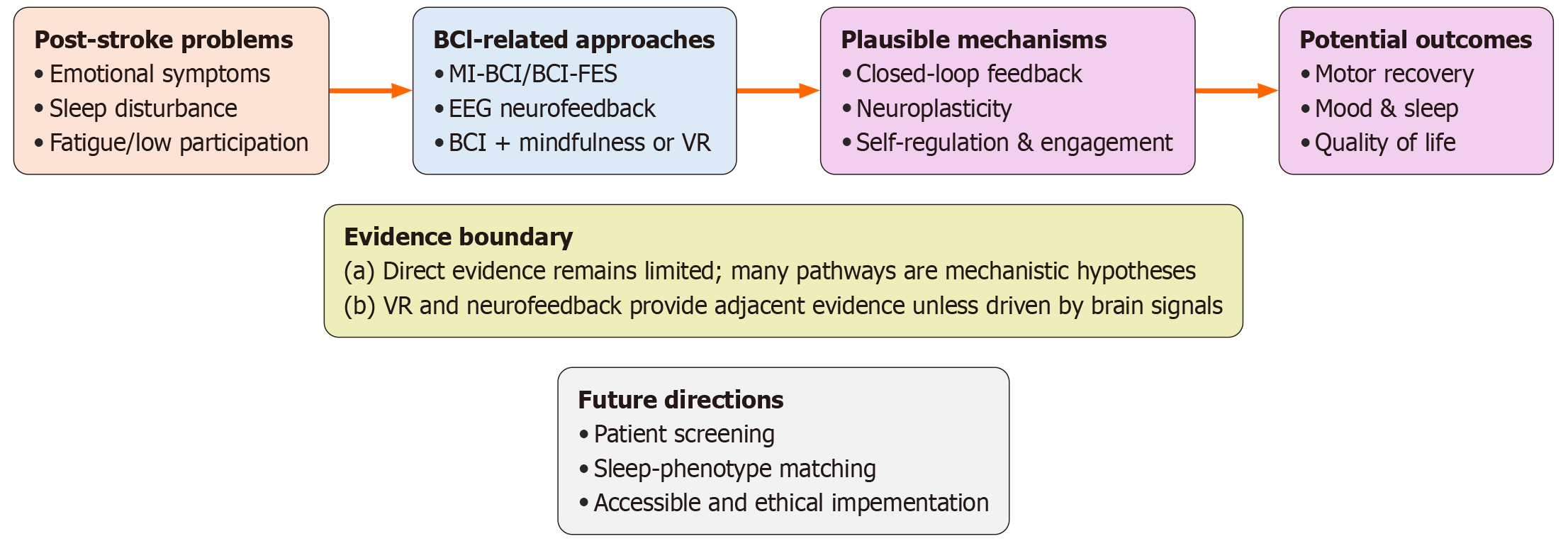
Figure 1 Conceptual framework of brain-computer interface-related rehabilitation for post-stroke emotional and sleep disorders.
Brain-computer interface-related approaches may support integrated post-stroke rehabilitation by linking emotional symptoms, sleep disturbance, fatigue, and participation with potential motor and non-motor outcomes through closed-loop feedback, neuroplasticity, and self-regulation. The pathways shown are proposed mechanisms because direct evidence for emotional and sleep-related outcomes remains limited. Virtual reality and neurofeedback provide adjacent evidence unless directly driven by brain signals. BCI: Brain-computer interfaces; MI: Motor imagery; FES: Functional electrical stimulation; EEG: Electroencephalogram; VR: Virtual reality.
- Citation: Liu XA, Liu J, Xu D, Zhao X. Application of brain-computer interfaces in the rehabilitation of post-stroke emotional and sleep disorders. World J Psychiatry 2026; 16(10): 123255
- URL: https://www.wjgnet.com/2220-3206/full/v16/i10/123255.htm
- DOI: https://dx.doi.org/10.5498/wjp.123255