
















Copyright: ©Author(s) 2026.
World J Psychiatry. Oct 19, 2026; 16(10): 123156
Published online Oct 19, 2026. doi: 10.5498/wjp.123156
Published online Oct 19, 2026. doi: 10.5498/wjp.123156
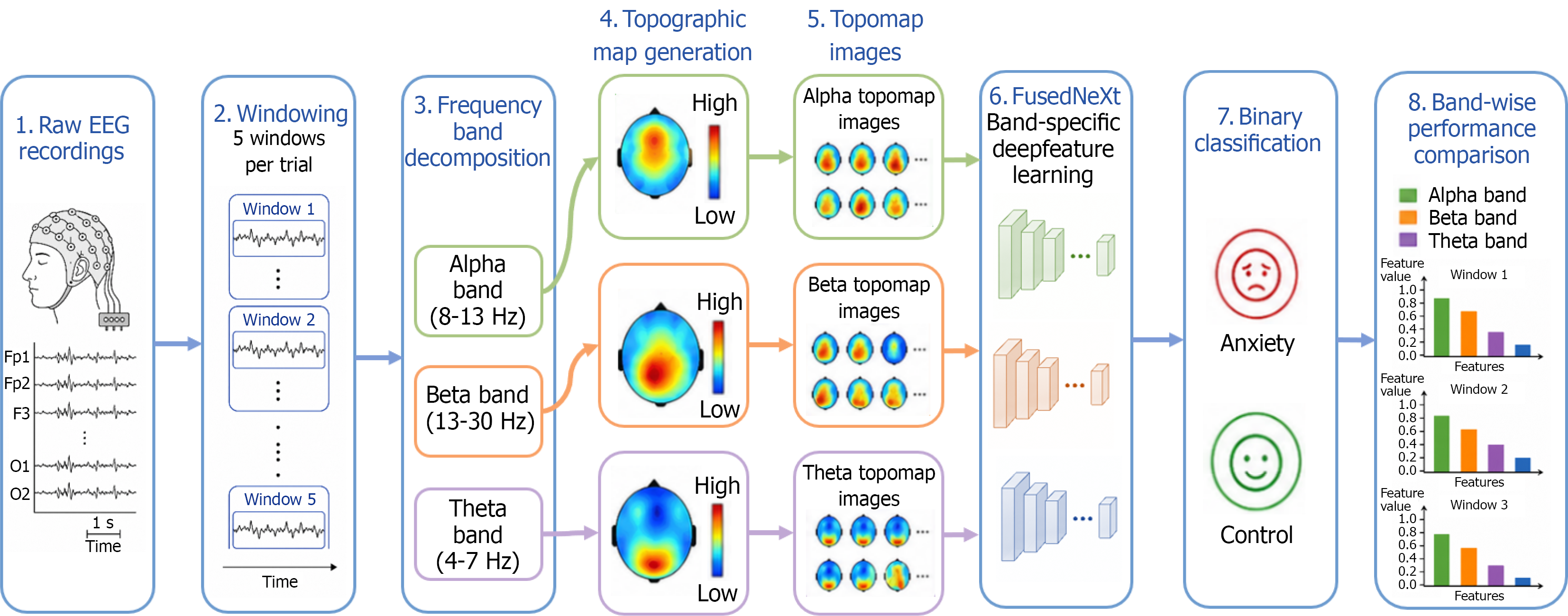
Figure 1 Overall workflow of the proposed FusedNeXt-based electroencephalography topographic-map classification framework.
EEG: Electroencephalography.
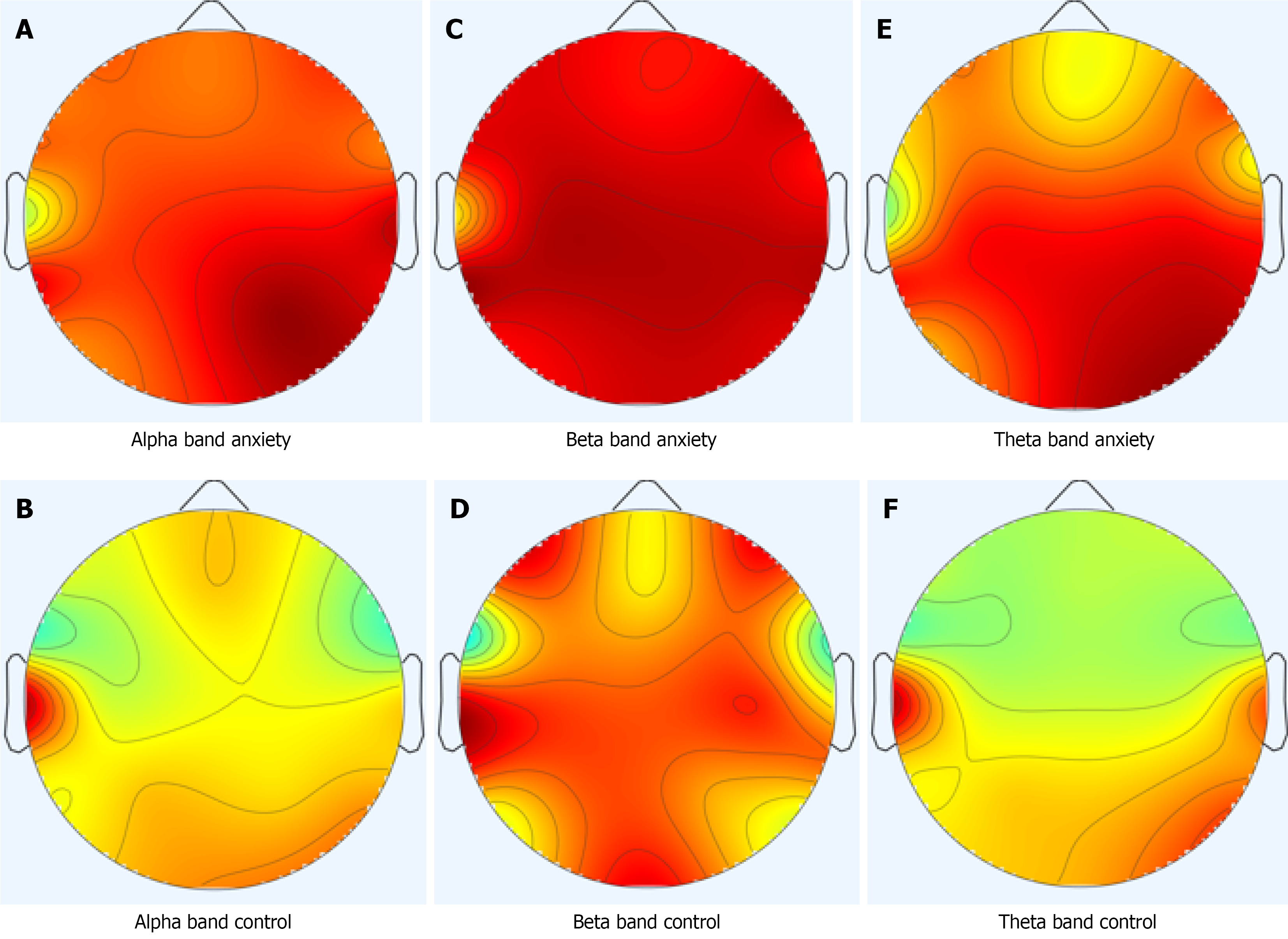
Figure 2 Representative electroencephalography topographic map images generated from different frequency bands.
The first line shows examples from the anxiety class, whereas the second line shows examples from the control class. Each row corresponds to a specific electroencephalography frequency band. A: Alpha band anxiety; B: Alpha band control; C: Beta band anxiety; D: Beta band control; E: Theta band anxiety; F: Theta band control.
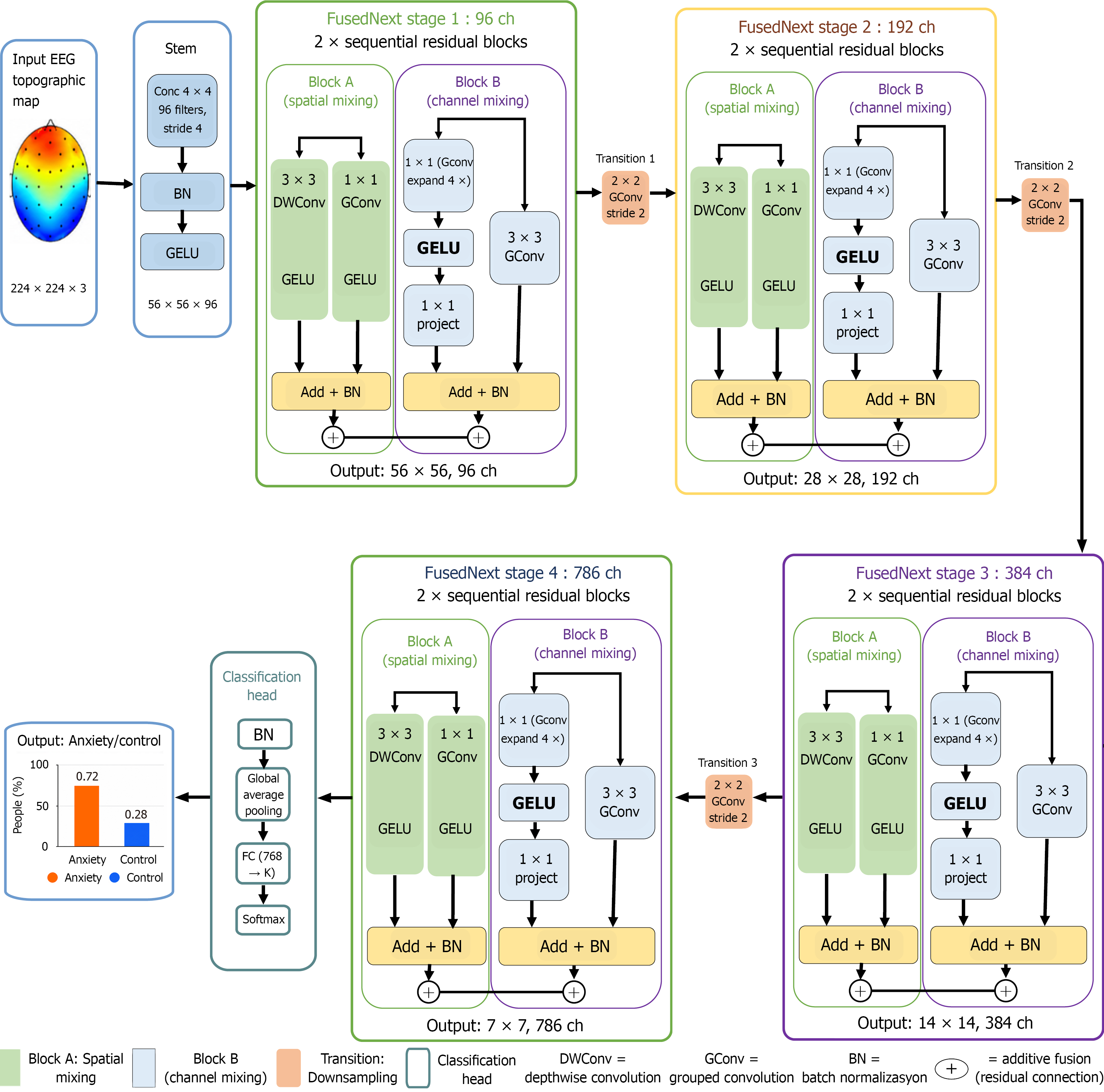
Figure 3 Overall architecture of the proposed lightweight FusedNeXt model for electroencephalography-based binary classification of anxiety.
The network processes 224 × 224 × 3 electroencephalography topographic maps through a stem block (4 × 4 convolution, 96 filters, stride 4; equation 4), followed by four progressive FusedNeXt stages with channel widths of 96, 192, 384, and 768. Each stage applies two sequential hyper-connected blocks (block A → block B) twice in succession: Block A (spatial-mixing; equations 5-7) performs spatial mixing using a 3 × 3 depthwise convolution branch in parallel with a 1 × 1 grouped convolution branch, fused by additive hyper-connection; block B (channel-mixing; equations 8-10) implements a transformer-style inverted bottleneck (4 × channel expansion followed by 1 × 1 projection) alongside a complementary 3 × 3 grouped-convolution branch, again fused by additive hyper-connection. Three transition blocks (2 × 2 grouped convolution with stride 2; equation 12) perform learnable spatial downsampling between stages. The classification head (equations 14-17) consists of batch normalization, global average pooling, a 2-unit fully connected layer, and a softmax activation, producing the final anxiety/control probability distribution. Total complexity: ≈ 7.17 M parameters, ≈ 1.95 GFLOPs. EEG: Electroencephalography; GELU: Gaussian Error Linear Unit; FC: Fully connected layer.
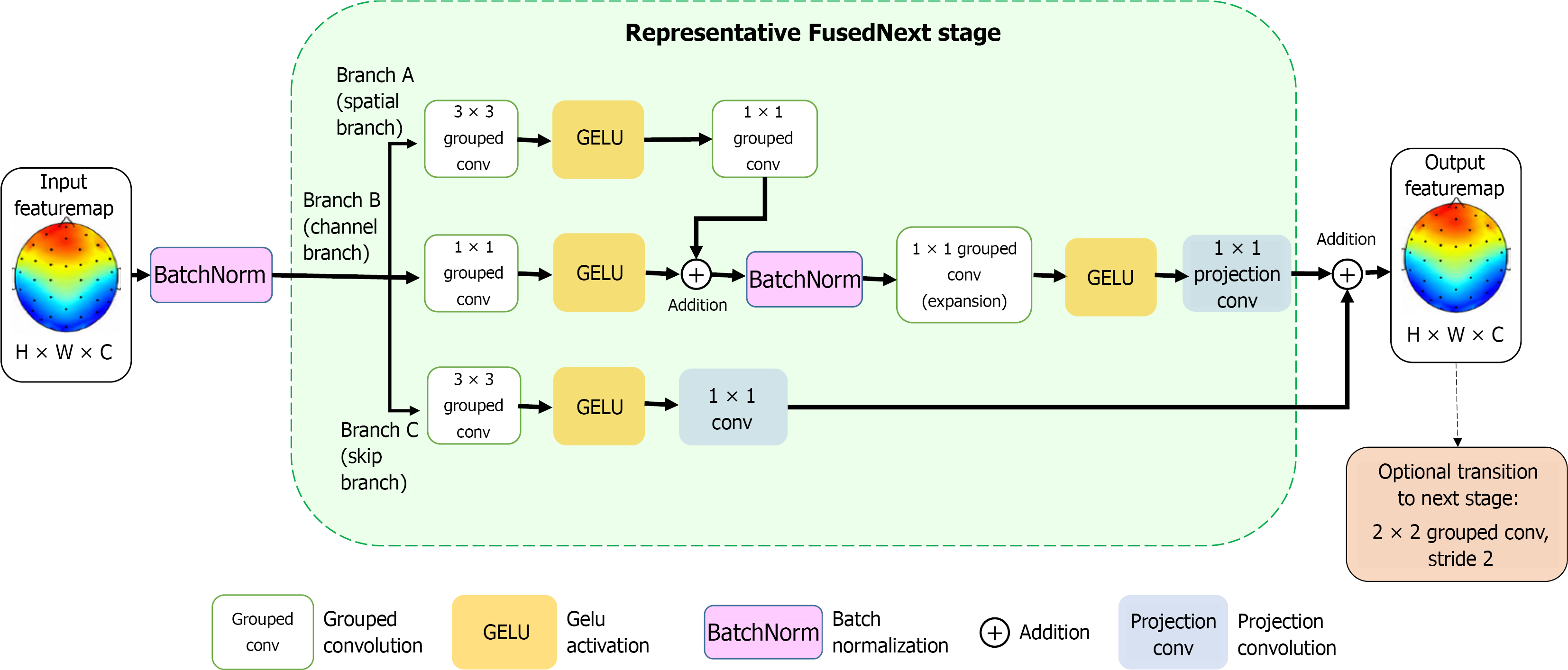
Figure 4 Detailed internal structure of a representative FusedNeXt stage, showing block A (spatial-mixing; equations 5-7) and block B (channel-mixing; equations 8-10) with their two parallel paths and additive hyper-connection (⊕) fusion points.
Block A combines a 3 × 3 depthwise-convolution path (P1) with a 1 × 1 grouped-convolution path (P2) and fuses them by element-wise addition followed by batch normalization. Block B combines a transformer-style inverted-bottleneck path (M; 1 × 1 grouped expansion → GELU → 1 × 1 projection) with a complementary 3 × 3 grouped-convolution path (R), again fused by element-wise addition followed by batch normalization. The two additive fusions form the hyper-connection points of the stage, allowing features from spatial and channel transformation paths to be combined within a shared representation space. GELU: Gaussian Error Linear Unit.
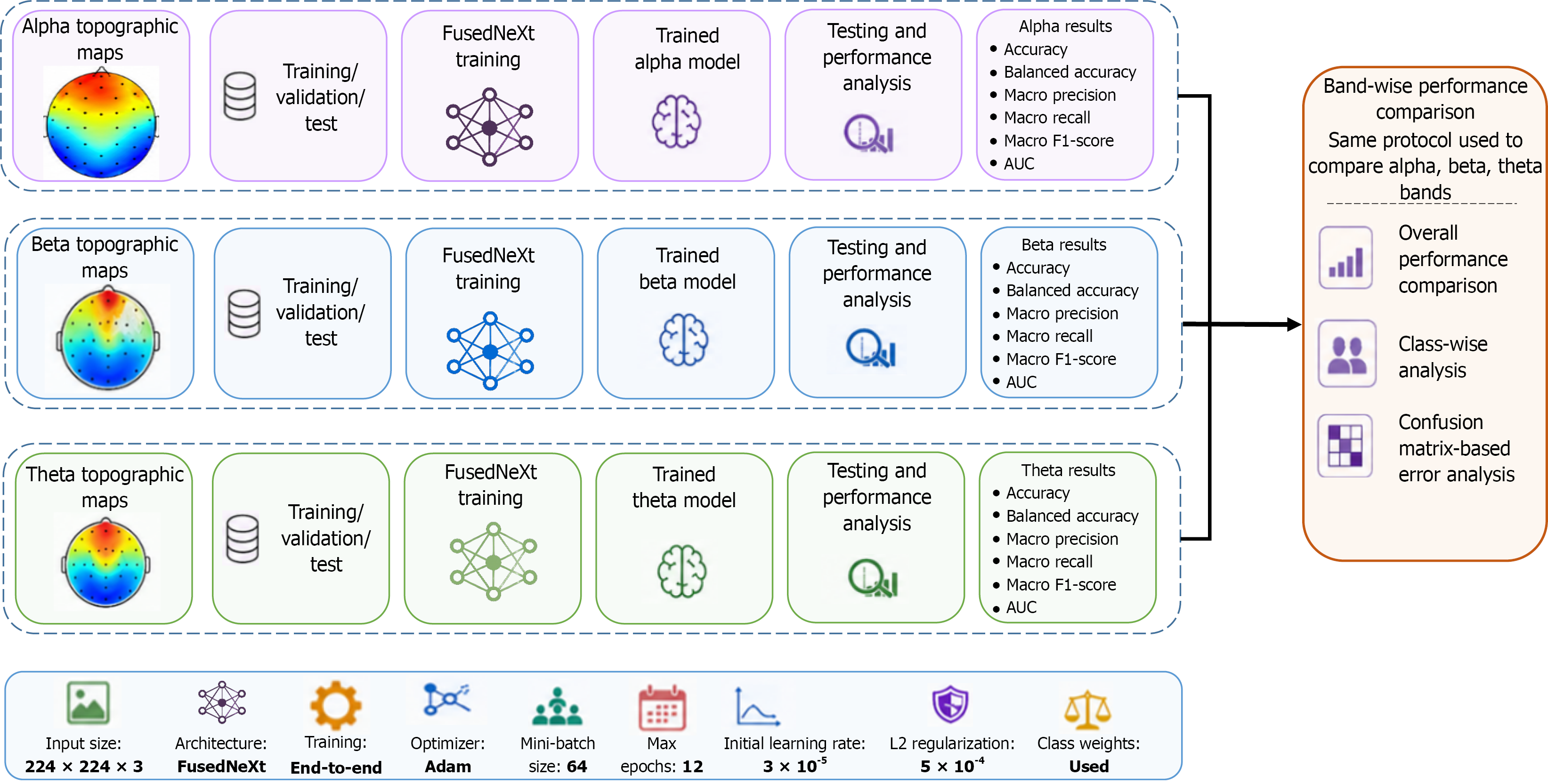
Figure 5 The band-based FusedNeXt training strategy applied to the alpha, beta, and theta bands.
AUC: Area under the curve.
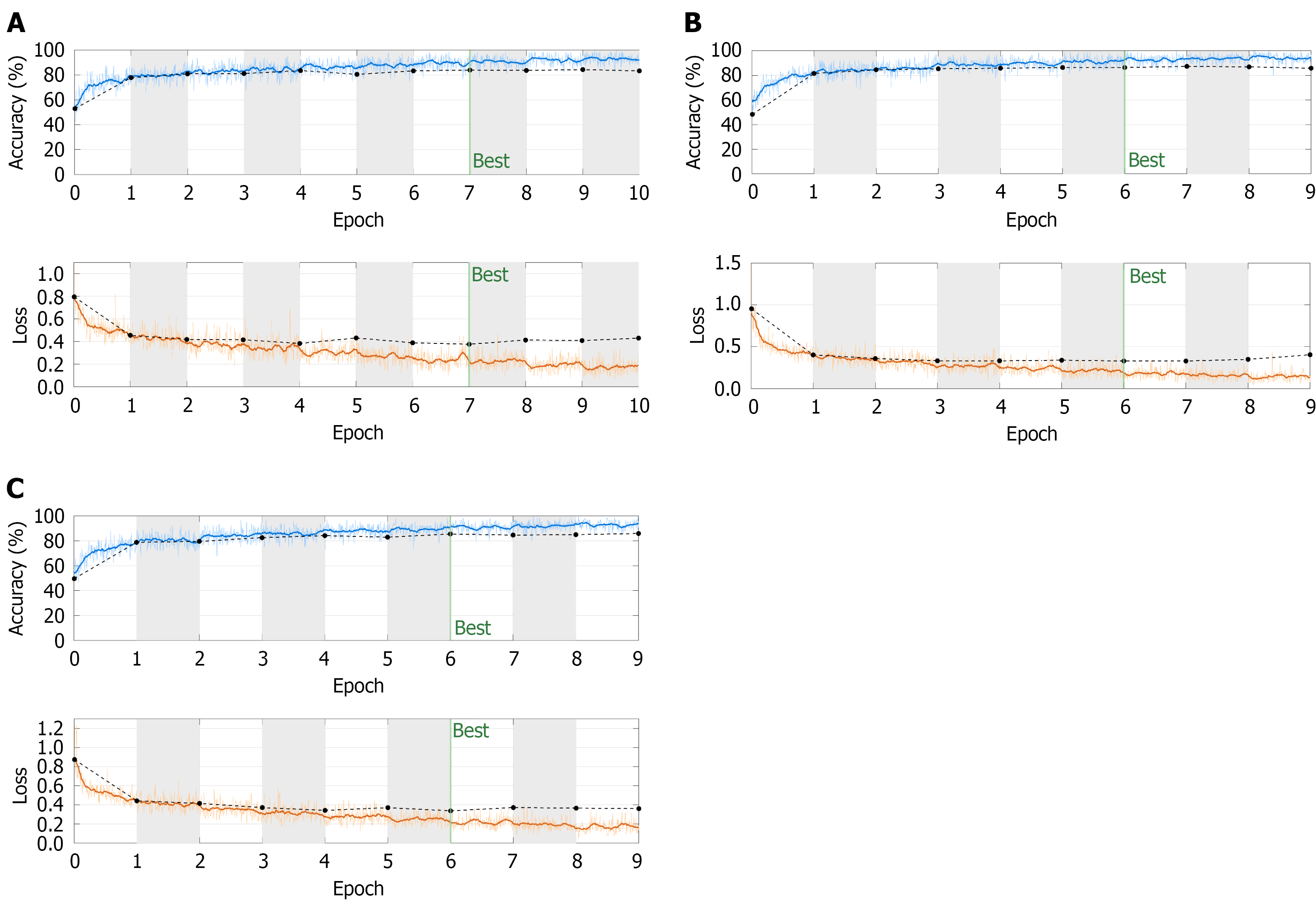
Figure 6 Training and validation loss curves of the FusedNeXt model for different electroencephalography frequency bands.
A: Alpha band; B: Beta band; C: Theta band.
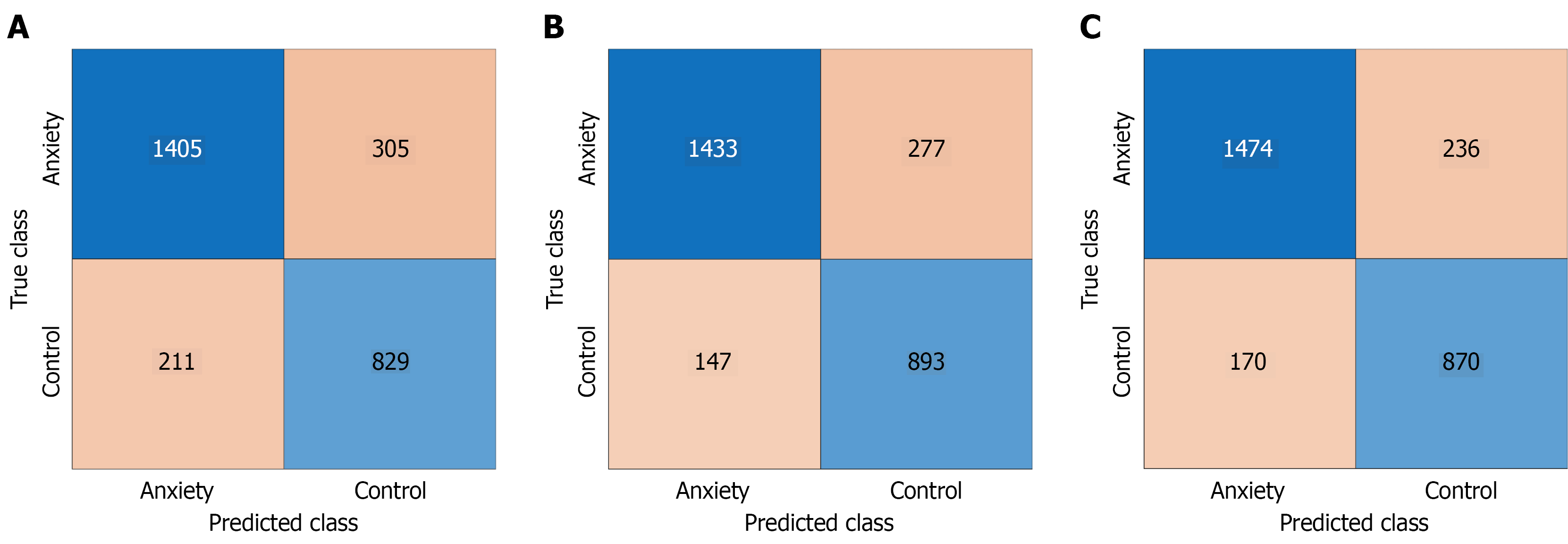
Figure 7 Confusion matrices obtained by the FusedNeXt model for different electroencephalography frequency bands.
A: Alpha band; B: Beta band; C: Theta band.
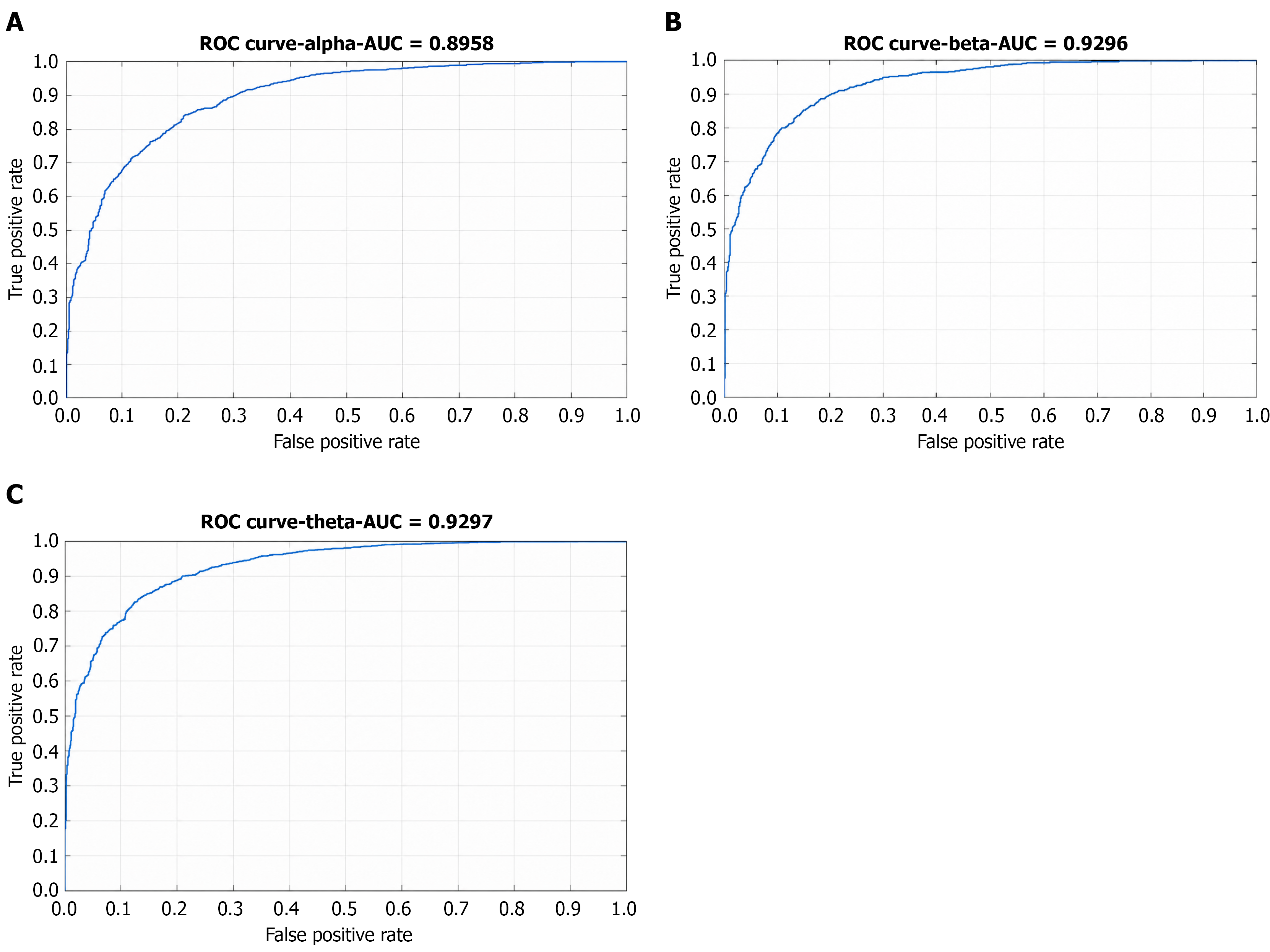
Figure 8 Receiver operating characteristic curves and area under the curve values obtained for the Anxiety class using the FusedNeXt model.
A: Alpha band; B: Beta band; C: Theta band. ROC: Receiver operating characteristic; AUC: Area under the curve.
- Citation: Kaya S, Tasci G, Tuncer İ, Tasci B, Baygın N, Tasci I, Baygin M, Dogan S, Tuncer T. FusedNeXt-based anxiety detection from electroencephalography topographic maps: A comparative analysis of alpha, beta, and theta bands. World J Psychiatry 2026; 16(10): 123156
- URL: https://www.wjgnet.com/2220-3206/full/v16/i10/123156.htm
- DOI: https://dx.doi.org/10.5498/wjp.123156