
















Copyright: ©Author(s) 2026.
World J Psychiatry. Oct 19, 2026; 16(10): 122462
Published online Oct 19, 2026. doi: 10.5498/wjp.122462
Published online Oct 19, 2026. doi: 10.5498/wjp.122462
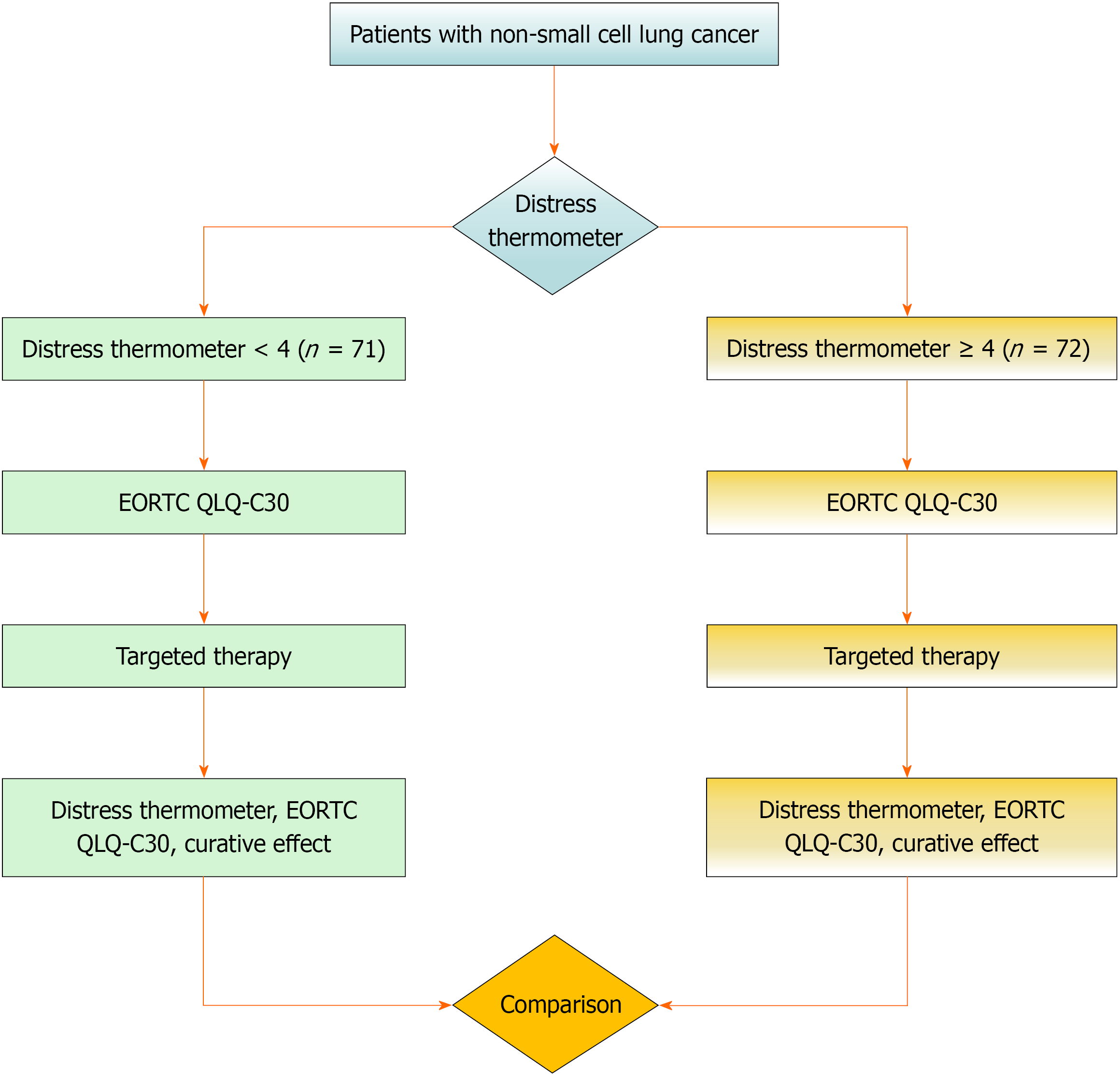
Figure 1 Flow chart of this study.
EORTC QLQ-C30: European Organization for Research and Treatment of Cancer Quality of Life Questionnaire-Core 30.
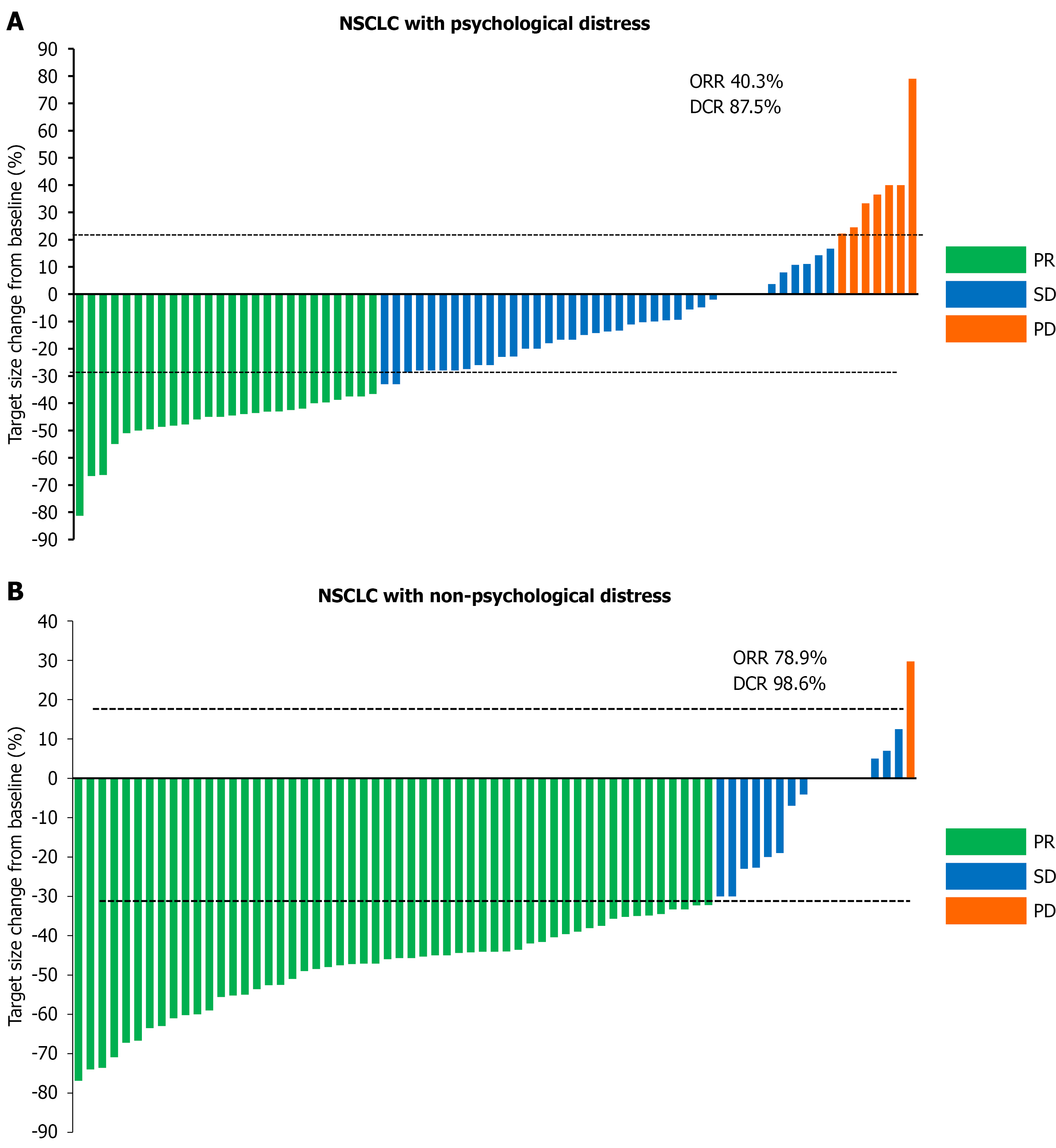
Figure 2 Comparison of objective response rate and disease control rate of targeted combination therapy between the psychological dis
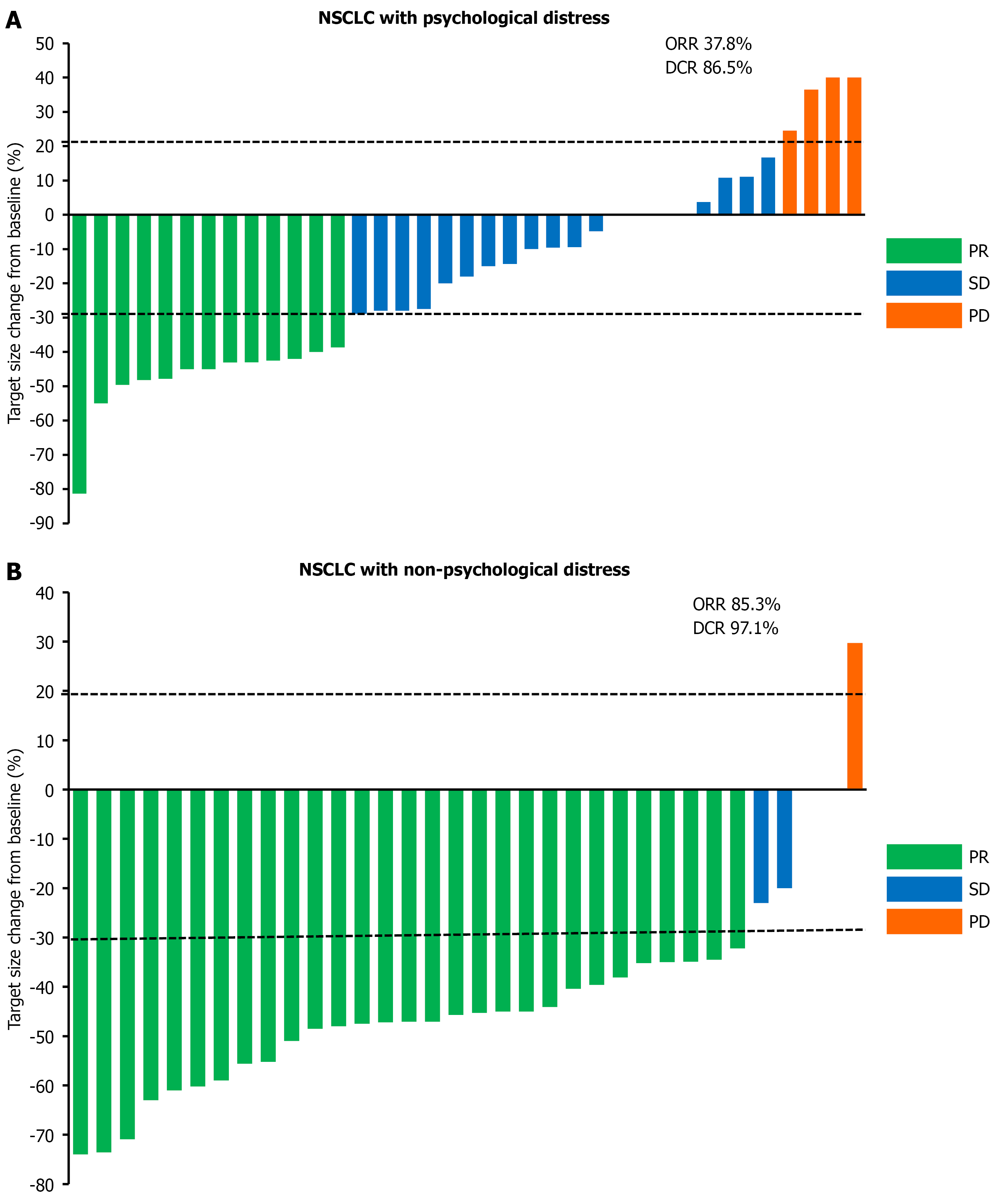
Figure 3 Comparison of objective response rate and disease control rate of targeted combination chemotherapy between the psycho
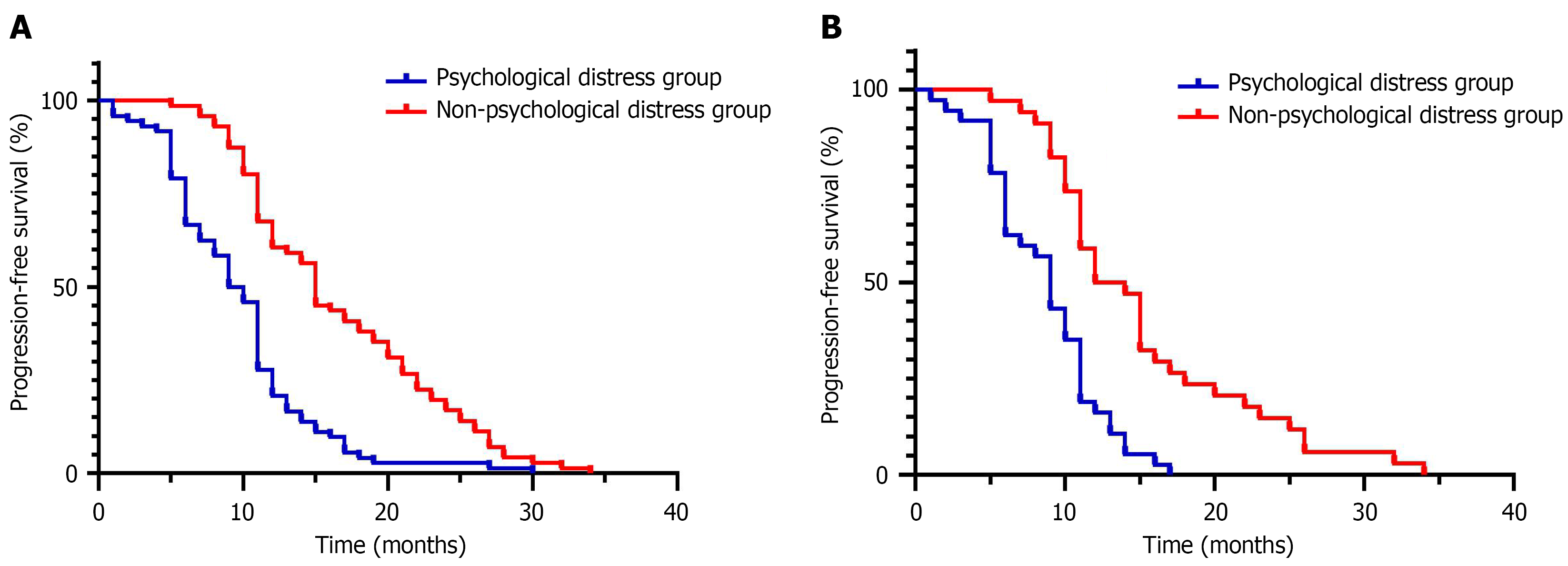
Figure 4 Progression-free survival of the patient receiving treatment.
A: Targeted comprehensive therapy; B: Targeted combination chemotherapy.
- Citation: Chen WJ, Hu XY, Yao SB, Chen MX, Bi ZR, Cheng HD. Psychological distress in advanced non-small cell lung cancer: Impact on targeted therapy and quality of life. World J Psychiatry 2026; 16(10): 122462
- URL: https://www.wjgnet.com/2220-3206/full/v16/i10/122462.htm
- DOI: https://dx.doi.org/10.5498/wjp.122462