
















Copyright: ©Author(s) 2026.
World J Psychiatry. Oct 19, 2026; 16(10): 122230
Published online Oct 19, 2026. doi: 10.5498/wjp.122230
Published online Oct 19, 2026. doi: 10.5498/wjp.122230
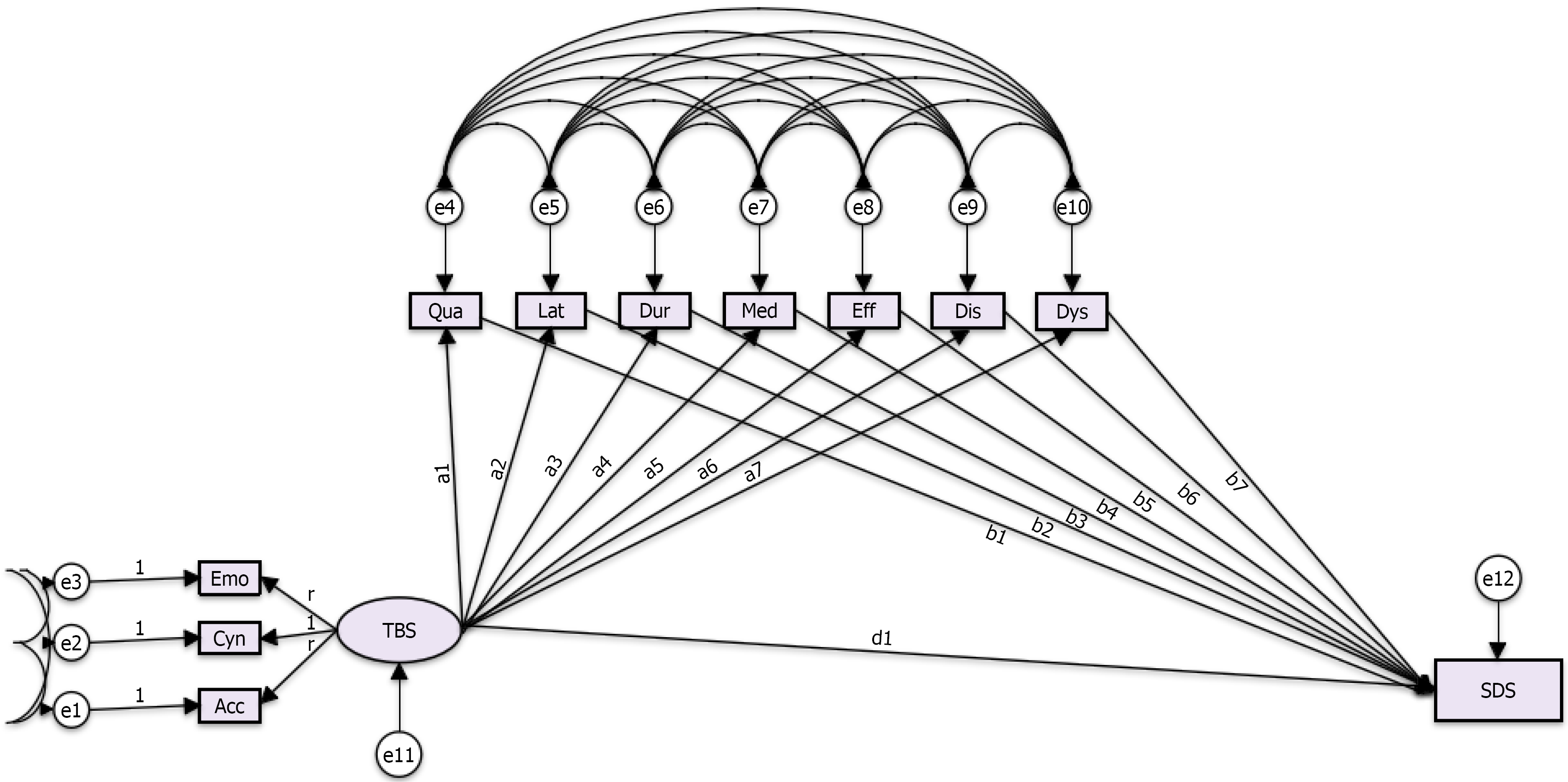
Figure 1 Structural equation model showing the unconstrained pathways between job burnout, sleep quality, and depressive symptoms.
This model examines the direct and indirect effects of total burnout score (TBS) on the Self-Rating Depression Scale, with seven sleep quality variables serving as mediators. The TBS consists of three components: Emotional exhaustion, cynicism, and reduced personal accomplishment. The seven mediators are derived from the Pittsburgh Sleep Quality Index and include: Subjective sleep quality), sleep latency, sleep duration, use of sleep medication, sleep efficiency, sleep disturbance, and daytime dysfunction. Paths a1-a7 represent the associations between job burnout and each sleep component. Paths b1-b7 represent the associations between each sleep component and depressive symptoms. Path d1 represents the direct effect of job burnout on depressive symptoms, controlling for the mediating effects of sleep problems. TBS: Total burnout score; SDS: Self-Rating Depression Scale; Emo: Emotional exhaustion; Cyn: Cynicism; Acc: Reduced personal accomplishment; Qua: Subjective sleep quality; Lat: Sleep latency; Dur: Sleep duration; Med: Use of sleep medication; Eff: Sleep efficiency; Dis: Sleep disturbance; Dys: Daytime dysfunction.
- Citation: Nan L, Wang Y, Wareesawetsuwan N, Sanan M, Zhao XF, Yang L, Zhu WL. Association between job burnout and depressive symptoms in rural primary healthcare workers: The indirect role of sleep quality. World J Psychiatry 2026; 16(10): 122230
- URL: https://www.wjgnet.com/2220-3206/full/v16/i10/122230.htm
- DOI: https://dx.doi.org/10.5498/wjp.122230