
















©The Author(s) 2025.
World J Exp Med. Dec 20, 2025; 15(4): 108221
Published online Dec 20, 2025. doi: 10.5493/wjem.v15.i4.108221
Published online Dec 20, 2025. doi: 10.5493/wjem.v15.i4.108221
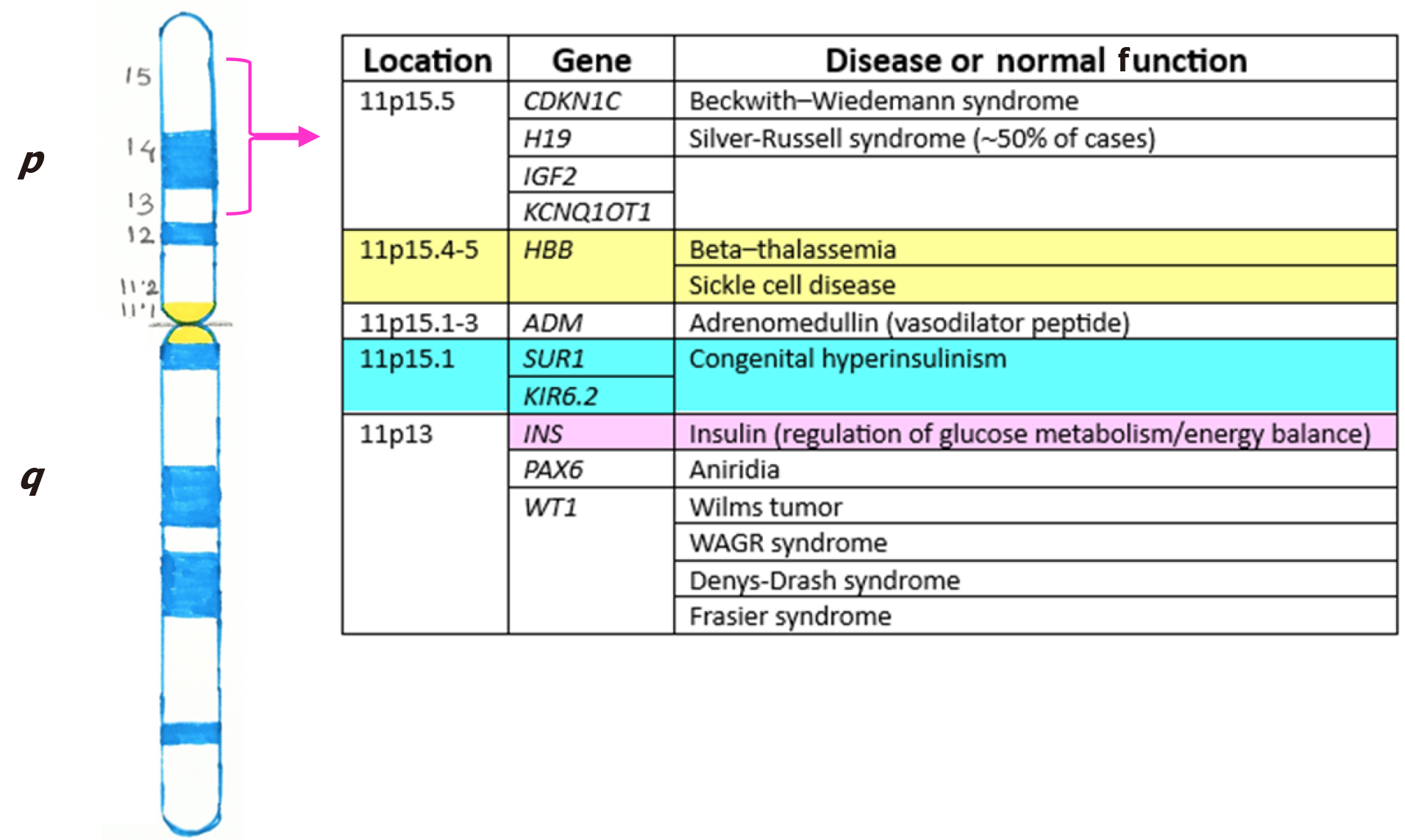
Figure 1 Schematic diagram of chromosome 11 and its short (p) arm-linked certain diseases.
Aniridia: A pan-ocular disorder with partial or complete deficiency of the iris; Beckwith-Wiedemann syndrome: A congenital overgrowth disorder; Beta-hemoglobinopathies (defects in β-globin chains): Beta-thalassemia and Sickle cell disease; Congenital hyperinsulinism: Characterized by excess insulin secretion and profound hypoglycemia; Denys-Drash syndrome: A disorder with congenital nephropathy/diffuse glomerulosclerosis, Wilms tumor, gonadal dysgenesis and cryptorchidism (among male patients); Frasier syndrome: Associated with nephropathy/focal segmental glomerulosclerosis, and gonadal abnormalities that commonly become cancerous/gonadoblastoma (among male patients); Silver-Russell syndrome: Clinical features include growth restriction, body asymmetry, and relative macrocephaly (etiologies are not related to chromosome 11 in about 50% of cases); WAGR: Wilms tumor-aniridia-genitourinary abnormalities-mental retardation.
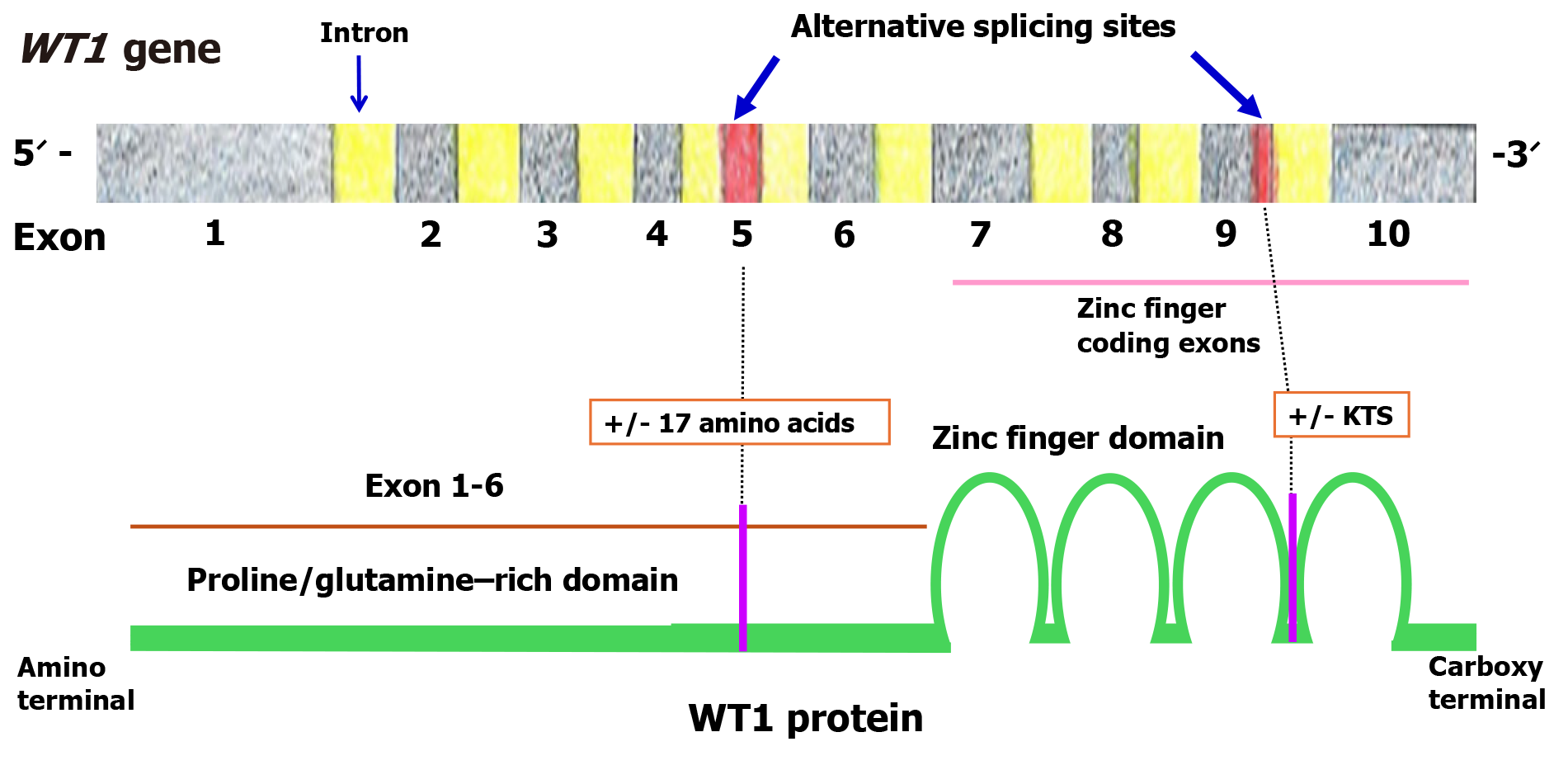
Figure 2 Schematic diagram of the Wilms tumor 1 gene and its encoded protein.
The Wilms tumor 1 (WT1) gene has ten exons: Exons 1-6 encode the transcriptional regulation region that is rich in proline-glutamine (N-terminus side), and exons 7-10 encode the zinc finger region, which is the DNA-binding domain (C-terminus side). Based on the translation initiation sites and post-transcriptional processes such as alternative splicing and RNA modification, more than 30 WT1 isoforms can originate, for example, an insertion of 17 amino acids in exon 5, and an insertion of a tripeptide lysine-threonine-serine (KTS) between zinc fingers 3 and 4. Of note, the isoform without KTS can frequently bind to DNA to function as a transcriptional regulator. WT1 protein has a molecular weight of about 50 kDa, and it is associated with the development of several key body structures, e.g., the heart, blood vessels, lung, kidney, gonads, spleen, retina, and the nervous system. In adult humans, WT1 is overexpressed in podocytes. WT1 transcriptionally controls various genes, such as fibroblast growth factor genes, Pax2, SRY (crucial for the development of seminiferous tubules and testes), and NR5A1/SF1 (for adrenal-gonadal primordium survival). Interestingly, WT1 can control its own expression. In addition, by binding to the DNA sequence 5’-GCGGGGGCG-3’, WT1 can affect the transcription of many other genes, including epidermal growth factor, insulin-like growth factors and their receptors, platelet-derived growth factor A, transforming growth factor-β, and macrophage colony-stimulating factor. Similarly, WT1 is involved in the functioning of a number of signaling pathways, such as Wnt/β-catenin, NOTCH (the term originated from Drosophila melanogaster with notched wings), JAK/STAT (Janus kinase/signal transducer and activator of transcription), and retinoic acid signaling pathways[41-43]. KTS: Single-letter code of amino acids representation - lysine (K), threonine (T), and serine (S).
- Citation: Burke A, Sanyaolu A, Ray A. Bacteria in neoplastic diseases: A brief note on Wilms tumor. World J Exp Med 2025; 15(4): 108221
- URL: https://www.wjgnet.com/2220-315x/full/v15/i4/108221.htm
- DOI: https://dx.doi.org/10.5493/wjem.v15.i4.108221