
















Copyright: ©Author(s) 2026.
World J Clin Pediatr. Jun 9, 2026; 15(2): 118424
Published online Jun 9, 2026. doi: 10.5409/wjcp.v15.i2.118424
Published online Jun 9, 2026. doi: 10.5409/wjcp.v15.i2.118424
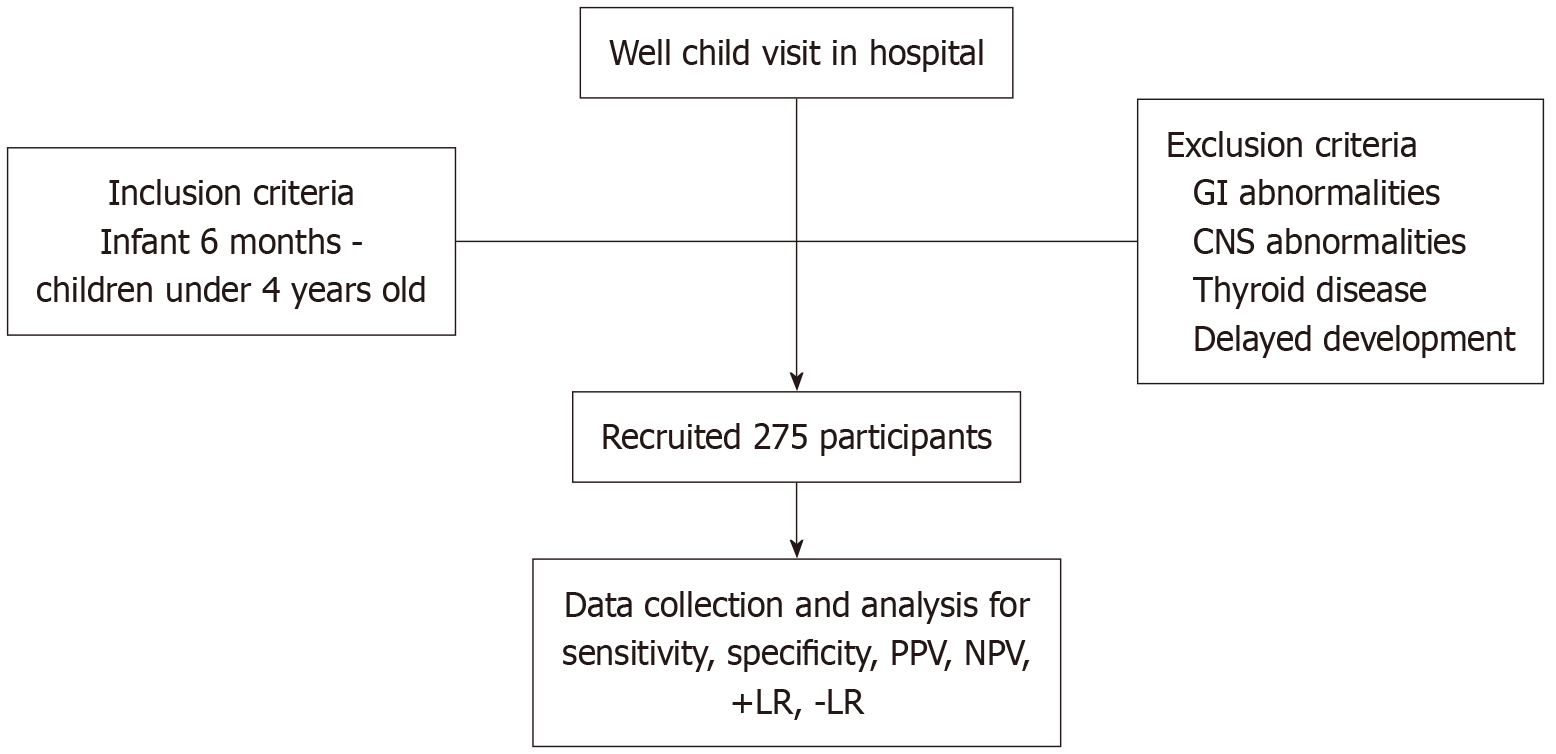
Figure 1 Flowchart of study enrollment.
PPV: Positive predictive value; NPV: Negative predictive value; LR: Likelihood-ratio; CNS: Central nervous system; GI: Gastrointestinal.
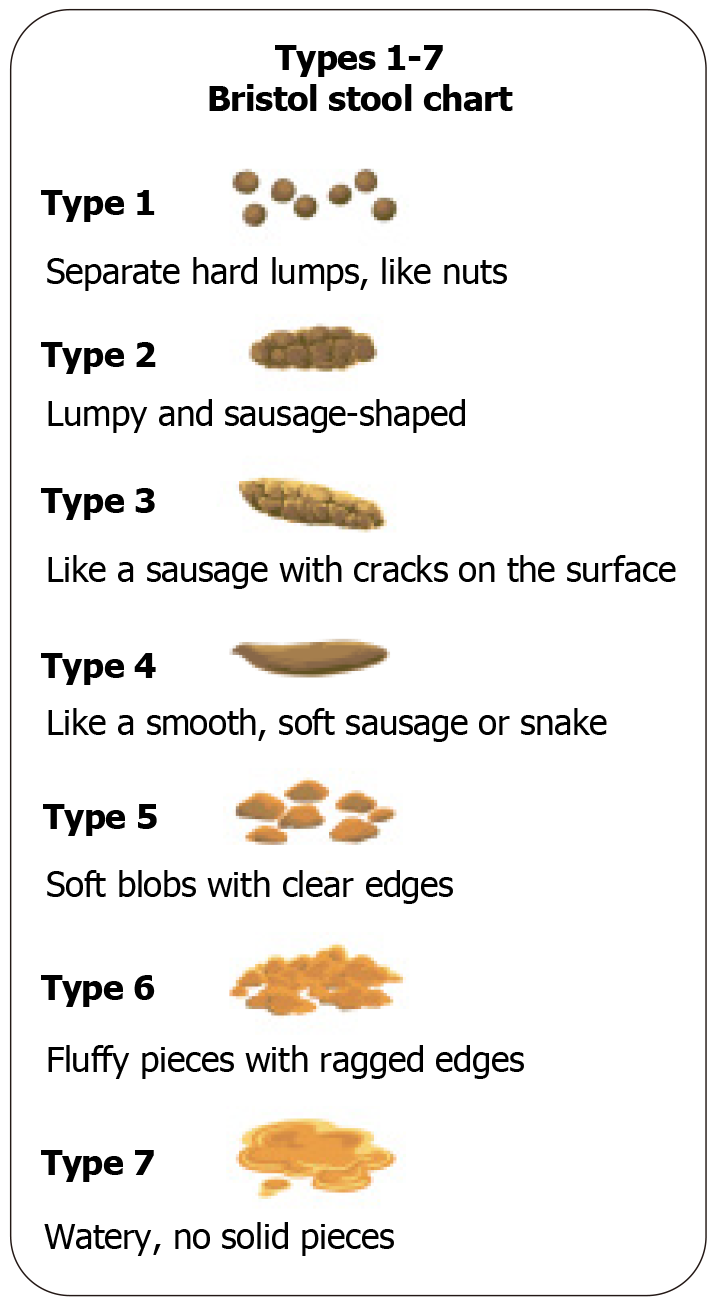
Figure 2 Bristol stool chart.
Type 1 separate hard lumps, like nuts, type 2 sausage-shaped but lumpy, type 3 like a sausage but with cracks on the surface, type 4 like a sausage or snake, smooth and soft, type 5 soft blobs with clear-cut edges, type 6 fluffy pieces with ragged edges, a mushy stool, type 7 watery, no solid pieces.
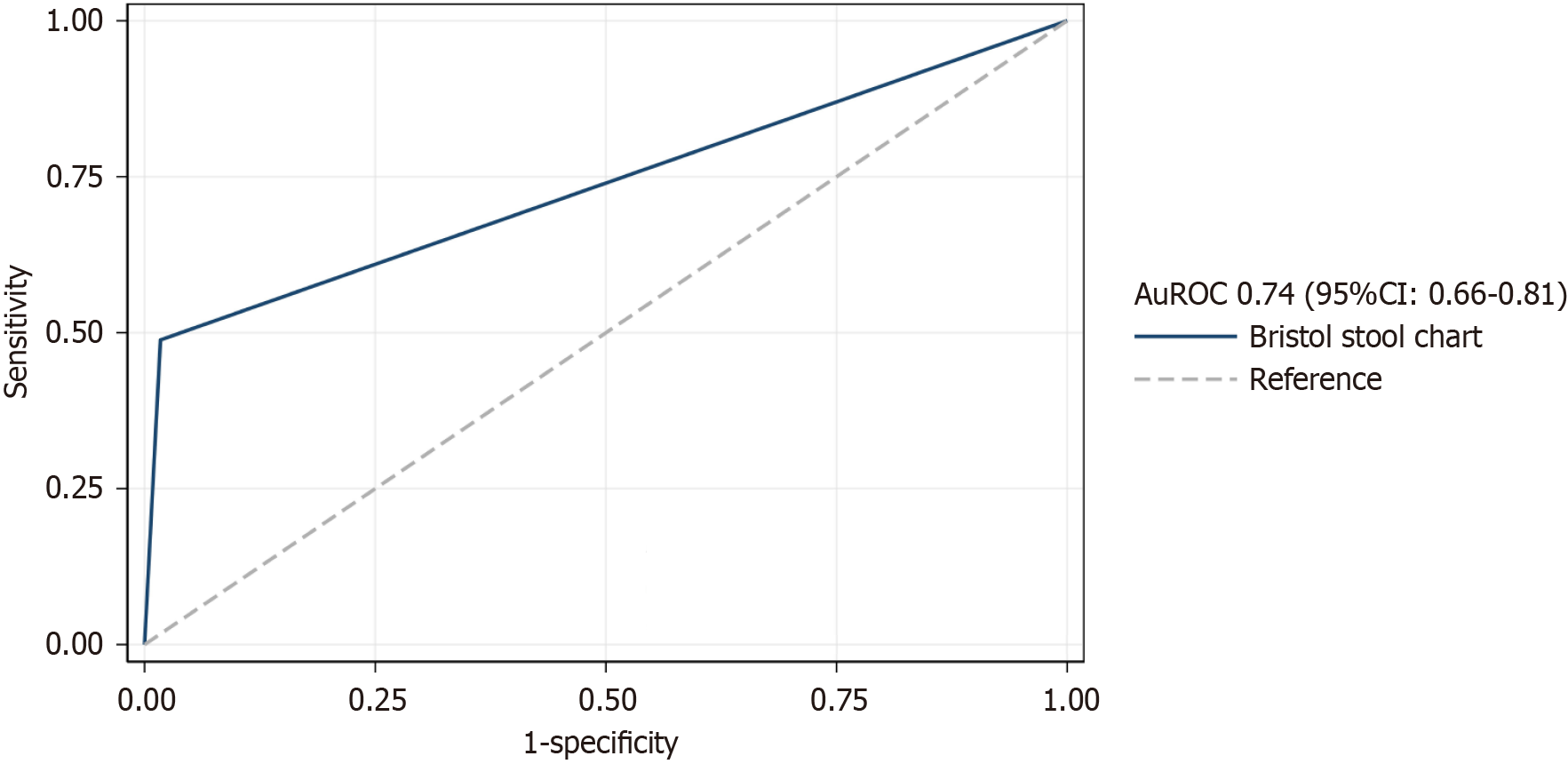
Figure 3 Diagnosis of functional constipation using the Rome IV criteria as the reference standard, with calculation of the area under the curve for Bristol stool chart.
AuROC: Area under the receiver operating characteristic; CI: Confidence interval.
- Citation: Ounboontham K, Ngoenmak T. Evaluating the role of the Bristol stool chart in diagnosing functional constipation in pediatric populations. World J Clin Pediatr 2026; 15(2): 118424
- URL: https://www.wjgnet.com/2219-2808/full/v15/i2/118424.htm
- DOI: https://dx.doi.org/10.5409/wjcp.v15.i2.118424