
















©Author(s) (or their employer(s)) 2026.
World J Clin Pediatr. Mar 9, 2026; 15(1): 111388
Published online Mar 9, 2026. doi: 10.5409/wjcp.v15.i1.111388
Published online Mar 9, 2026. doi: 10.5409/wjcp.v15.i1.111388
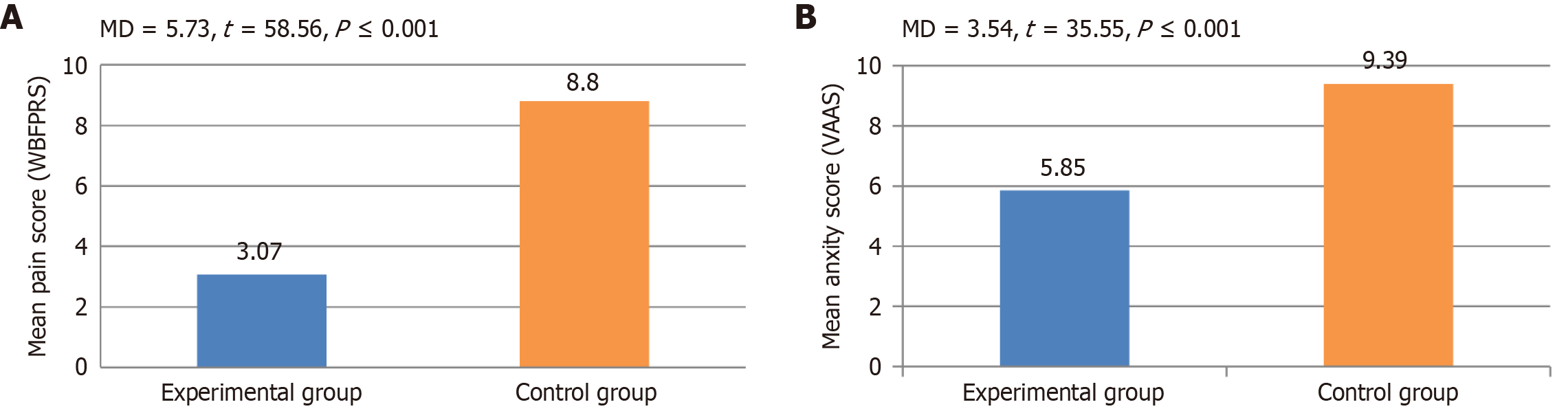
Figure 1 Comparison between post-test pain scores and post-test anxiety scores between groups.
A: Comparison between post-test pain scores. It illustrates the distribution of post-test pain scores between the experimental and control groups, as measured by the Wong-Baker FACES Pain Rating Scale. The graph highlights significantly reduced pain scores in the experimental group that received multimodal distraction, compared to consistently high pain scores in the control group; B: Comparison of post-test anxiety scores between groups. It shows the comparative analysis of post-test anxiety scores between the experimental and control groups, using the Visual Analogue Anxiety Scale. The results depict markedly lower anxiety levels in the experimental group following the distraction intervention, confirming the intervention’s effectiveness in reducing procedural anxiety. MD: Mean difference; VAAS: Visual Analogue Anxiety Scale; WBFPRS: Wong-Baker FACES Pain Rating Scale.
- Citation: Wilson LP, Khan Z, Patil PN, Konnur RG, Sriram N. Multimodal distraction reduces intravenous cannulation pain and anxiety in preschoolers: Controlled prospective study. World J Clin Pediatr 2026; 15(1): 111388
- URL: https://www.wjgnet.com/2219-2808/full/v15/i1/111388.htm
- DOI: https://dx.doi.org/10.5409/wjcp.v15.i1.111388