
















Copyright: ©Author(s) 2026.
World J Orthop. Mar 18, 2026; 17(3): 113798
Published online Mar 18, 2026. doi: 10.5312/wjo.v17.i3.113798
Published online Mar 18, 2026. doi: 10.5312/wjo.v17.i3.113798
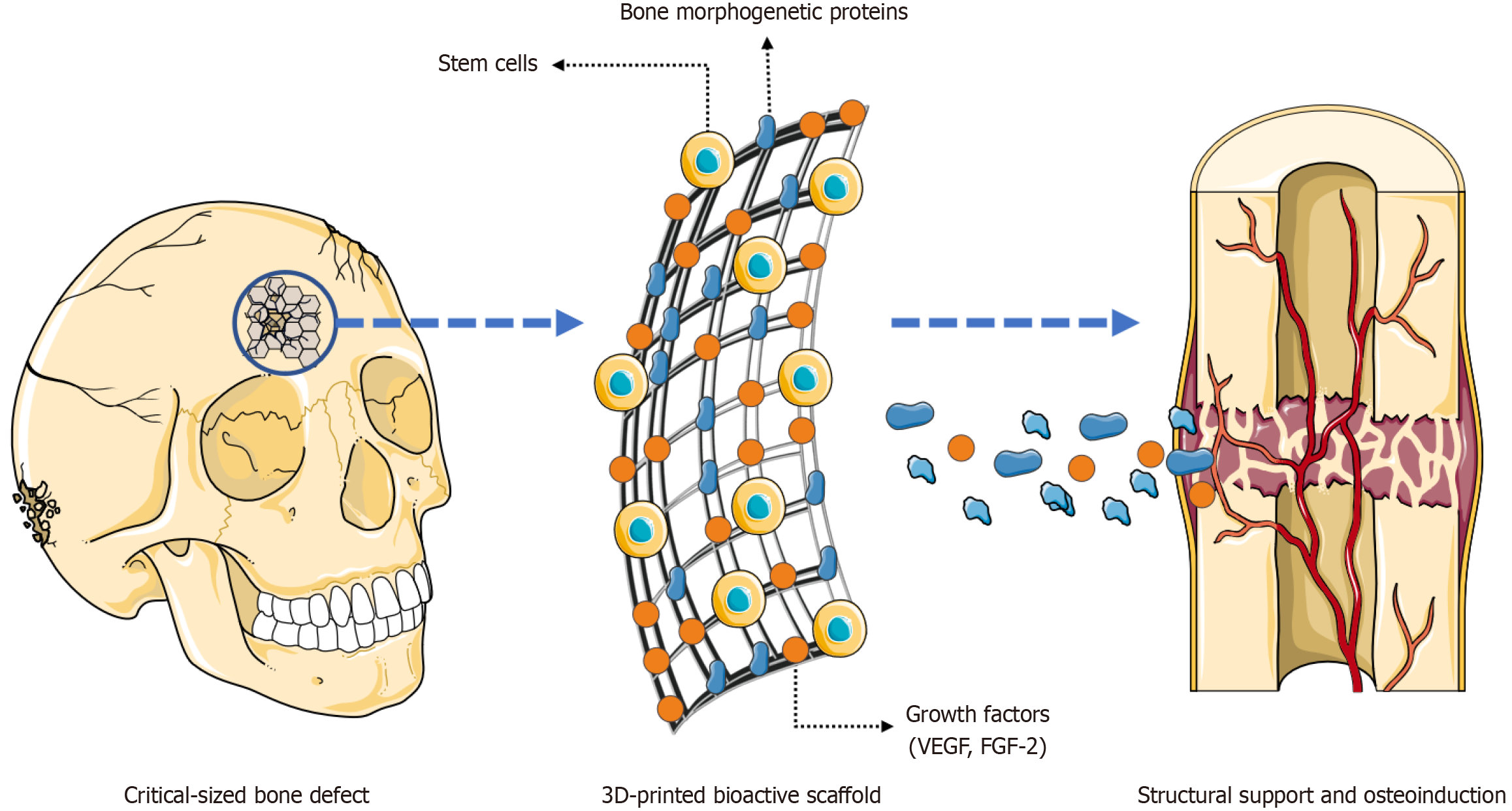
Figure 1 Conceptual illustration of bioactive scaffold-mediated repair of critical-sized bone defects.
A critical-sized cranial bone defect represents a clinically significant loss of bone structure that cannot heal spontaneously. To address this, a three-dimensional-printed bioactive scaffold (middle) is designed to fill the defect and serves as a temporary structural framework. The scaffold can be seeded with stem cells and loaded with osteogenic and angiogenic factors, such as bone morphogenetic proteins and growth factors, which are gradually released into the defect site. These components synergistically promote cell recruitment, vascularization, and new bone formation. Ultimately, the combined effect of mechanical support and osteoinductive cues facilitates the regeneration of functional bone tissue, restoring both structure and biomechanical integrity. VEGF: Vascular endothelial growth factor; FGF-2: Fibroblast growth factor-2; 3D: Three-dimensional.
- Citation: Ruan YH, Wang P, Tang XD, Zhang Q, Yan P, Tian YG, Li CJ, Fu WP, Wang RB, Zhang CJ. Advances in bone tissue engineering and three-dimensional printing: Current strategies and future perspectives in orthopaedics. World J Orthop 2026; 17(3): 113798
- URL: https://www.wjgnet.com/2218-5836/full/v17/i3/113798.htm
- DOI: https://dx.doi.org/10.5312/wjo.v17.i3.113798