
















©The Author(s) 2026.
World J Orthop. Feb 18, 2026; 17(2): 113405
Published online Feb 18, 2026. doi: 10.5312/wjo.v17.i2.113405
Published online Feb 18, 2026. doi: 10.5312/wjo.v17.i2.113405
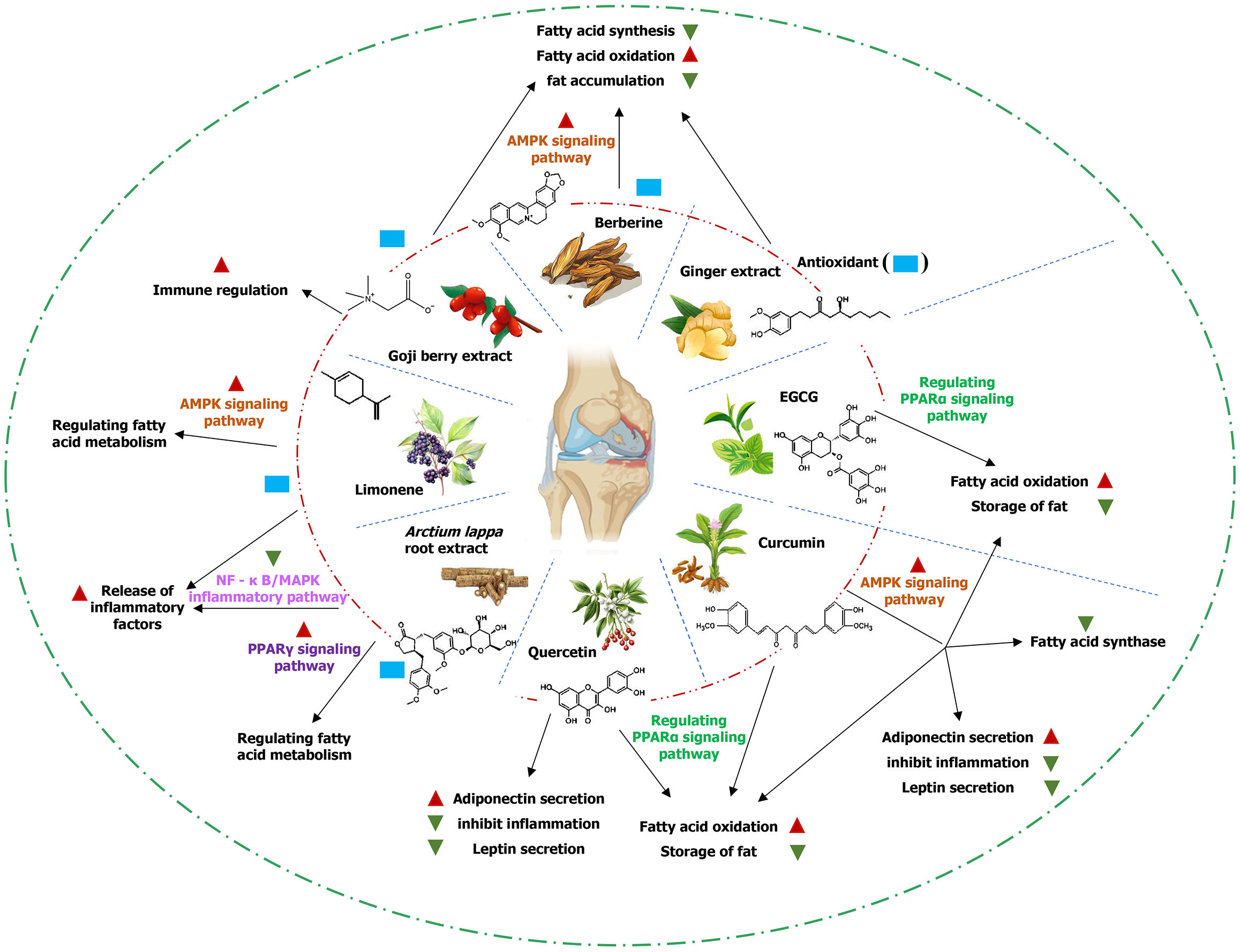
Figure 1 Comprehensive signaling network diagram illustrating how plant-derived bioactive compounds regulate osteoarthritis through lipid metabolism-related pathways.
Representative phytochemicals, including curcumin, green tea polyphenols, quercetin, and other natural products, act on multiple molecular targets to modulate key signaling cascades such as the AMP-activated protein kinase pathway, peroxisome proliferator-activated receptor-α/peroxisome proliferator-activated receptor-γ pathways, and the nuclear factor kappa-light-chain-enhancer of activated B cells/mitogen-activated protein kinase inflammatory pathway. By regulating these pathways, phytochemicals exert anti-inflammatory, antioxidative, and chondroprotective effects that contribute to slowing osteoarthritis progression. In the diagram, red triangles indicate promotion or activation of signaling events, green triangles represent inhibition, and blue rectangles denote antioxidative effects, thereby providing a visual summary of the integrated lipid metabolism-related regulatory mechanisms. AMPK: AMP-activated protein kinase; NF-κB: Nuclear factor kappa-light-chain-enhancer of activated B cells; MAPK: Mitogen-activated protein kinase; PPAR: Peroxisome proliferator-activated receptor; EGCG: Epigallocatechin gallate.
- Citation: Zhang T, Liu JL, Wang W, Ren K, Liu XM, Cao K, Li Z, Cheng XY, Zhang XY, Xu WS. Lipid metabolism disorders and osteoarthritis progression: Potential intervention with plant active ingredients. World J Orthop 2026; 17(2): 113405
- URL: https://www.wjgnet.com/2218-5836/full/v17/i2/113405.htm
- DOI: https://dx.doi.org/10.5312/wjo.v17.i2.113405