
















©The Author(s) 2026.
World J Orthop. Jan 18, 2026; 17(1): 109955
Published online Jan 18, 2026. doi: 10.5312/wjo.v17.i1.109955
Published online Jan 18, 2026. doi: 10.5312/wjo.v17.i1.109955
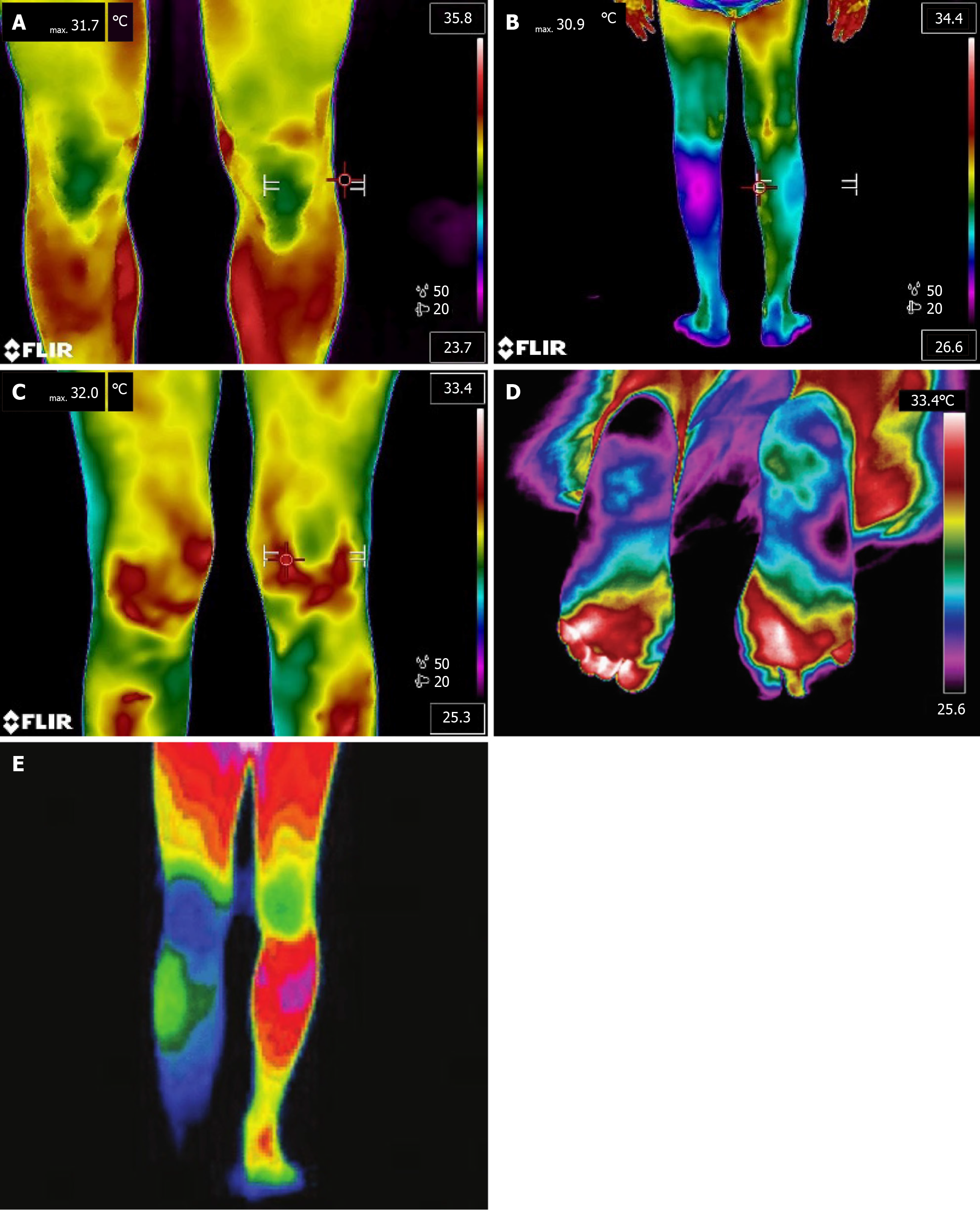
Figure 1 Representative images of the utilization of infrared thermography in various musculoskeletal pathologies are depicted.
A: Infrared imaging of bilateral knees with localized hyper-radiation in the superolateral region of the left patella suggestive of quadriceps tendinopathy; B: Infrared imaging of bilateral lower limbs showing hyporadiant area on the lateral side of the thigh and posterolateral side of the right leg suggestive of lumbar radiculopathy; C: Infrared imaging of left knee showing hyper-radiant area embracing the inferior aspect of the patella with localized area of hyper-radiation on the medial aspect of the knee suggestive of knee synovitis (horseshoe sign) with overloading of medial collateral ligament; D: Infrared imaging of bilateral feet showing the breaking of the transverse lines of the feet distal thermal gradient with digital anisothermy, and the average temperature of feet sole > 33 °C suggestive of diabetic neuropathy; E: Infrared imaging of the right lower limb showing the area of diffuse hyporadiation throughout the leg and especially the foot suggestive of chronic complex regional pain syndrome.
- Citation: Jeyaraman M, Jeyaraman N, Nallakumarasamy A, Roy M, de Souza Moraes TM, da Fonseca LF. Science of heat mapping: Thermography in musculoskeletal disorders. World J Orthop 2026; 17(1): 109955
- URL: https://www.wjgnet.com/2218-5836/full/v17/i1/109955.htm
- DOI: https://dx.doi.org/10.5312/wjo.v17.i1.109955