
















Copyright: ©Author(s) 2026.
World J Clin Oncol. Aug 24, 2026; 17(8): 123375
Published online Aug 24, 2026. doi: 10.5306/wjco.123375
Published online Aug 24, 2026. doi: 10.5306/wjco.123375
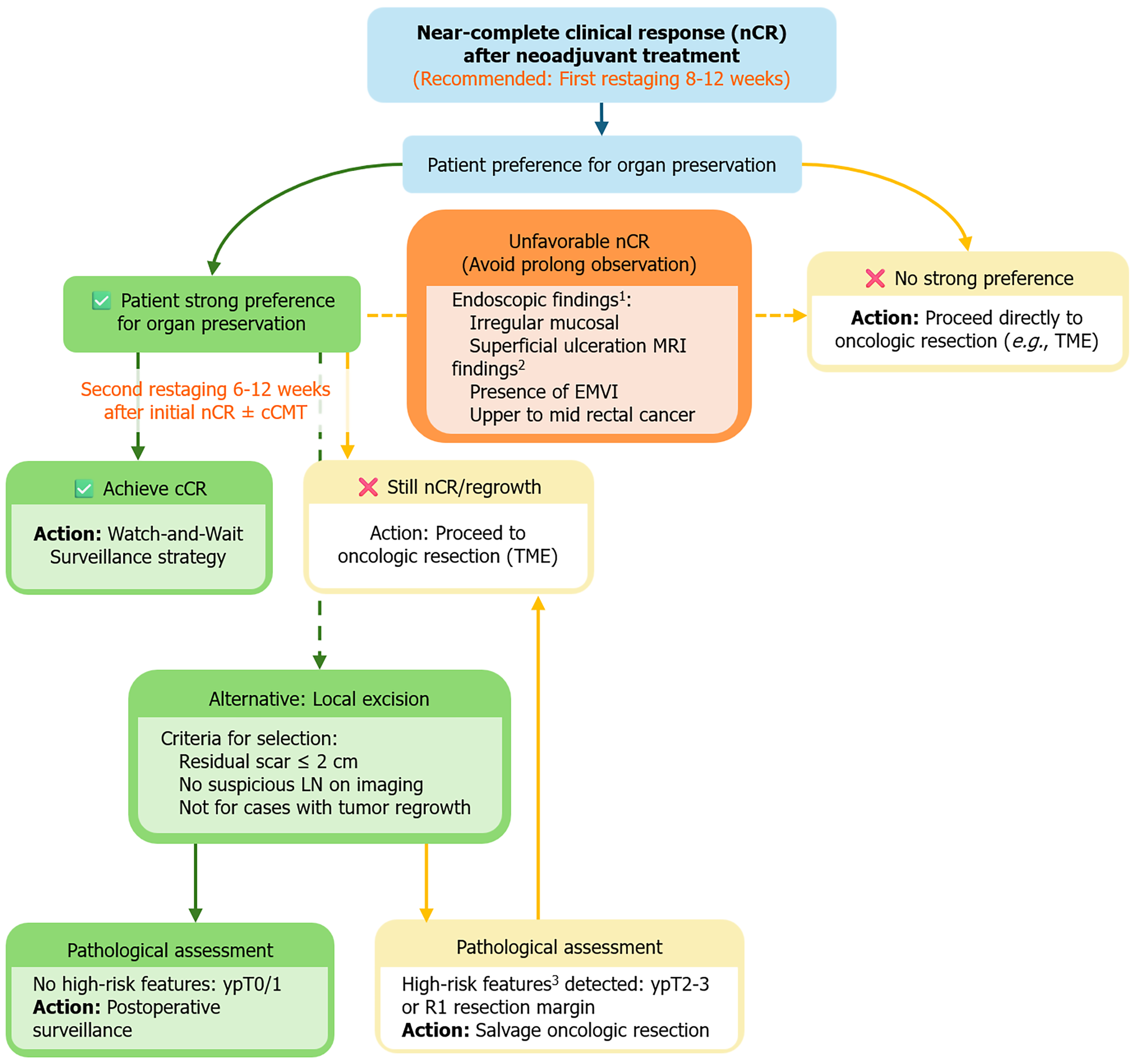
Figure 1 Proposed management algorithm for near-complete clinical response after neoadjuvant therapy in rectal cancer.
Proposed management algorithm for patients with near-complete clinical response (nCR) after neoadjuvant therapy. Initial assessment is recommended at 8-12 weeks. Management is guided by patient preference and by clinical, endoscopic, and magnetic resonance imaging features distinguishing favorable from unfavorable nCR. Selected patients may undergo interval reassessment (6-12 weeks) to allow conversion to complete clinical response and subsequent watch-and-wait approach. Persistent nCR, local regrowth, or unfavorable features warrant oncologic resection (e.g., total mesorectal excision). Local excision may be considered in selected cases. 1Endoscopic features adapted from Williams et al[18]. 2Magnetic resonance imaging-based predictors adapted from Yilmaz et al[22]. 3High-risk features include lymphovascular invasion, perineural invasion, extramural venous invasion, positive resection margin, tumor budding, and poor differentiation[42]. nCR: Near-complete clinical response; cCMT: Consolidation chemotherapy; EMVI: Extramural venous invasion; TME: Total mesorectal excision; cCR: Complete clinical response; LN: Lymph node.
- Citation: Tantinam T, Bhatanaprabhabhan K, Ngamsirimas B, Sutharat P, Thiengthiantham R, Santrakul N, Sanmee S, Supatrakul E, Chandrachamnong P, Buakhrun S. Near-complete clinical response after neoadjuvant therapy in rectal cancer: Decision-making between organ preservation and surgery. World J Clin Oncol 2026; 17(8): 123375
- URL: https://www.wjgnet.com/2218-4333/full/v17/i8/123375.htm
- DOI: https://dx.doi.org/10.5306/wjco.123375