
















Copyright: ©Author(s) 2026.
World J Clin Oncol. Jul 24, 2026; 17(7): 123540
Published online Jul 24, 2026. doi: 10.5306/wjco.123540
Published online Jul 24, 2026. doi: 10.5306/wjco.123540
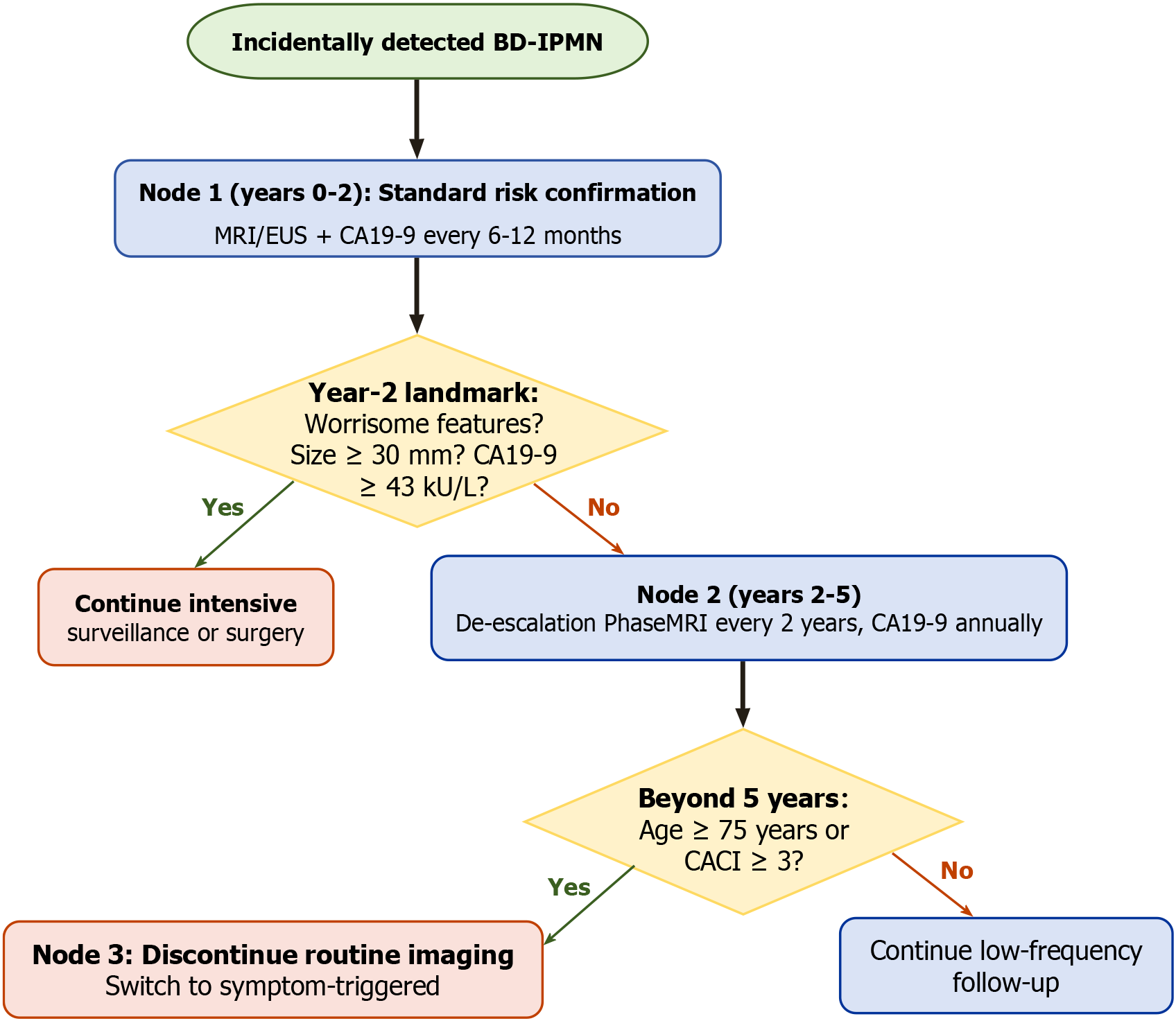
Figure 1 Proposed dynamic surveillance de-escalation framework for branch duct intraductal papillary mucinous neoplasms.
The framework is organized around three decision nodes based on time, risk, and patient status: (1) Years 0-2: Intensive monitoring to detect high-risk lesions; (2) At 2 years: De-escalation for stable cysts (< 30 mm) with a carbohydrate antigen 19-9 (CA19-9) level < 43 kU/L; and (3) Years 2-5 and beyond: Gradual transition to chronic disease-style follow-up, with discontinuation of routine imaging considered for patients aged ≥ 75 years or those with a Charlson comorbidity index (CCI) ≥ 3. BD-IPMN: Branch duct intraductal papillary mucinous neoplasms; MRI/EUS: Magnetic resonance imaging/endoscopic ultrasound.
- Citation: Xu JJ, Ni CX. Letter to the Editor: Beyond cyst size - a time-risk-state framework for dynamic surveillance de-escalation of branch duct intraductal papillary mucinous neoplasms. World J Clin Oncol 2026; 17(7): 123540
- URL: https://www.wjgnet.com/2218-4333/full/v17/i7/123540.htm
- DOI: https://dx.doi.org/10.5306/wjco.123540