
















Copyright: ©Author(s) 2026.
World J Gastrointest Pathophysiol. Sep 22, 2026; 17(3): 121571
Published online Sep 22, 2026. doi: 10.4291/wjgp.121571
Published online Sep 22, 2026. doi: 10.4291/wjgp.121571
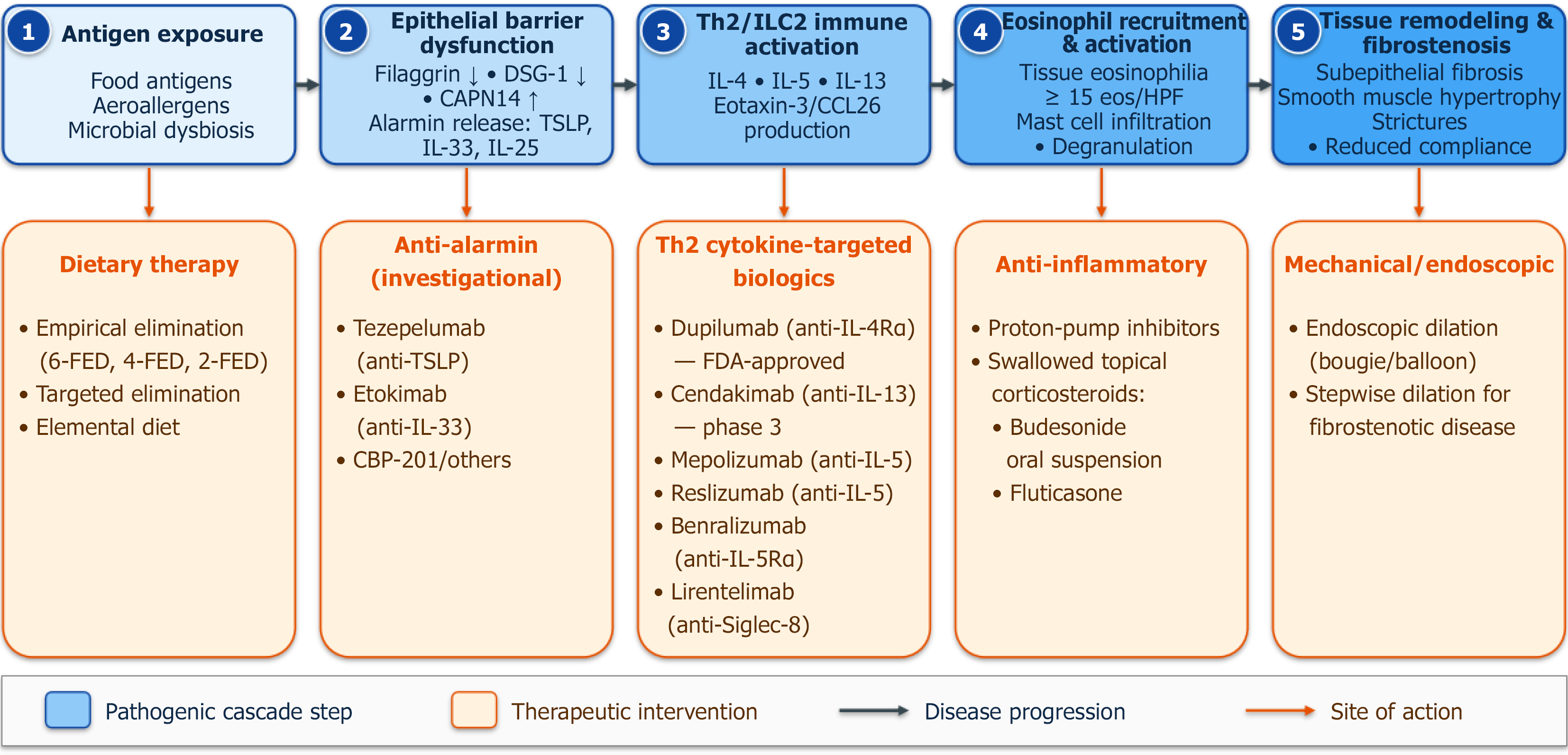
Figure 1 Pathogenesis of eosinophilic esophagitis with current and investigational therapeutic targets.
The horizontal cascade depicts antigen exposure, epithelial barrier dysfunction with alarmin release [thymic stromal lymphopoietin, interleukin (IL)-33, IL-25], Th2/type 2 innate lymphoid cells immune activation with IL-4, IL-5, and IL-13 production, eosinophil recruitment and activation, and tissue remodeling/fibrostenosis. The therapeutic class intervening at each step is shown below the corresponding cascade step, including dietary elimination, anti-alarmin biologics (tezepelumab), Th2 cytokine-targeted biologics (dupilumab, cendakimab, mepolizumab, reslizumab, benralizumab, lirentelimab), topical corticosteroids and proton-pump inhibitors, and endoscopic dilation. DSG-1: Desmoglein-1; CAPN14: Calpain 14; TSLP: Thymic stromal lymphopoietin; IL: Interleukin; ILC2: Type 2 innate lymphoid cells; CCL26: Chemokine (C-C motif) ligand 26; eos: Eosinophil; HPF: High-power field; FED: Food elimination diet; FDA: Food and Drug Administration.
- Citation: Sharma A, Tiwari A, Deshpande V, Mahesh VA, Kumar H, Shah A, Ray I, Sisodia R, Sonaiya S, Alsakarneh S, Ali H, Dahiya DS. Advancing the understanding of eosinophilic esophagitis: From pathogenesis to novel therapies. World J Gastrointest Pathophysiol 2026; 17(3): 121571
- URL: https://www.wjgnet.com/2150-5330/full/v17/i3/121571.htm
- DOI: https://dx.doi.org/10.4291/wjgp.121571