
















©The Author(s) 2017.
World J Radiol. Nov 28, 2017; 9(11): 405-412
Published online Nov 28, 2017. doi: 10.4329/wjr.v9.i11.405
Published online Nov 28, 2017. doi: 10.4329/wjr.v9.i11.405
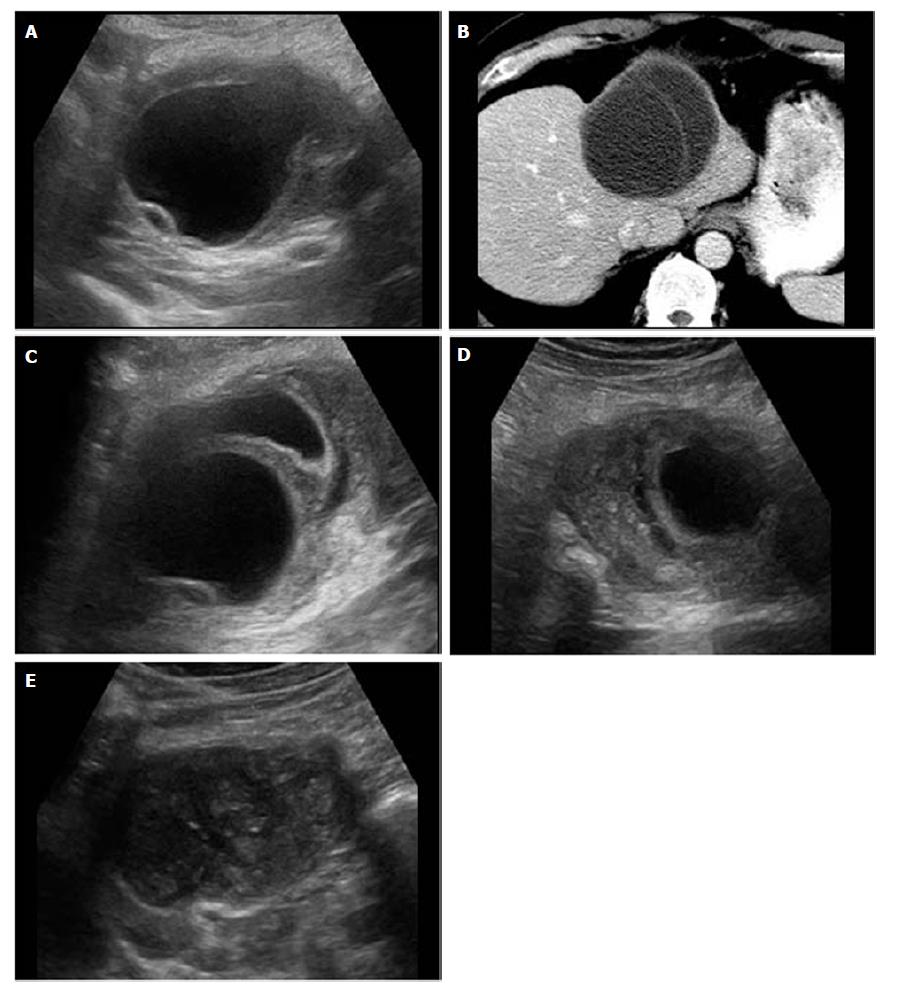
Figure 1 Type 1 hydatid cyst follow-up examinations conducted one to 1-18 mo after the procedure.
A: US image prior to the procedure; B: CT image prior to the procedure; C: US image 6 mo after the procedure, wall thickness and irregularity of the cyst is seemed to be increased; D: US image 12 mo after the procedure, cyst dimension and tension is seemed to be markedly decreased and the contents can could be seen to have solidified; E: US image 18 mo after percutaneous drainage. Cyst can could be seen to have completely collapsed and solidified in the image and a pseudotumor image is formed. US: Ultrasound; CT: Computerized tomography.
- Citation: Turan HG, Özdemir M, Acu R, Küçükay F, Özdemir FAE, Hekimoğlu B, Yıldırım UM. Comparison of seldinger and trocar techniques in the percutaneous treatment of hydatid cysts. World J Radiol 2017; 9(11): 405-412
- URL: https://www.wjgnet.com/1949-8470/full/v9/i11/405.htm
- DOI: https://dx.doi.org/10.4329/wjr.v9.i11.405