
















Copyright: ©Author(s) 2026.
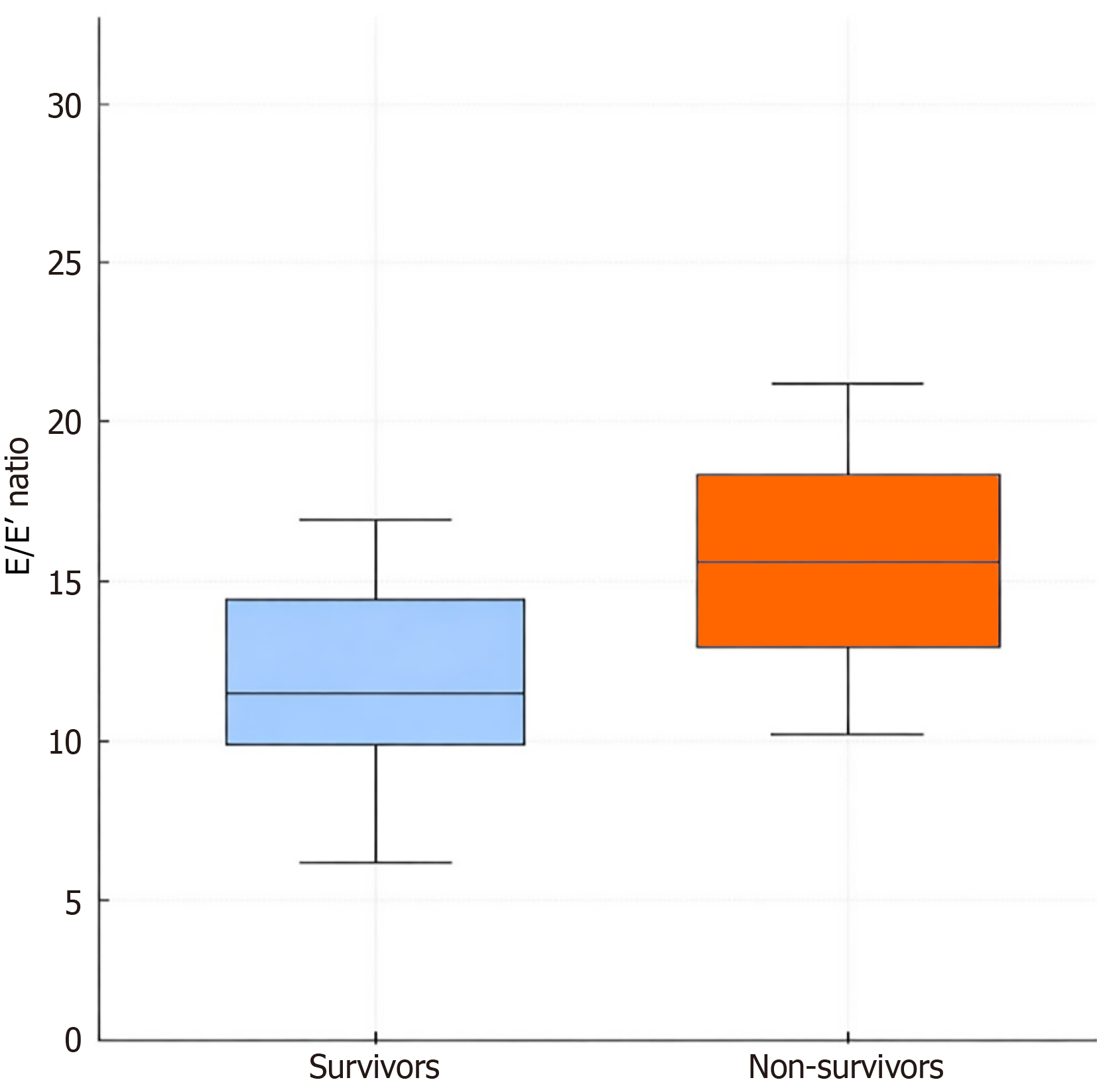
Figure 1 Comparison of ratio of early mitral inflow velocity to early diastolic mitral annular velocity ratio between survivors and non-survivors.
E/E’ is ratio of early mitral inflow velocity to early diastolic mitral annular velocity. The authors used ChatGPT (version GPT-5.1, OpenAI, San Francisco, CA, United States) to assist in generating the graphical representations of the study data included in Figure 1. All AI-assisted graphical content was reviewed, verified, and approved by the authors, who take full responsibility for the accuracy, originality, and integrity of the final figures.
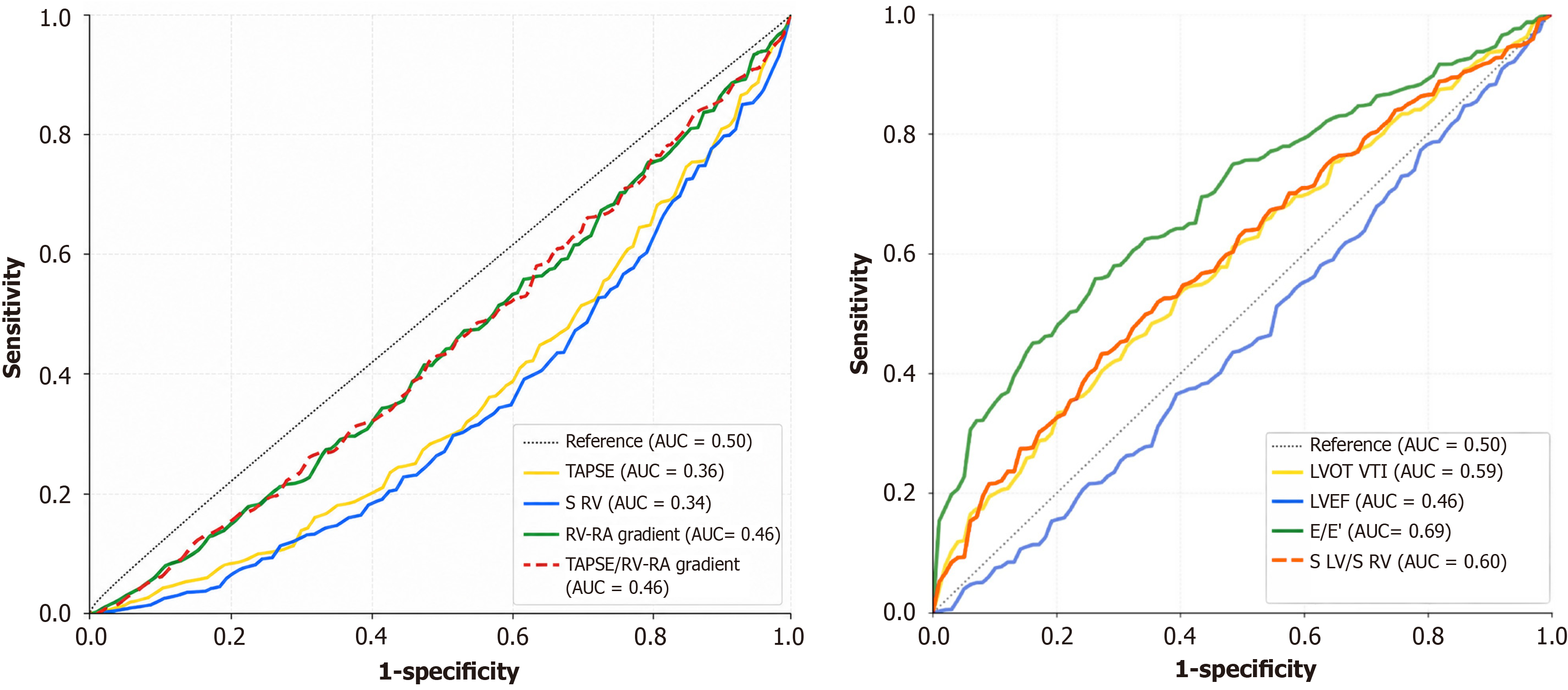
Figure 2 Exploratory receiver-operating characteristic curves in relation to in-hospital mortality.
A: Exploratory receiver-operating characteristic (ROC) curves for right ventricular parameters in relation to in-hospital mortality; B: Exploratory ROC curves for left ventricular parameters and systolic velocity at the lateral mitral annulus/systolic velocity at the lateral tricuspid annulus ratio in relation to in-hospital mortality. E/E’ is ratio of early mitral inflow velocity to early diastolic mitral annular velocity. AUC: Area under the curve; TAPSE: Tricuspid annular plane systolic excursion; S RV: Right ventricular systolic annular velocity; RV-RA gradient: Right ventricle-right atrium pressure gradient; TAPSE/RV-RA gradient: Ratio of tricuspid annular plane systolic excursion to right ventricle-right atrium pressure gradient; LVOT: Left ventricular outflow tract; VTI: Velocity-time integral; LVEF: Left ventricular ejection fraction; S LV/S RV: Ratio of left ventricular to right ventricular systolic annular velocity. The authors used ChatGPT (version GPT-5.1, OpenAI, San Francisco, CA, United States) to assist in generating the graphical representations of the study data included in Figure 2. All AI-assisted graphical content was reviewed, verified, and approved by the authors, who take full responsibility for the accuracy, originality, and integrity of the final figures.
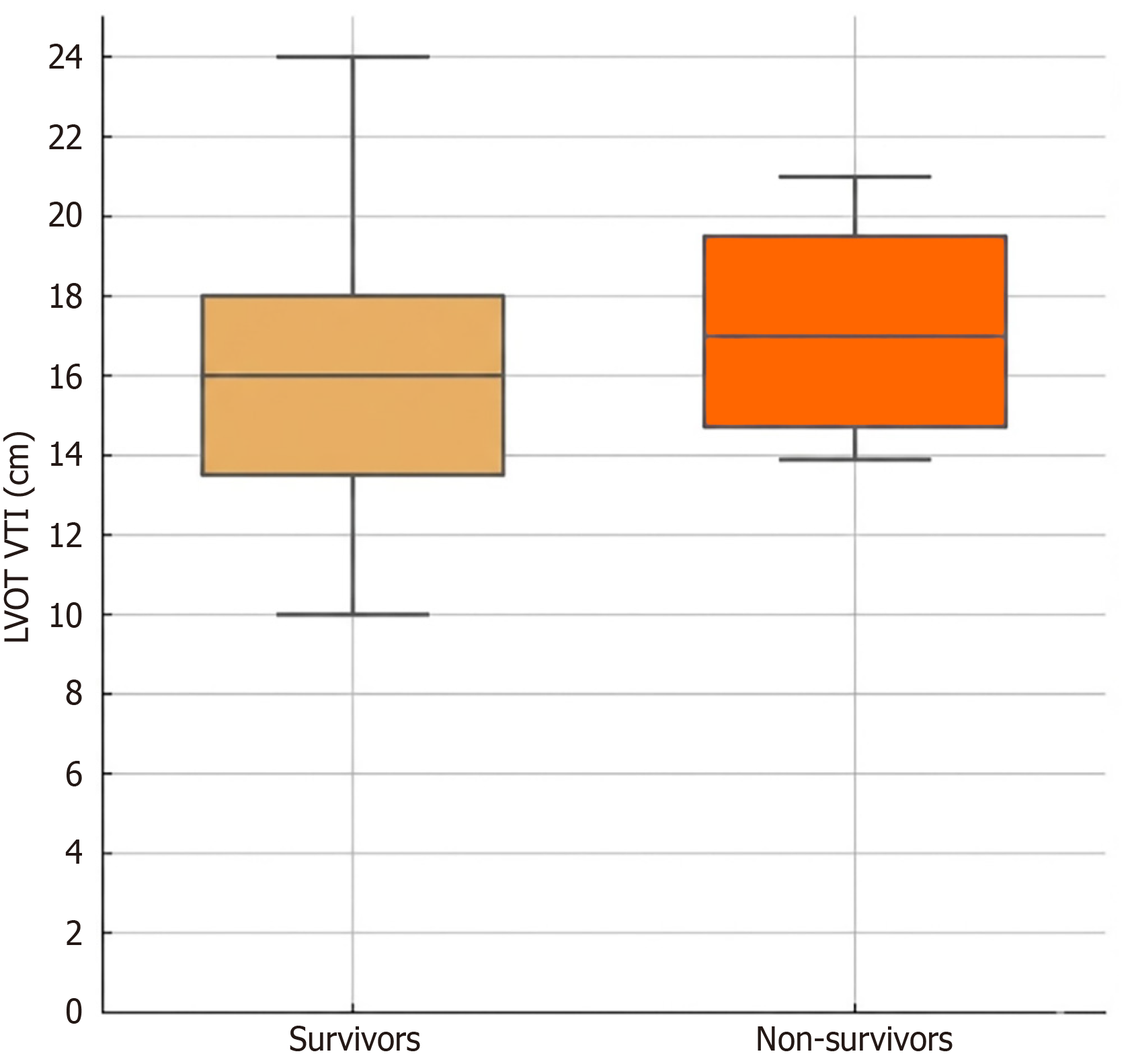
Figure 3 Distribution of left ventricular outflow tract velocity-time integral according to in-hospital mortality.
LVOT: Left ventricular outflow tract; VTI: Velocity-time integral. The authors used ChatGPT (version GPT-5.1, OpenAI, San Francisco, CA, United States) to assist in generating the graphical representations of the study data included in Figure 3. All AI-assisted graphical content was reviewed, verified, and approved by the authors, who take full responsibility for the accuracy, originality, and integrity of the final figures.
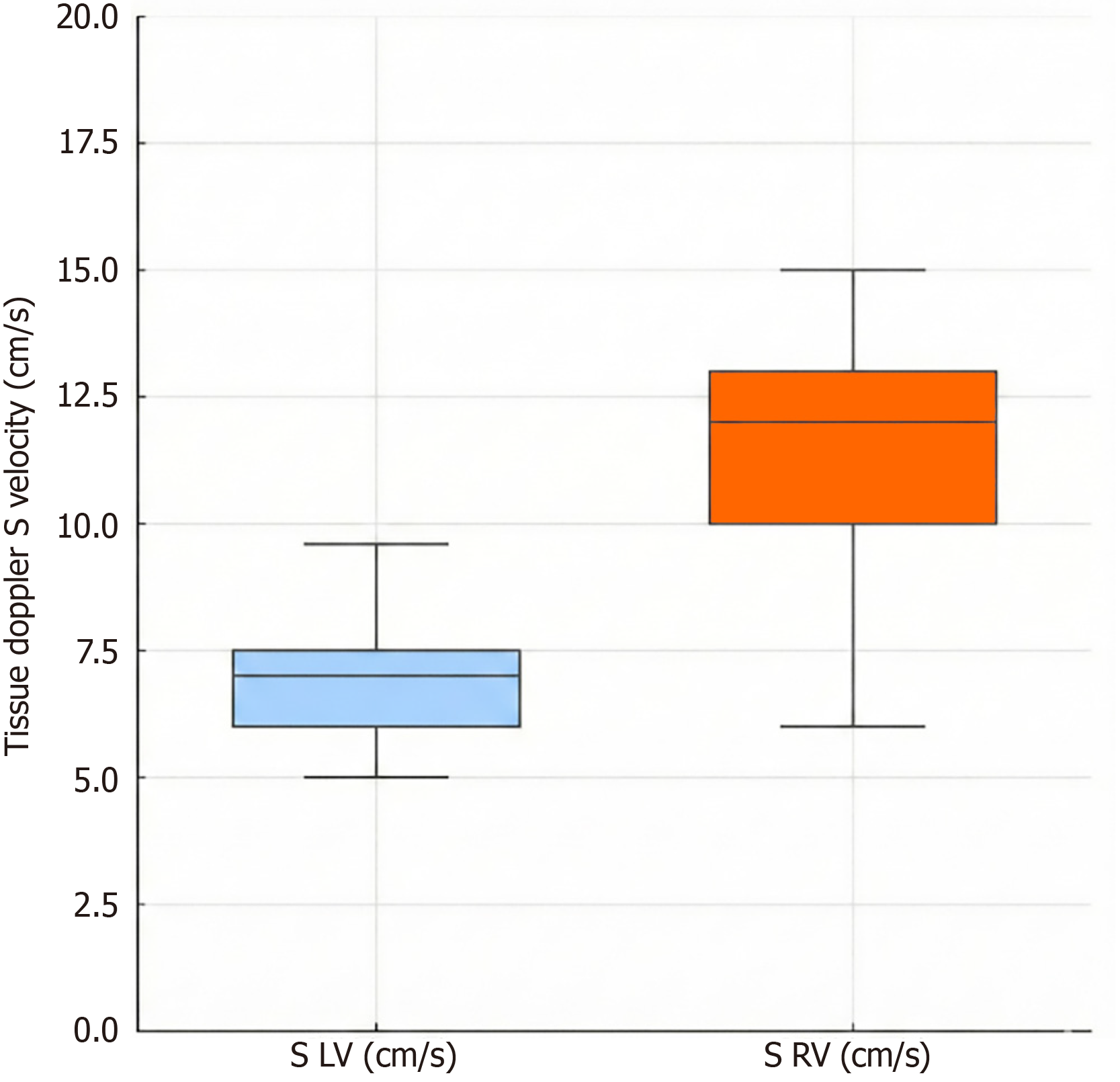
Figure 4 Paired comparison of left and right ventricular systolic annular velocities (systolic velocity at the lateral mitral annulus and systolic velocity at the lateral tricuspid annulus) in patients with cardiogenic pulmonary edema.
S LV: Systolic velocity of the lateral mitral annulus; S RV: Systolic velocity of the lateral tricuspid annulus. The authors used ChatGPT (version GPT-5.1, OpenAI, San Francisco, CA, United States) to assist in generating the graphical representations of the study data included in Figure 4. All AI-assisted graphical content was reviewed, verified, and approved by the authors, who take full responsibility for the accuracy, originality, and integrity of the final figures.
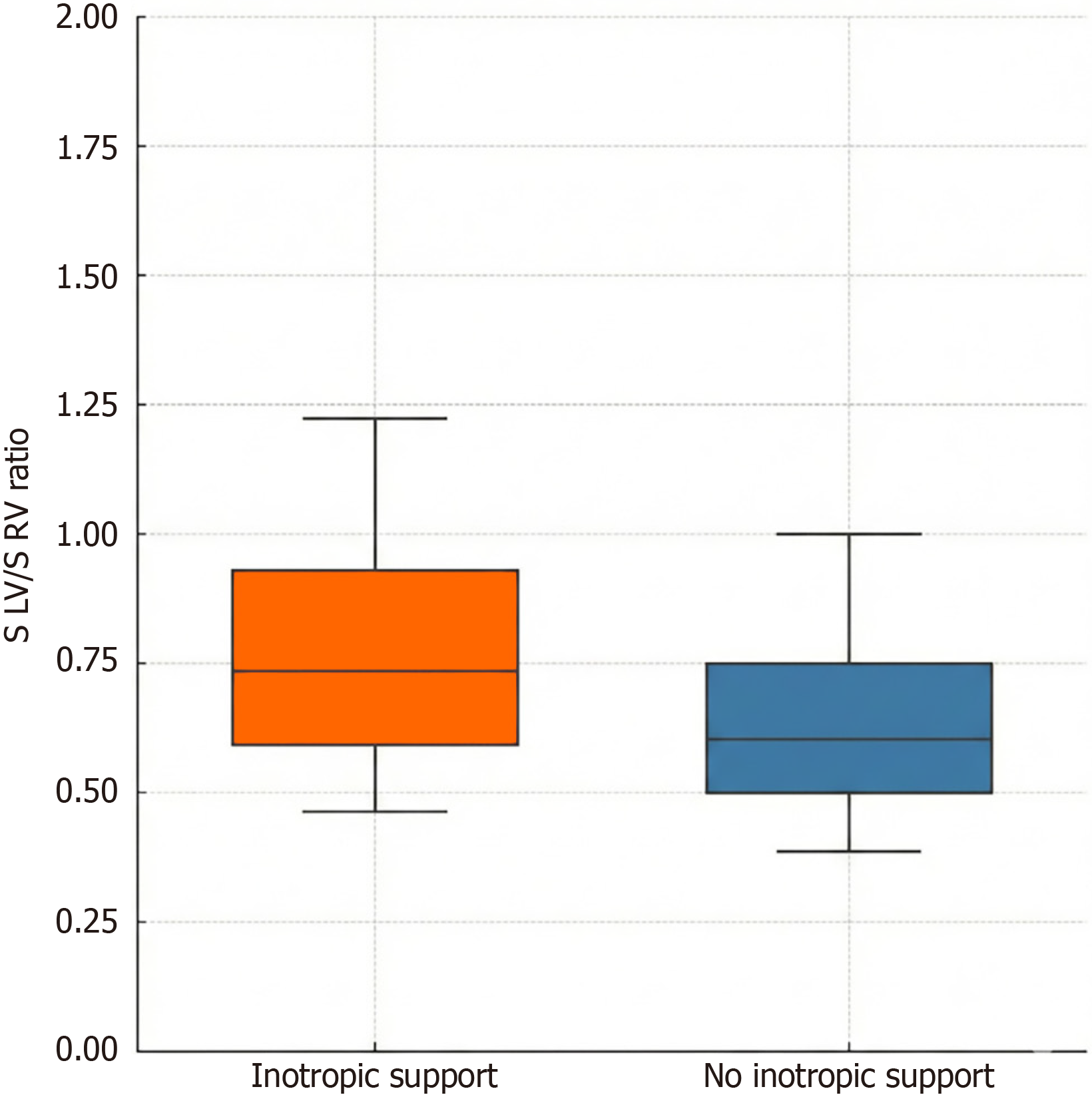
Figure 5 Distribution of the systolic velocity of the lateral mitral annulus/systolic velocity of the lateral tricuspid annulus ratio according to inotropic support requirement.
S LV: Systolic velocity of the lateral mitral annulus; S RV: Systolic velocity of the lateral tricuspid annulus. The authors used ChatGPT (version GPT-5.1, OpenAI, San Francisco, CA, United States) to assist in generating the graphical representations of the study data included in Figure 5. All AI-assisted graphical content was reviewed, verified, and approved by the authors, who take full responsibility for the accuracy, originality, and integrity of the final figures.
- Citation: Popescu DC, Diaconu M, Țînț D, Nechita AC. Left and right ventricular echocardiographic patterns in cardiogenic pulmonary edema: An exploratory retrospective study. World J Cardiol 2026; 18(7): 121228
- URL: https://www.wjgnet.com/1949-8462/full/v18/i7/121228.htm
- DOI: https://dx.doi.org/10.4330/wjc.121228