
















©The Author(s) 2025.
World J Cardiol. Dec 26, 2025; 17(12): 113443
Published online Dec 26, 2025. doi: 10.4330/wjc.v17.i12.113443
Published online Dec 26, 2025. doi: 10.4330/wjc.v17.i12.113443
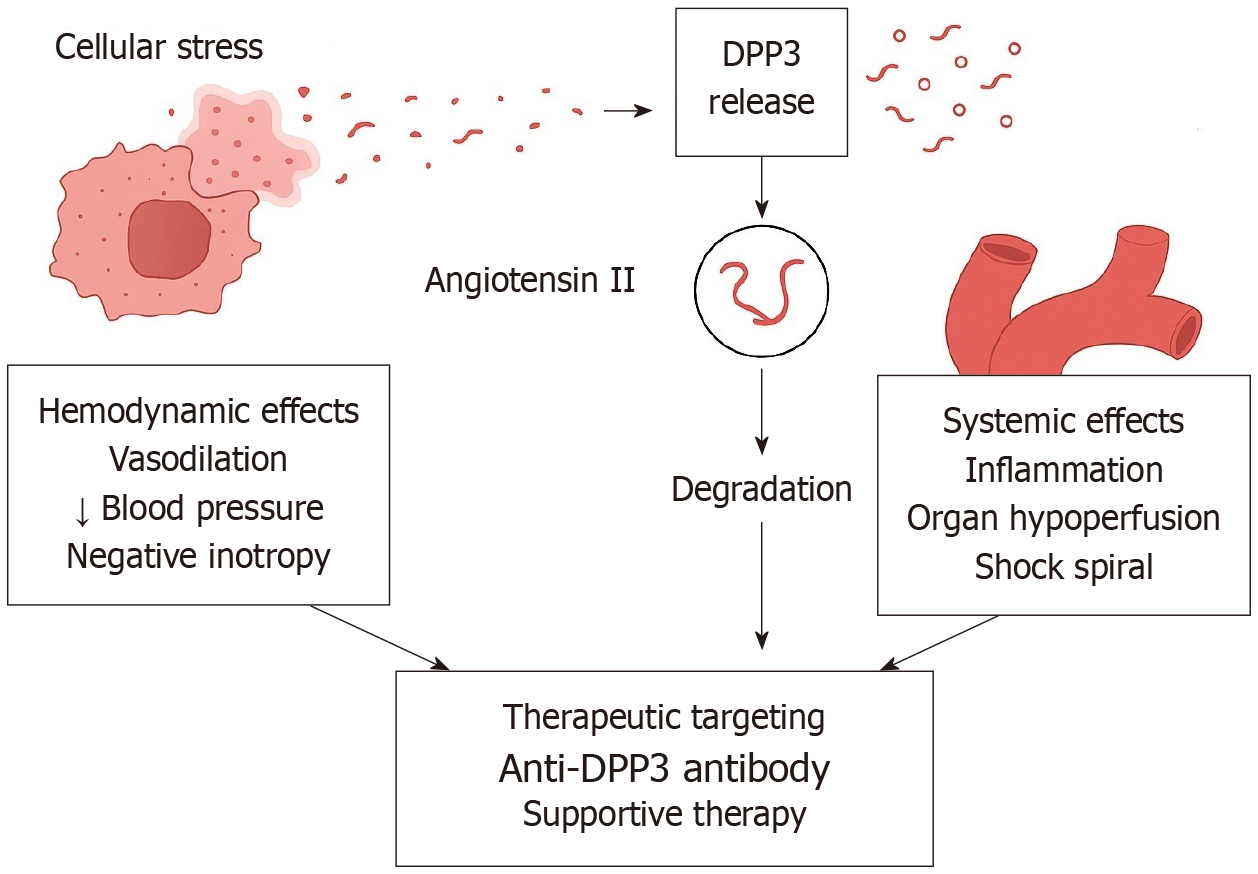
Figure 1 Schematic representation of dipeptidyl peptidase 3 release during cellular stress and its downstream effects.
Cellular stress (e.g., ischemia, acute coronary syndrome, shock) triggers the release of intracellular dipeptidyl peptidase 3 (DPP3) into the plasma. Extracellular DPP3 degrades angiotensin II, leading to impaired renin-angiotensin-aldosterone system signaling. This cascade results in hemodynamic effects such as vasodilation, hypotension, and negative inotropy, as well as systemic consequences including inflammation, organ hypoperfusion, and progression toward a shock spiral. Potential therapeutic interventions include anti-cDPP3 antibodies and supportive therapies aimed at restoring hemodynamic stability and mitigating systemic damage. DPP3: Dipeptidyl peptidase 3.
- Citation: Ramoni D, Liberale L, Carbone F, Montecucco F. Reimagining risk stratification: Dipeptidyl peptidase 3 in the new era of cardiovascular biomarkers. World J Cardiol 2025; 17(12): 113443
- URL: https://www.wjgnet.com/1949-8462/full/v17/i12/113443.htm
- DOI: https://dx.doi.org/10.4330/wjc.v17.i12.113443