
















Copyright: ©Author(s) 2026.
World J Gastrointest Surg. Mar 27, 2026; 18(3): 116575
Published online Mar 27, 2026. doi: 10.4240/wjgs.v18.i3.116575
Published online Mar 27, 2026. doi: 10.4240/wjgs.v18.i3.116575
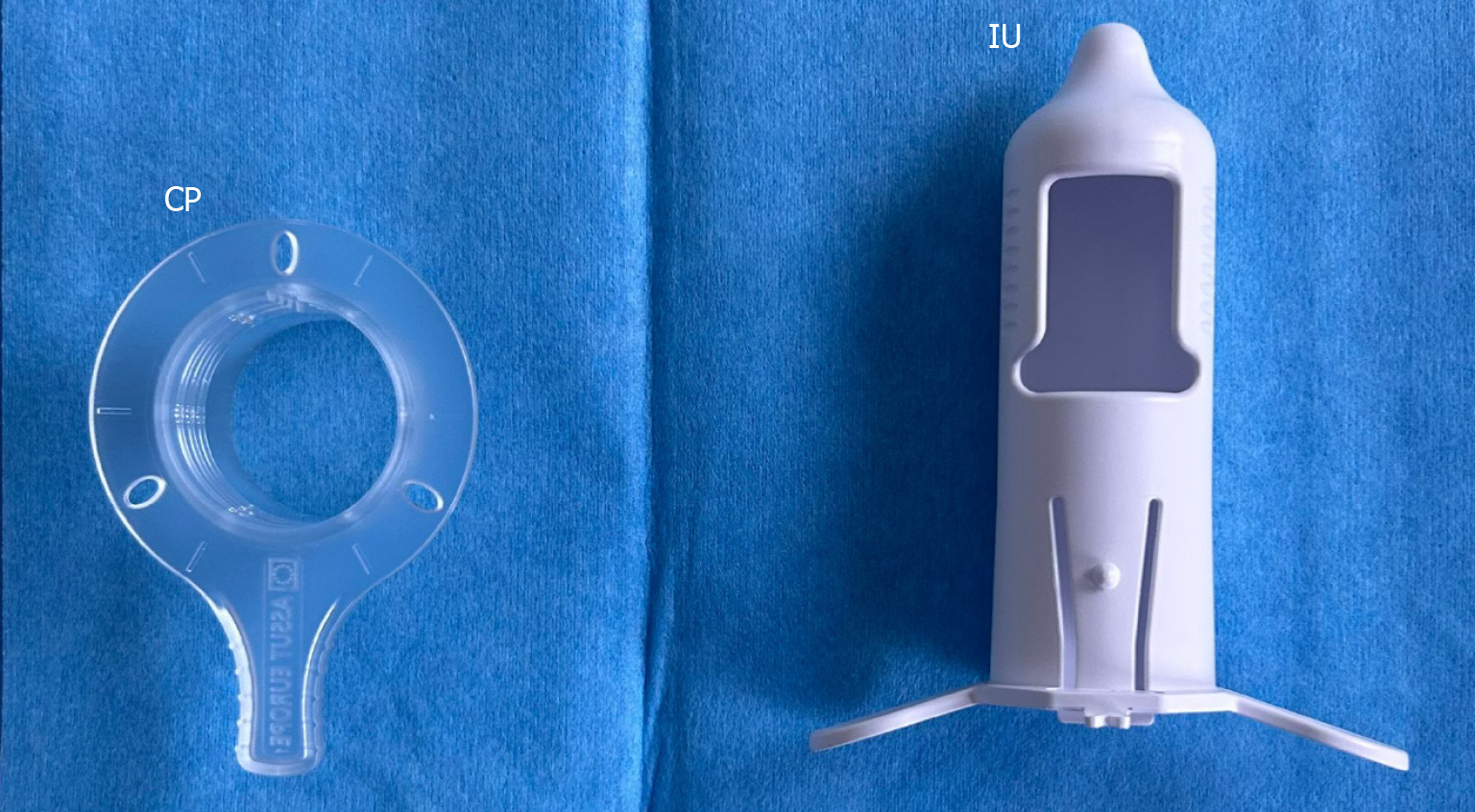
Figure 1 Sylarum® device.
IU: Intervention unit, anatomical double-curved, closed-top, inverted T-shaped intervention frame, providing optimal visualization of the operative field by preventing protrusion of tissue or stool into the device’s inner channel; CP: Control platform, the transparent nature of the control platform allows easy identification of the dentate line, which can be used as a reliable anatomical reference point.
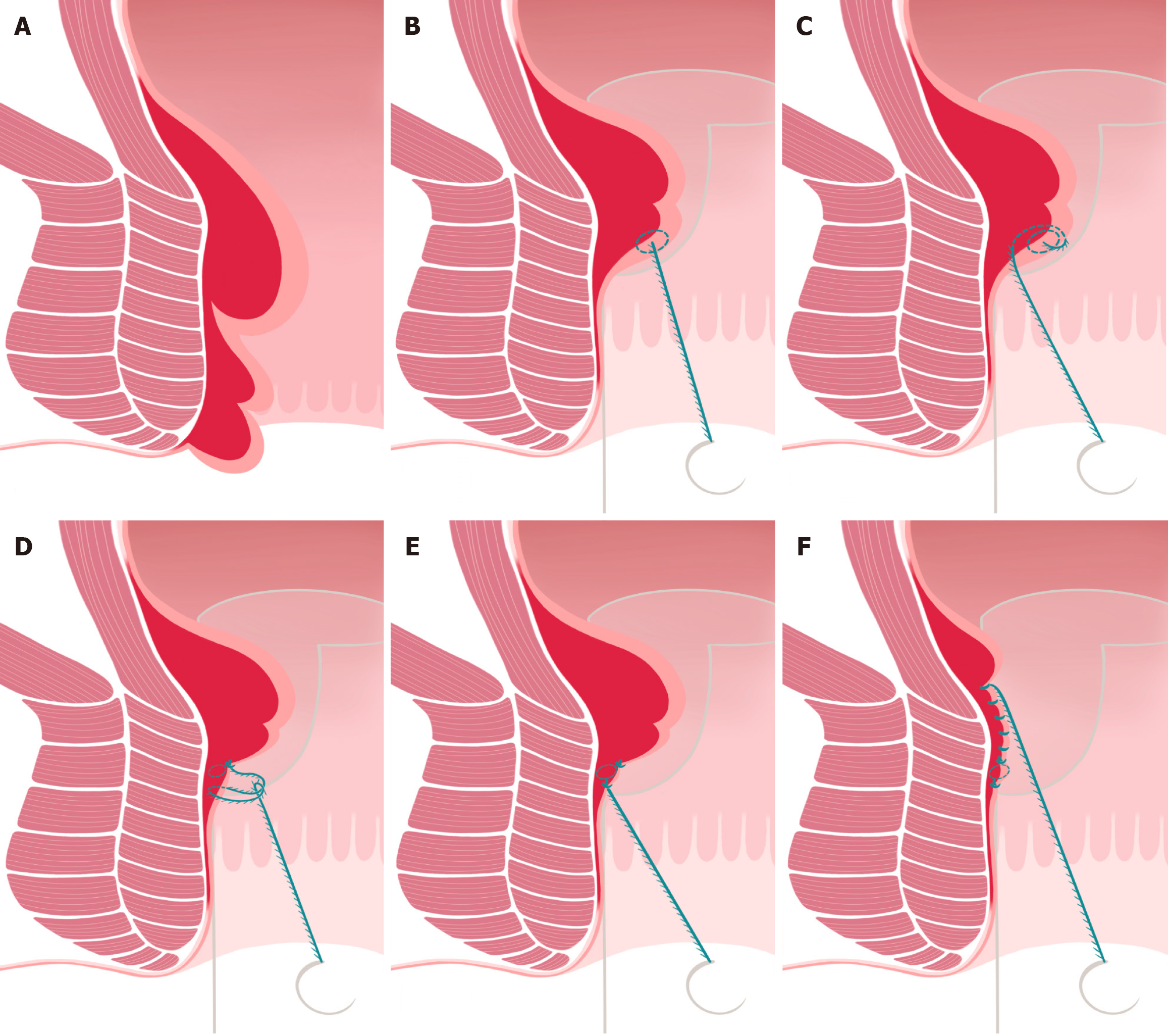
Figure 2 Stepwise illustration of the initial sutured rectal lift suture sequence.
A: Internal rectal prolapse; B: Superficial mucosal-submucosal pass with barbed suture; C: Deep muscular pass at the samelevel; D: Deep pass 3 mm caudally with semiloop; E: Closure of the anchoring stitch; F: Cranial mucosa plication.
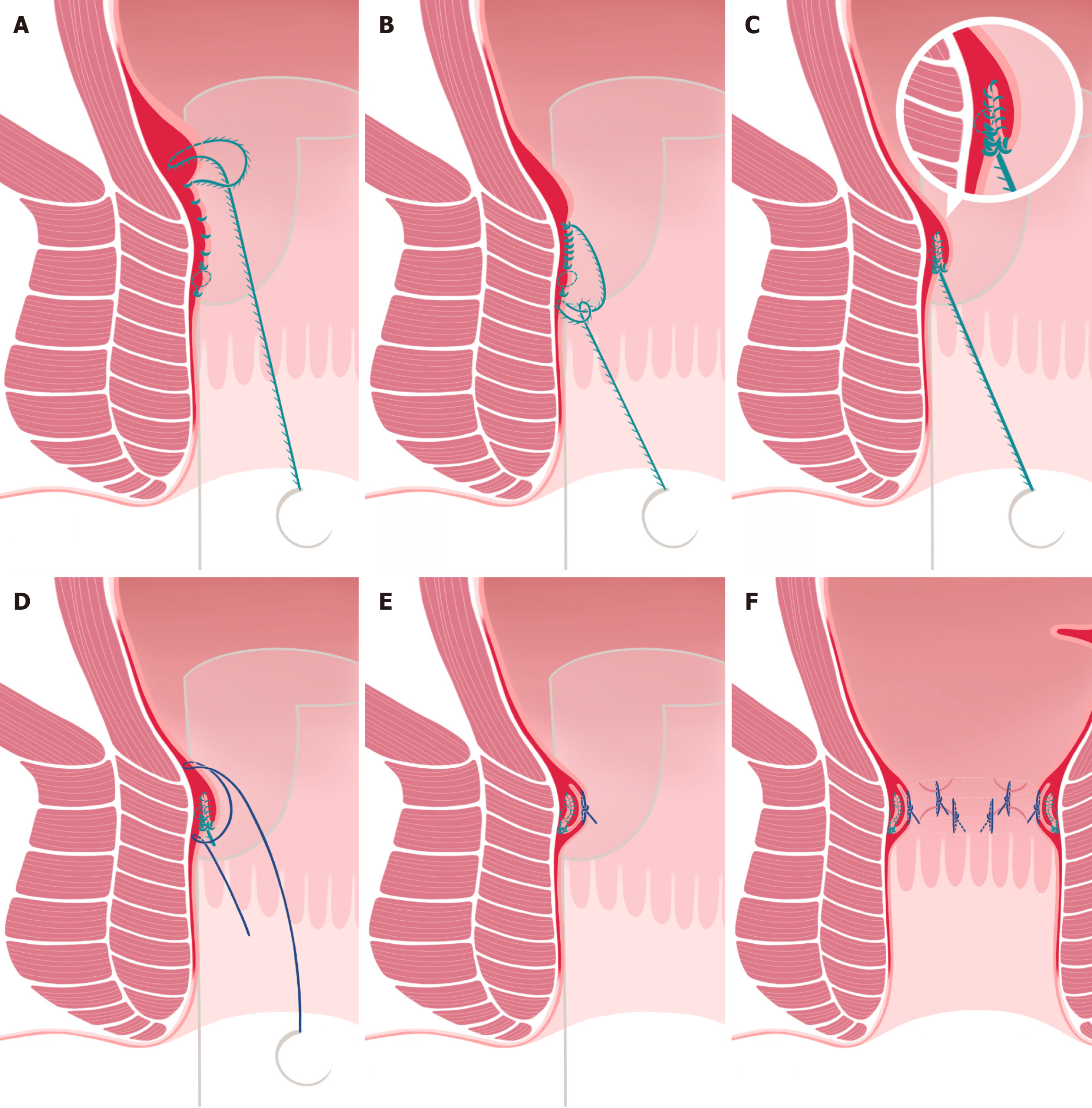
Figure 3 Final stages of sutured rectal lift and multilayer reinforcement.
A: Second semiloop positioned above the margin of the prolapse; B: Third semiloop placed below the first stitch; C: Resulting folding of the rectal wall after suture tightening; D: Second layer of deep muscular reinforcement using non-adsorbable monofilament suture; E: Final knot securing the reinforcement layed; F: Final result after repeating the procedure on all six quadrants.
- Citation: Pagano CE, Sarnari S, Favetta U, Picheo R, Gambarini F, Guttadauro A, Schiano di Visconte M. Sutured rectal lift for obstructed defecation: Mesh-free sphincter-preserving transanal technique for Oxford grade II-III prolapse. World J Gastrointest Surg 2026; 18(3): 116575
- URL: https://www.wjgnet.com/1948-9366/full/v18/i3/116575.htm
- DOI: https://dx.doi.org/10.4240/wjgs.v18.i3.116575