
















Copyright: ©Author(s) 2026.
World J Gastrointest Surg. Mar 27, 2026; 18(3): 115484
Published online Mar 27, 2026. doi: 10.4240/wjgs.v18.i3.115484
Published online Mar 27, 2026. doi: 10.4240/wjgs.v18.i3.115484
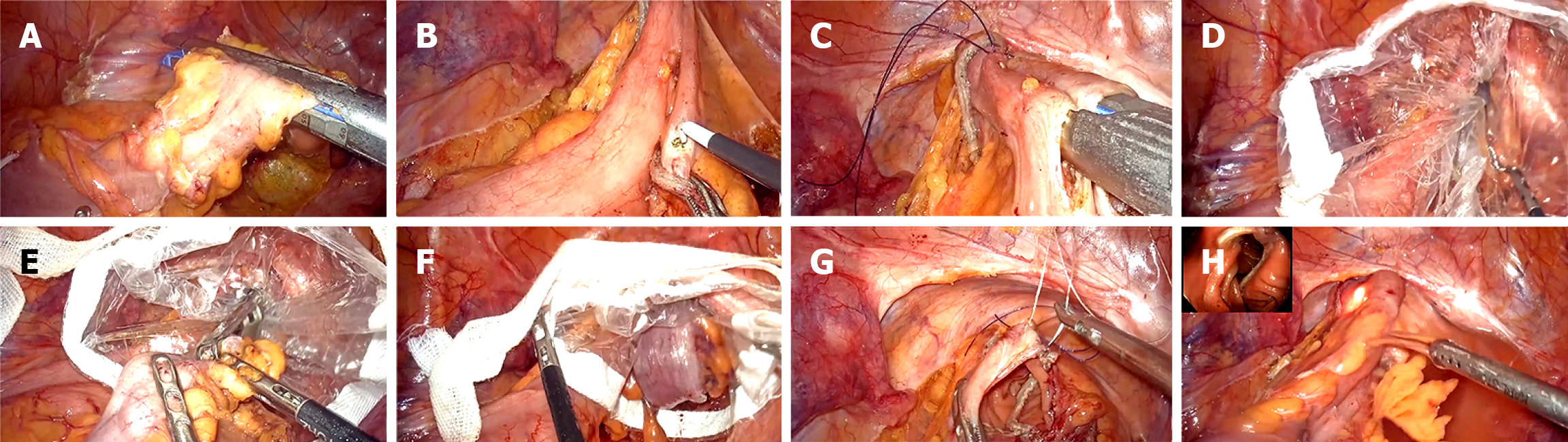
Figure 1 Intraoperative view of the modified natural orifice specimen extraction surgery procedure.
A: Transect the proximal and distal bowel; B: Approximate the proximal and distal bowel at the mesenteric border and incise the bowel wall; C: Insert the two jaws of the linear stapler, fire to complete the overlap anastomosis, and create a common opening; D: Insert a protective sheath through the common opening; E: Introduce laparoscopic forceps through the anus via the common opening; F: Extract the specimen transanally through the common opening; G: Close the common opening with barbed sutures; H: Intraoperative colonoscopy examination of the anastomosis.
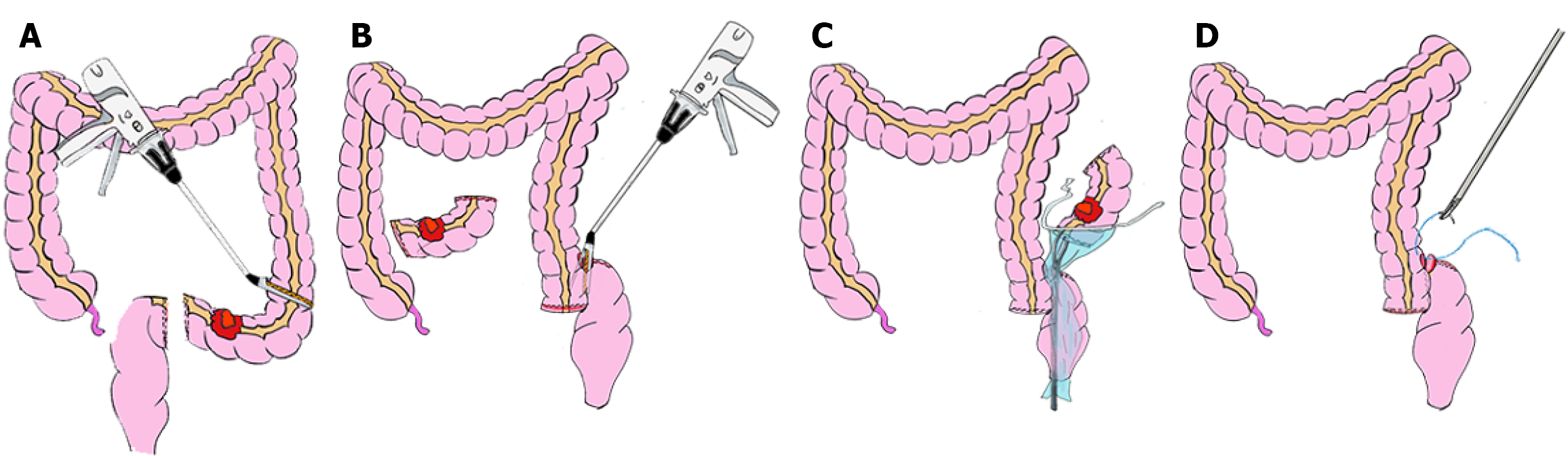
Figure 2 Surgical steps of the modified natural orifice specimen extraction surgery procedure.
A: The bowel was transected at the proximal and distal ends of the tumor; B: An overlap anastomosis was performed between the proximal and distal segments to create a common enterotomy; C: The specimen is extracted transanally through the common opening; D: The common opening is closed with barbed sutures.
- Citation: Li YB, Zhu C, Xia LG, Sun X, Zhong KL, Li Y. Modified natural orifice specimen extraction type IV surgery for rectosigmoid cancer: A retrospective clinical study. World J Gastrointest Surg 2026; 18(3): 115484
- URL: https://www.wjgnet.com/1948-9366/full/v18/i3/115484.htm
- DOI: https://dx.doi.org/10.4240/wjgs.v18.i3.115484