
















Copyright: ©Author(s) 2026.
World J Gastrointest Surg. Mar 27, 2026; 18(3): 114895
Published online Mar 27, 2026. doi: 10.4240/wjgs.v18.i3.114895
Published online Mar 27, 2026. doi: 10.4240/wjgs.v18.i3.114895
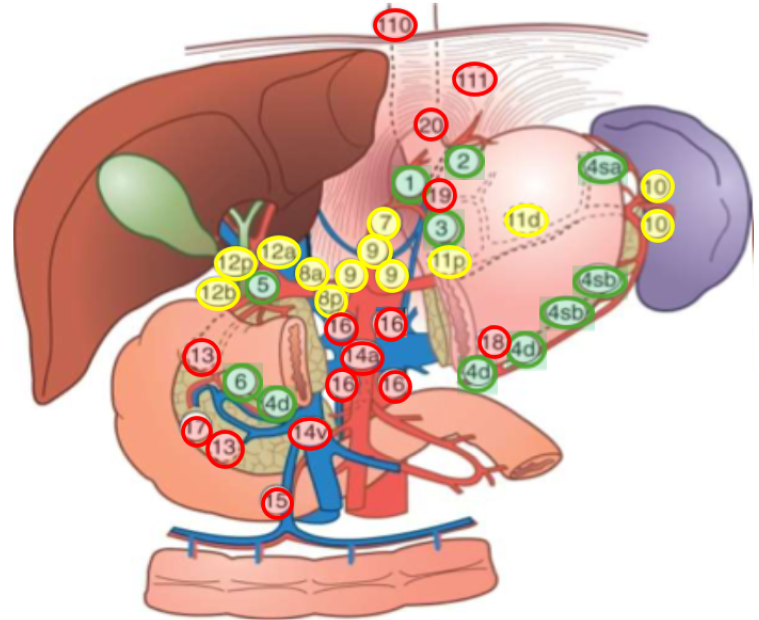
Figure 1 Anatomical definitions of lymph node stations according to the first classification of the Japanese Research Society for Gastric Cancer[5].
First region (highlighted in green). No. 1: Right paracardial. No. 2: Left paracardial. No. 3: Gastric lesser curvature. No. 4: Gastric greater curvature divided into No. 4sa (short vessels), No. 4sb (left gastroepiploic artery), No. 4d (right gastroepiploic artery). No. 5: Suprapyloric. No. 6: Infrapyloric. Second region (highlighted in yellow). No. 7: Left gastric artery. No. 8: Common hepatic artery divided into No. 8a (Anterior), No. 8p (posterior). No. 9: Celiac trunk. No. 10: Splenic hilum. No. 11: Splenic artery divided into No. 11p (proximal), No. 11d (distal). No. 12: Pedicle of liver divided into No. 12a (artery), No. 12b (bile duct), No. 12v (portal vein). Third region (highlighted in red). No. 13: Retropancreatic. No. 14: Superior mesenteric artery and vein, divided into No. 14v (venous), No. 14a (arterial). No. 15: Middle colic artery. No. 16: Paraaortic divided into No. 16a1 (hiatus of the esophagus), No. 16a2 (from the celiac trunk to the renal vein), No. 16b1 (from the renal vein to the inferior mesenteric artery), No. 16b2 (from the inferior mesenteric artery to the aortic bifurcation). No. 17: On the anterior surface of the pancreatic head beneath the pancreatic sheath. No. 18: Along the inferior border of the pancreatic body. No. 19: Infradiaphragmatic predominantly along the subphrenic artery. No. 20: Paraesophageal in the diaphragmatic esophageal hiatus. No. 110: Paraesophageal in the lower thorax. No. 111: Supradiaphragmatic separate from the esophagus.
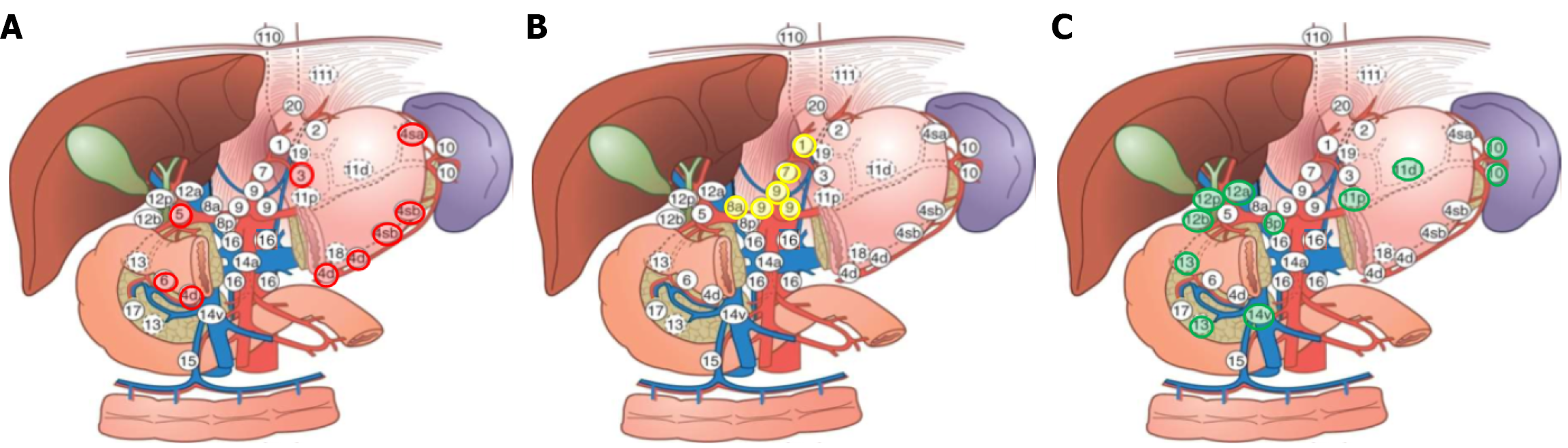
Figure 2 N1, N2, and N3 lymph node stations in distal gastric cancer.
A: N1 stations in red; B: N2 stations in yellow; C: N3 stations in green.
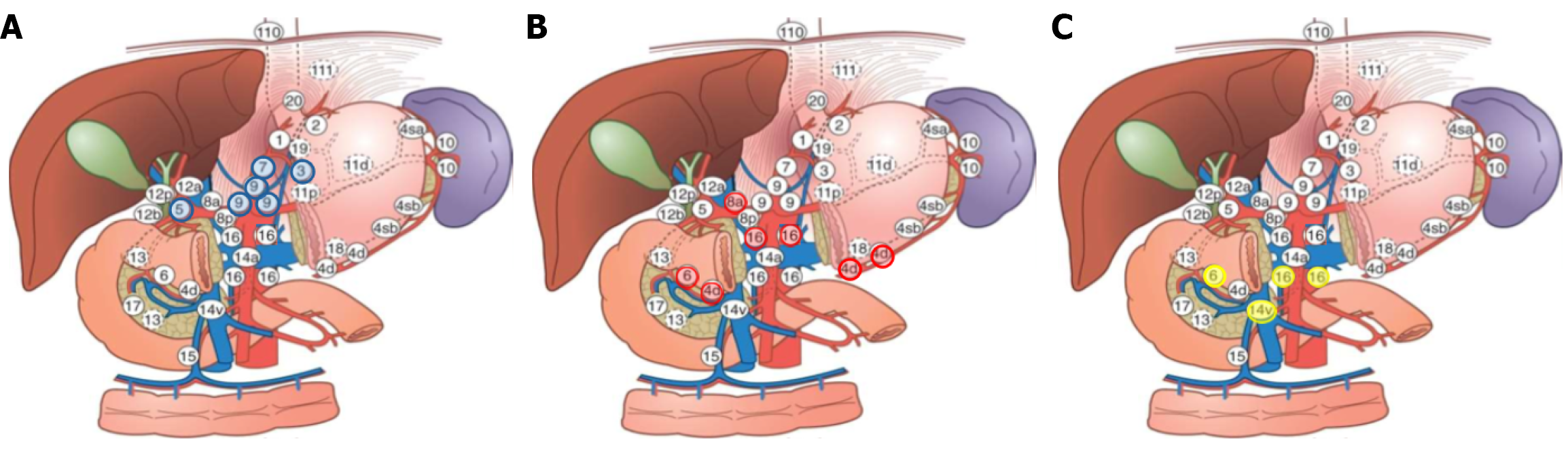
Figure 3 Lymphatic pathways in distal gastric tumors.
A: Blue shows lymph node stations in tumors located along the lesser curvature; B: Red shows lymph flow in tumors located along the greater curvature; C: Yellow shows lymph node stations involved in tumors of the distal portion of the greater curvature and the pyloric region[27].
- Citation: Brisinda G, Chiarello MM, Misuriello F, Cariati M, Tropeano G, Piras E, Altieri G, Bracalente G, Papa V. Which lymph node dissection should be performed in advanced distal gastric cancer? A critical assessment of D2 lymphadenectomy. World J Gastrointest Surg 2026; 18(3): 114895
- URL: https://www.wjgnet.com/1948-9366/full/v18/i3/114895.htm
- DOI: https://dx.doi.org/10.4240/wjgs.v18.i3.114895