
















©Author(s) (or their employer(s)) 2026.
World J Gastrointest Surg. Feb 27, 2026; 18(2): 114483
Published online Feb 27, 2026. doi: 10.4240/wjgs.v18.i2.114483
Published online Feb 27, 2026. doi: 10.4240/wjgs.v18.i2.114483
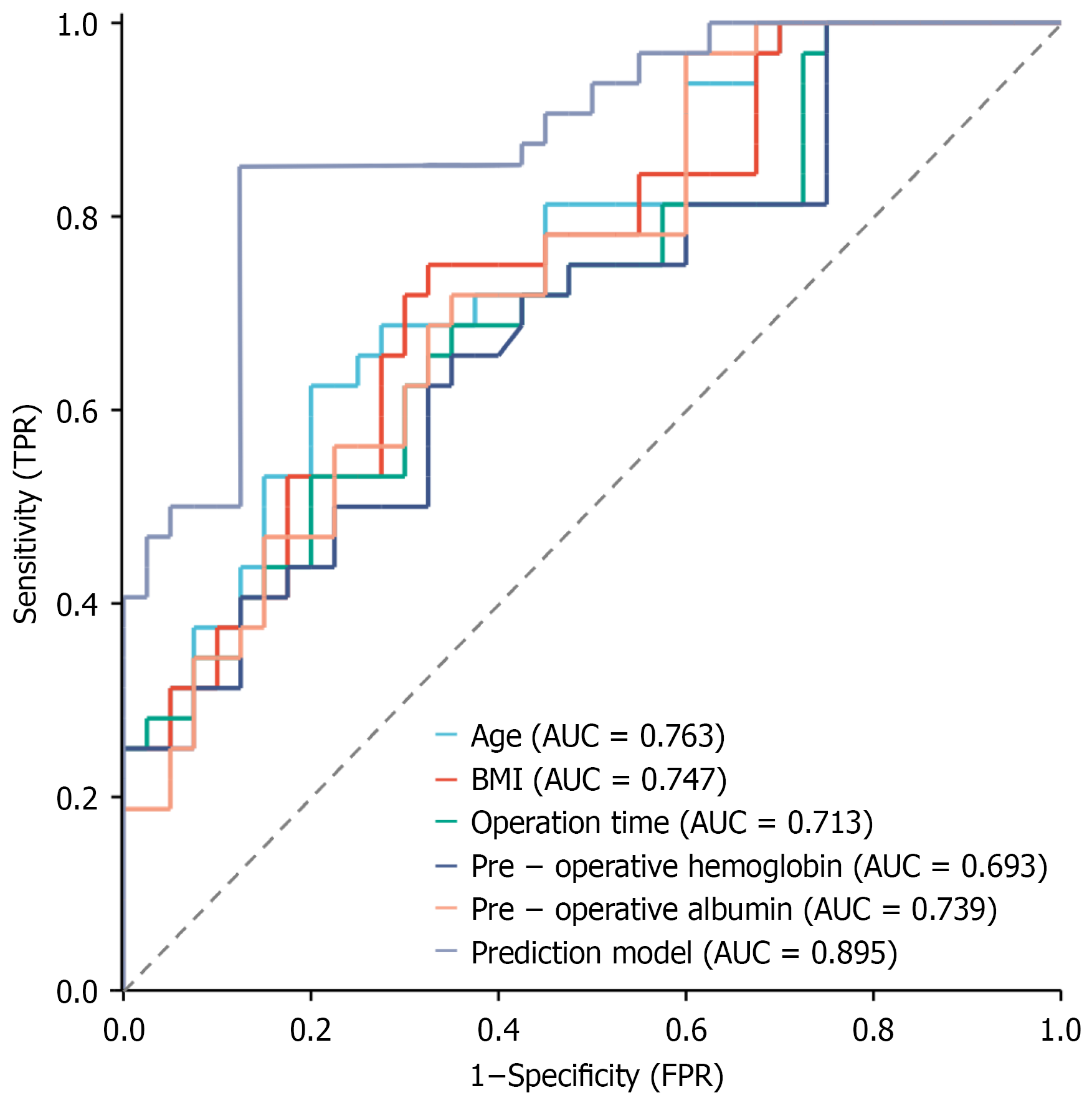
Figure 1 Receiver operating characteristic curves of different biomarkers and joint diagnosis for predicting postoperative gastro
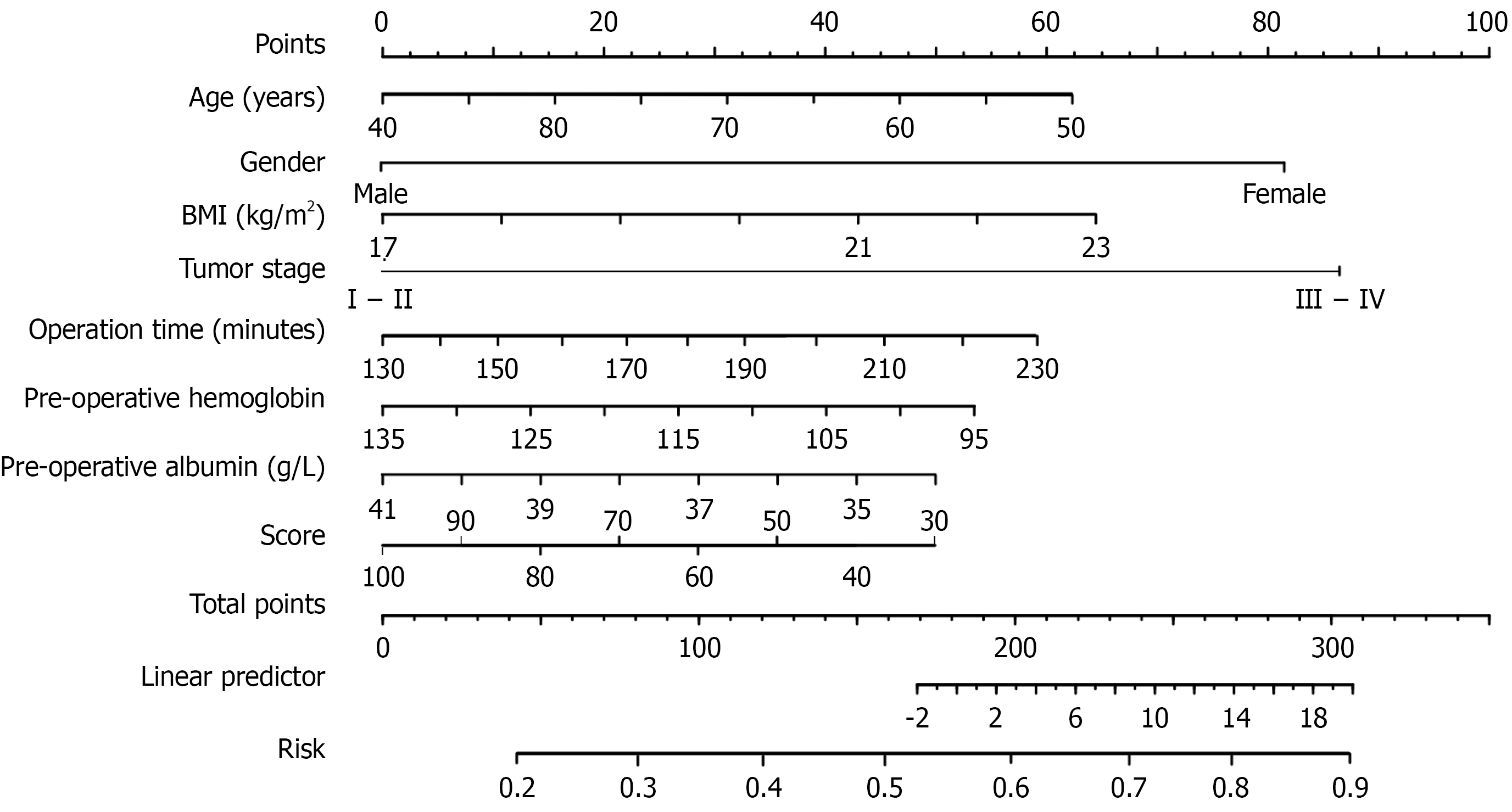
Figure 2 Nomogram for predicting postoperative gastrointestinal dysfunction in patients with gastrointestinal tumors.
This nomogram is constructed based on the multivariate Logistic regression model. To use the nomogram: (1) Locate the value of each risk factor (age, gender, body mass index, tumor stage, operative duration, preoperative hemoglobin, preoperative albumin) on the corresponding axis; (2) Draw a vertical line upward to the "points" axis to obtain the score for each factor; (3) Sum the scores of all factors to get the total score; and (4) Draw a vertical line downward from the “total points” axis to the “risk probability” axis to obtain the individual risk of postoperative gastrointestinal dysfunction. A ruler can be used to assist in reading scores and risk probabilities. BMI: Body mass index.
- Citation: Wang XH, Wang Y, Liu X, Ouyang XL, Xie F, Liao L. Construction of a risk prediction model for postoperative gastrointestinal dysfunction and prevention in patients with gastrointestinal tumors. World J Gastrointest Surg 2026; 18(2): 114483
- URL: https://www.wjgnet.com/1948-9366/full/v18/i2/114483.htm
- DOI: https://dx.doi.org/10.4240/wjgs.v18.i2.114483