
















©The Author(s) 2026.
World J Gastrointest Surg. Jan 27, 2026; 18(1): 114452
Published online Jan 27, 2026. doi: 10.4240/wjgs.v18.i1.114452
Published online Jan 27, 2026. doi: 10.4240/wjgs.v18.i1.114452
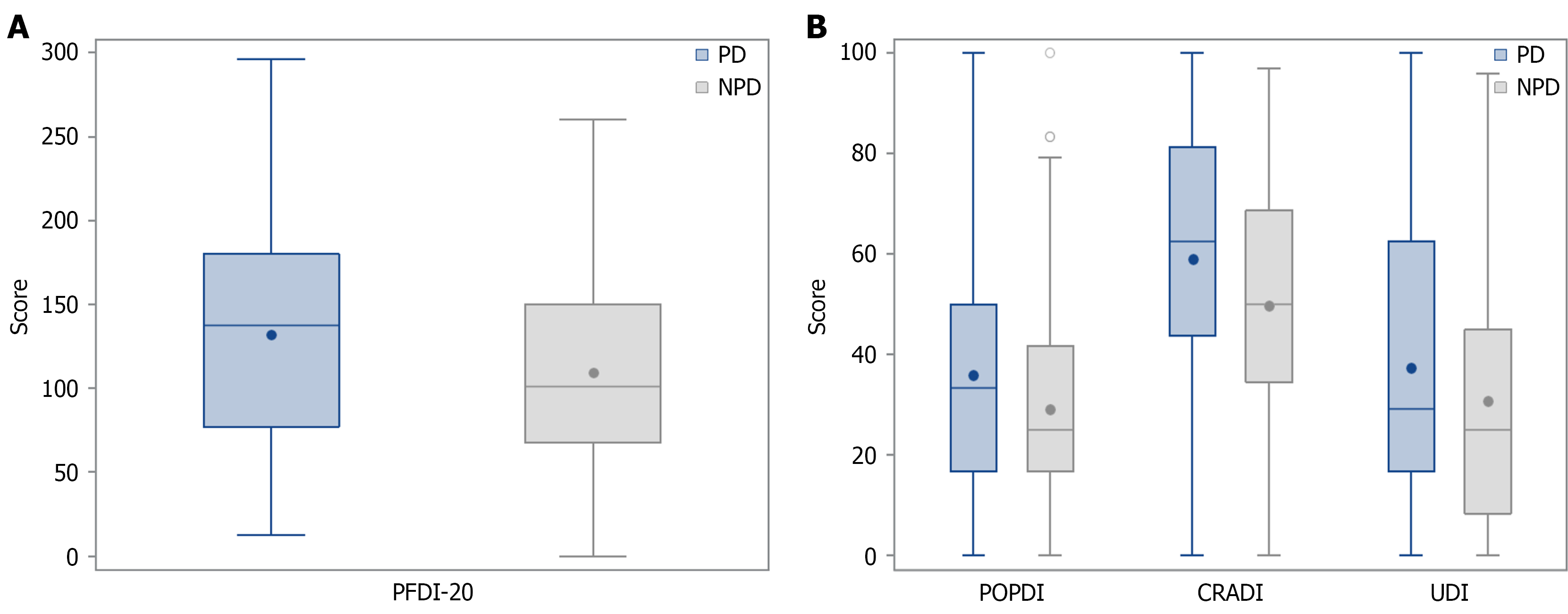
Figure 1 Distribution of Pelvic Floor Distress Inventory Questionnaire quality-of-life scores and subscale scores.
A: Pelvic Floor Distress Inventory Questionnaire-20; B: Pelvic Floor Distress Inventory Questionnaire-20 subscale. PFDI: Pelvic Floor Distress Inventory Questionnaire; PD: Psychiatric disorders; NPD: No psychiatric disorders; POPD: Pelvic Organ Prolapse Distress; CRAD: Colorectal-Anal Distress Inventory; UDI: Urinary Distress Inventory.
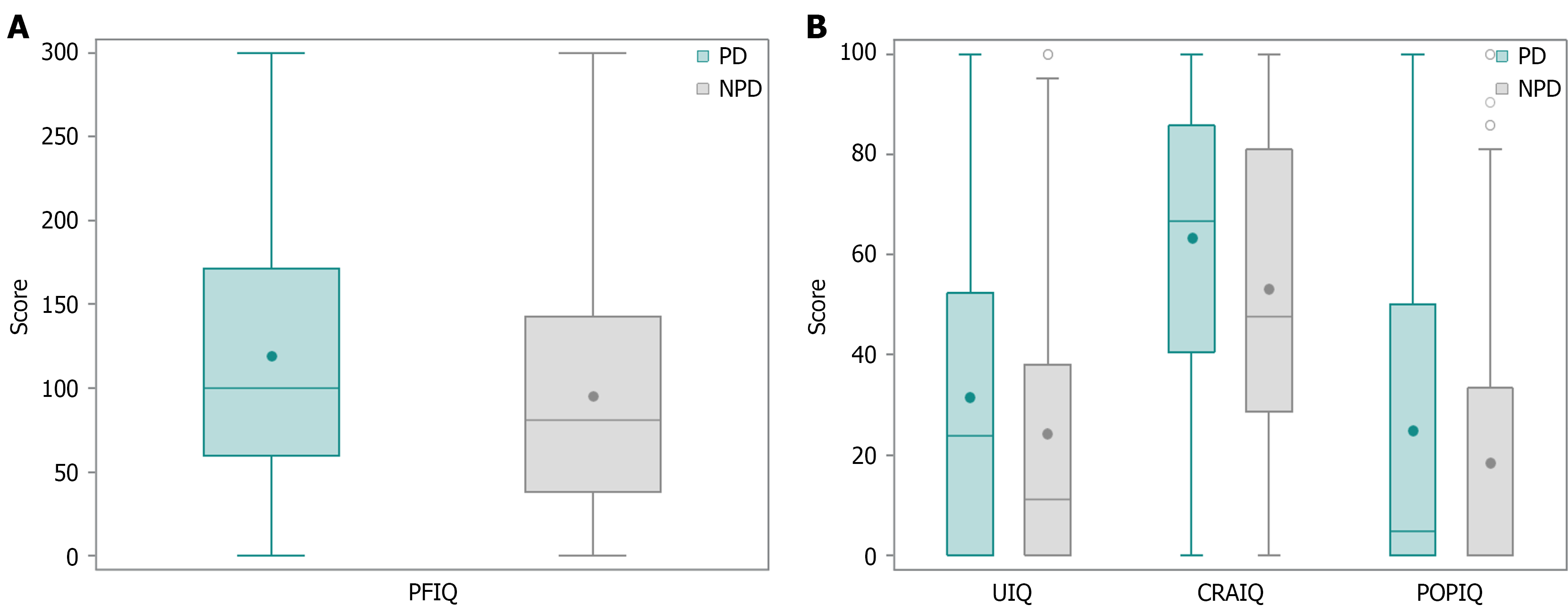
Figure 2 Distribution of Pelvic Floor Impact Questionnaire and subscale scores.
A: Pelvic Floor Impact Questionnaire; B: Pelvic Floor Impact Questionnaire subscale. The box represents the interquartile range, spanning from the 25th percentile (lower edge) to the 75th percentile (upper edge), with a line inside the box indicating the median. The dot within the box marks the mean. Whiskers extend to the smallest and largest values within 1.5 times the interquartile range from the lower and upper quartiles. Values beyond this range are considered outliers and are shown as individual points. Boxplots illustrate the distribution across groups; statistical comparisons are reported in Tables 4 and 5. PFIQ: Pelvic Floor Impact Questionnaire; PD: Psychiatric disorders; NPD: No psychiatric disorders; UIQ: Urinary Impact Questionnaire; CRAIQ: Colorectal-Anal Impact Questionnaire; POPIQ: Pelvic Organ Prolapse Impact Questionnaire.
- Citation: Akeel N, Rajasingh CM, Earley M, Au Hoy S, Neshatian L, Enemchukwu E, Mishra K, Gurland B. Perception of rectal prolapse symptoms in patients with psychiatric disorders. World J Gastrointest Surg 2026; 18(1): 114452
- URL: https://www.wjgnet.com/1948-9366/full/v18/i1/114452.htm
- DOI: https://dx.doi.org/10.4240/wjgs.v18.i1.114452