
















©The Author(s) 2026.
World J Gastrointest Surg. Jan 27, 2026; 18(1): 112927
Published online Jan 27, 2026. doi: 10.4240/wjgs.v18.i1.112927
Published online Jan 27, 2026. doi: 10.4240/wjgs.v18.i1.112927
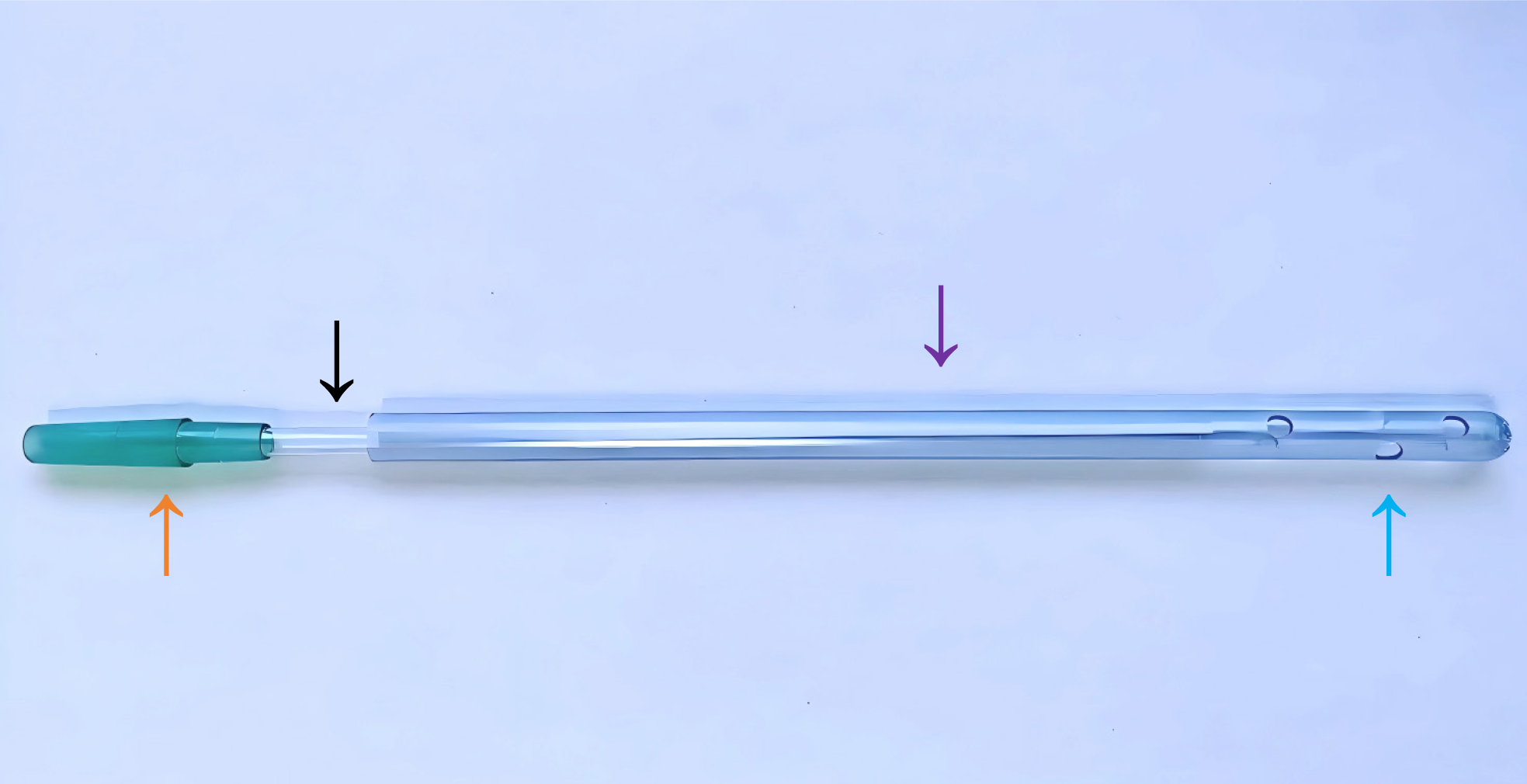
Figure 1 Cannula.
Outer tube (purple arrow), internal tube (orange arrow), and side perforations of the tube (blue arrow); the black arrow indicates the junction where air can enter.
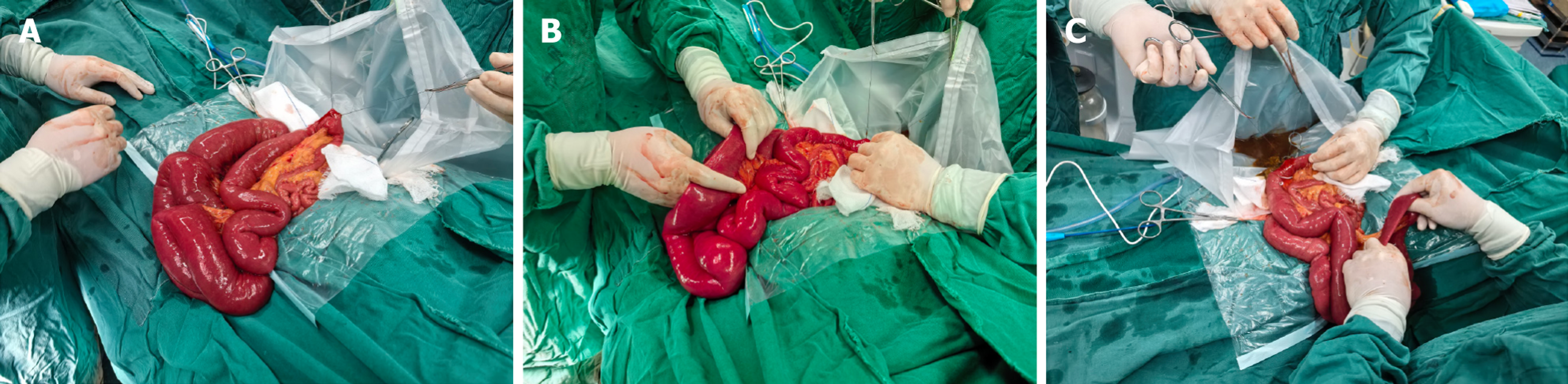
Figure 2 Small intestine incision decompression method.
A: The small intestine was pulled out of the incision using silk thread. The gauze was placed underneath, and the intestinal tract was cut open; B: The intestinal tube was squeezed segment by segment in the direction of intestinal peristalsis with the index and middle fingers, and the intestinal contents were discharged into the container; C: The intestinal contents were collected in a storage bag and transferred into a measurable container, after which the degree of pressure reduction was calculated.
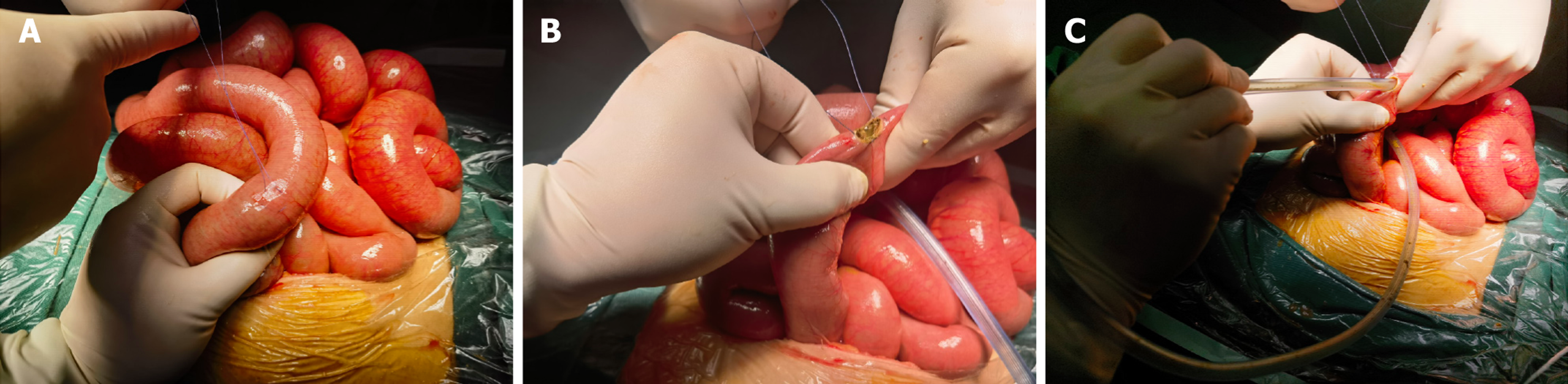
Figure 3 Small intestine tube decompression method.
A: A purse-string suture with a diameter of approximately 1 cm was placed on the small intestine wall; B: Fingers were used to control the proximal intestinal tract as the intestinal wall was cut open the; C: The cannula was inserted, and fingers were released to perform the small intestine decompression.
- Citation: Zhang Q, He XH, Liu X, Ling XJ, Zhang YM. Application of a novel small intestine decompression method in patients with intestinal obstruction: A retrospective cohort study. World J Gastrointest Surg 2026; 18(1): 112927
- URL: https://www.wjgnet.com/1948-9366/full/v18/i1/112927.htm
- DOI: https://dx.doi.org/10.4240/wjgs.v18.i1.112927