
















Copyright: ©Author(s) 2026.
World J Diabetes. May 15, 2026; 17(5): 117132
Published online May 15, 2026. doi: 10.4239/wjd.v17.i5.117132
Published online May 15, 2026. doi: 10.4239/wjd.v17.i5.117132
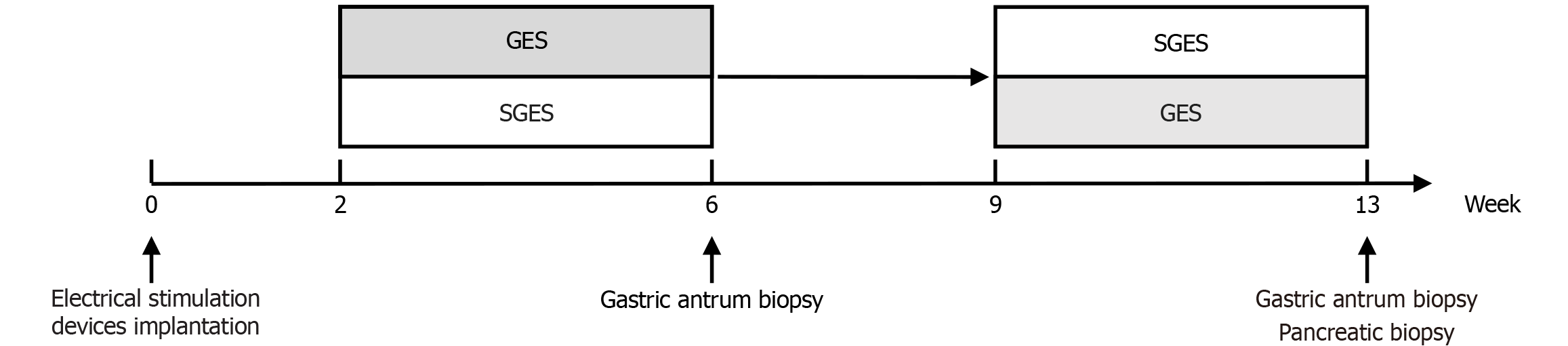
Figure 1 Experimental protocol and intervention.
GES: Gastric electrical stimulation; SGES: Sham gastric electrical stimulation.
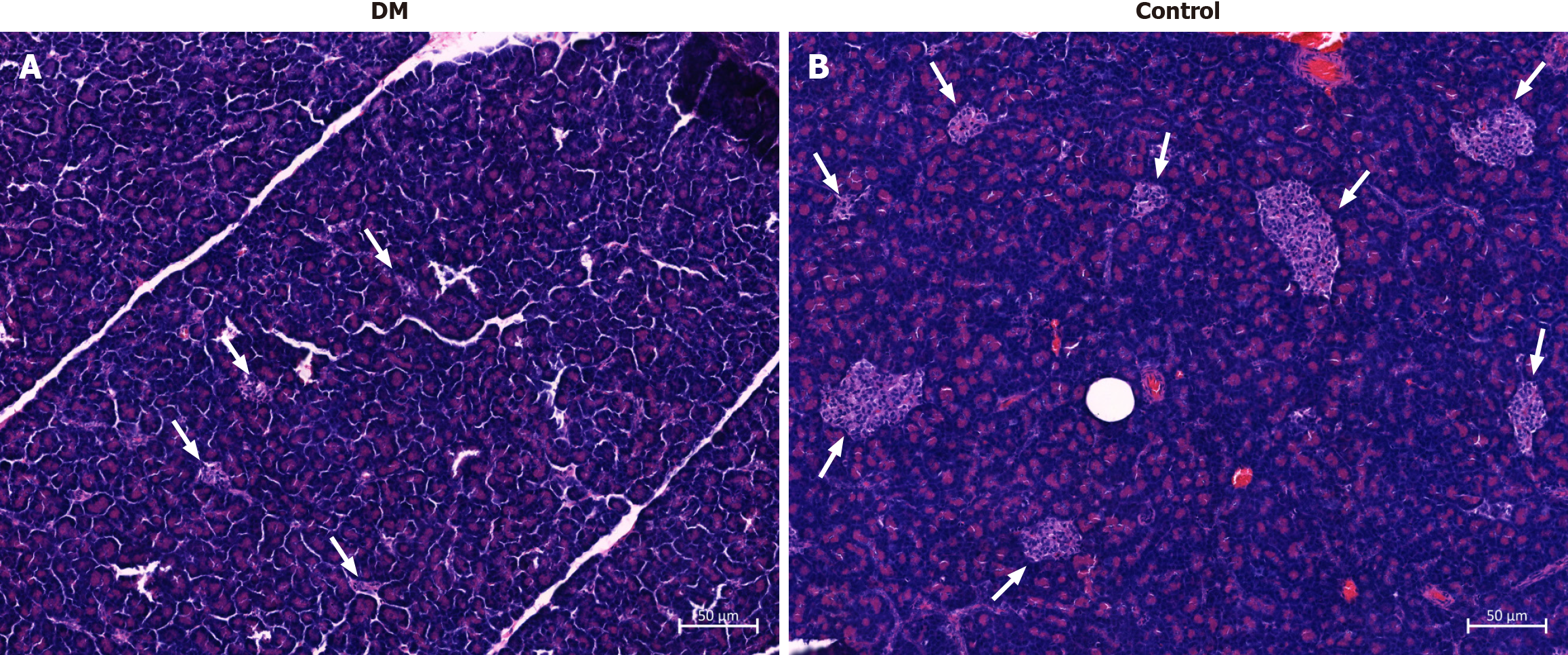
Figure 2 Representative hematoxylin-eosin staining of pancreatic tail tissues in the diabetic models and controls.
A: Diabetes mellitus; B: Control. Scale bar = 50 µm. DM: Diabetes mellitus.
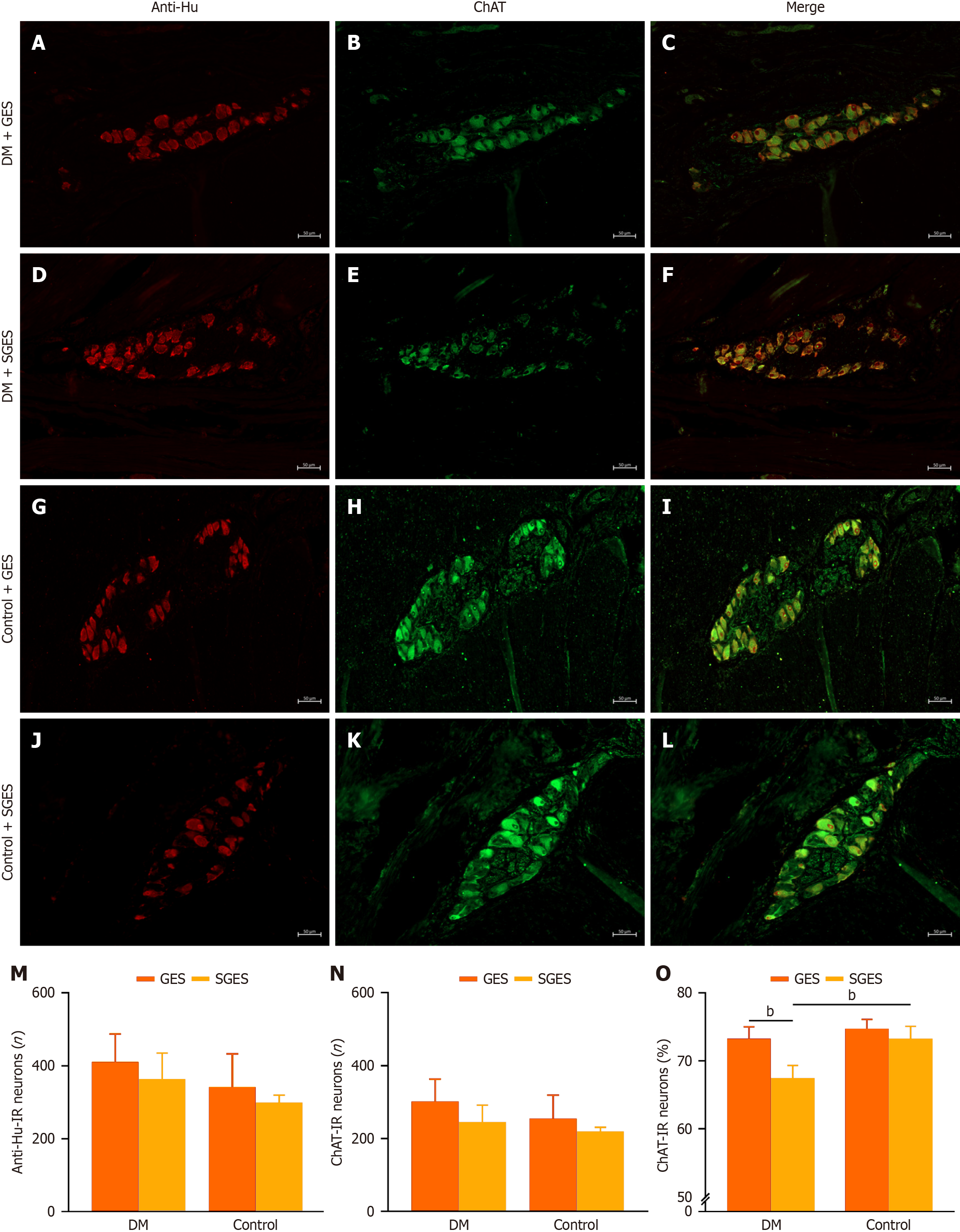
Figure 3 Representative immunofluorescence images of myenteric choline acetyltransferase-immunoreactive positive neurons in full-thickness sections of canine gastric antrum (200 × magnification, scale bar = 50 μm).
A: Representative images of anti-human neuronal protein HuC/HuD-immunoreactive (anti-Hu-IR) labeled neurons in diabetes mellitus (DM) + gastric electrical stimulation (GES); B: Representative images of choline acetyltransferase-immunoreactive (ChAT-IR) positive neurons in DM + GES; C: Representative merged images of anti-Hu-IR/ChAT-IR in DM + GES; D: Representative images of anti-Hu-IR labeled neurons in DM + sham GES (SGES); E: Representative images of ChAT-IR positive neurons in DM + SGES; F: Representative merged images of anti-Hu-IR/ChAT-IR in DM + SGES; G: Representative images of anti-Hu-IR labeled neurons in control + GES; H: Representative images of ChAT-IR positive neurons in control + GES; I: Representative merged images of anti-Hu-IR/ChAT-IR in control + GES; J: Representative images of anti-Hu-IR labeled neurons in control + SGES; K: Representative images of ChAT-IR positive neurons in control + SGES; L: Representative merged images of anti-Hu-IR/ChAT-IR in control + SGES; M: Number of anti-Hu-IR positive neurons; N: Number of ChAT-IR positive neurons; O: Proportion of ChAT-IR positive neurons relative to total neurons. The proportion of ChAT-IR neurons was higher in the diabetes mellitus + GES compared with the diabetes mellitus + SGES subgroup (bP < 0.01). Within sham-stimulated subgroups, the proportion of ChAT-IR neurons was less in the diabetic canines compared with the controls (bP < 0.01). Anti-Hu: Anti-human neuronal protein HuC/HuD; ChAT: Choline acetyltransferase; DM: Diabetes mellitus; GES: Gastric electrical stimulation; SGES: Sham gastric electrical stimulation.
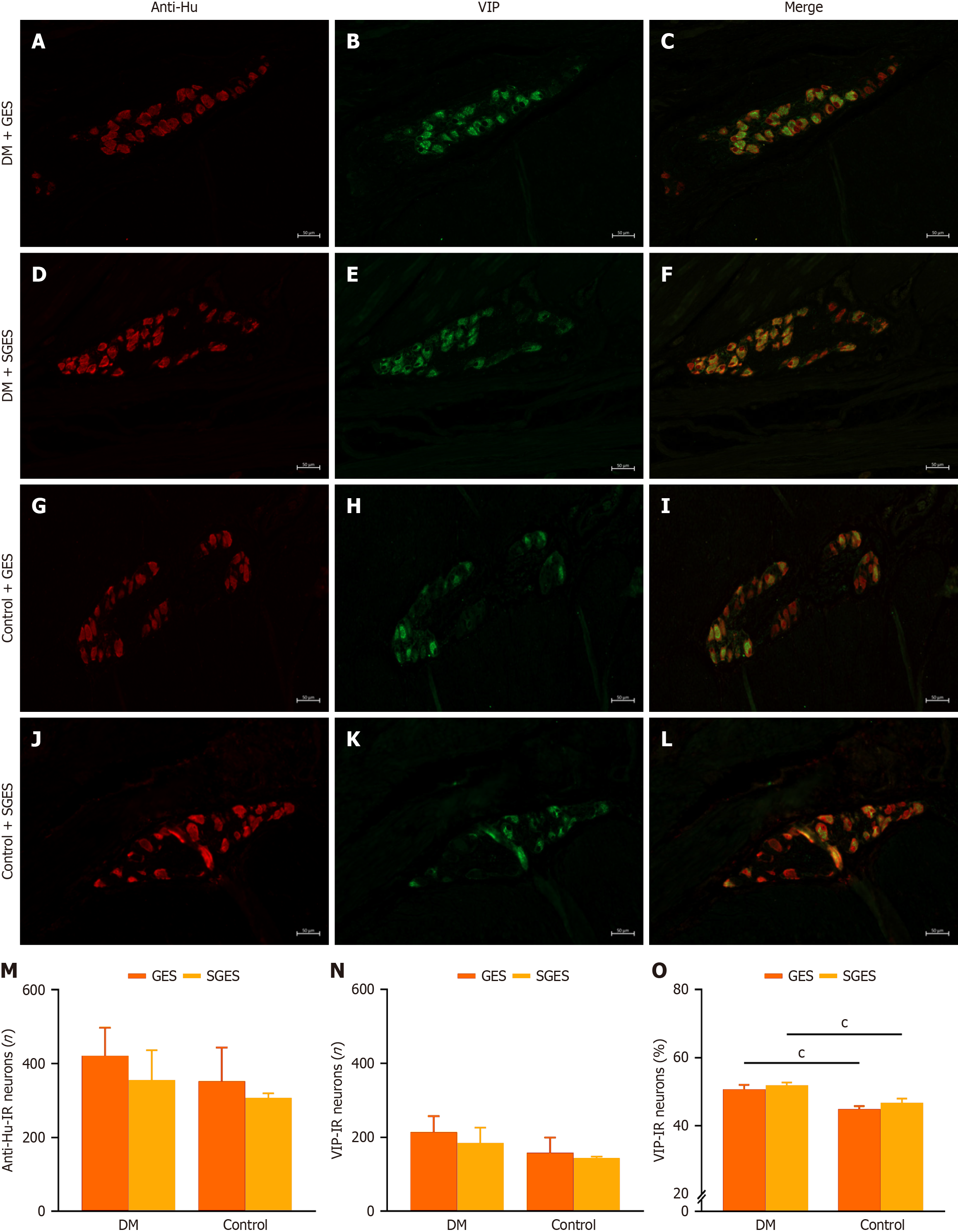
Figure 4 Representative immunofluorescence images of myenteric vasoactive intestinal peptide-immunoreactive positive neurons in full-thickness sections of canine gastric antrum (200 × magnification, scale bar = 50 μm).
A: Representative images of anti-human neuronal protein HuC/HuD-immunoreactive (anti-Hu-IR) labeled neurons in diabetes mellitus (DM) + gastric electrical stimulation (GES); B: Representative images of vasoactive intestinal peptide-immunoreactive (VIP-IR) positive neurons in DM + GES; C: Representative merged images of anti-Hu-IR/VIP-IR in DM + GES; D: Representative images of anti-Hu-IR labeled neurons in DM + sham GES (SGES); E: Representative images of VIP-IR positive neurons in DM + SGES; F: Representative merged images of anti-Hu-IR/VIP-IR in DM + SGES; G: Representative images of anti-Hu-IR labeled neurons in control + GES; H: Representative images of VIP-IR positive neurons in control + GES; I: Representative merged images of anti-Hu-IR/VIP-IR in control + GES; J: Representative images of anti-Hu-IR labeled neurons in control + SGES; K: Representative images of VIP-IR positive neurons in control + SGES; L: Representative merged images of anti-Hu-IR/VIP-IR in control + SGES; M: Number of anti-Hu-IR positive neurons; N: Number of VIP-IR positive neurons; O: Proportion of VIP-IR positive neurons relative to total neurons. The proportion of VIP-IR neurons was significantly higher in the diabetes mellitus canines compared with controls, whether in GES or SGES subgroups (cP < 0.001). Anti-Hu: Anti-human neuronal protein HuC/HuD; DM: Diabetes mellitus; GES: Gastric electrical stimulation; IR: Immunoreactive; SGES: Sham gastric electrical stimulation; VIP: Vasoactive intestinal peptide.
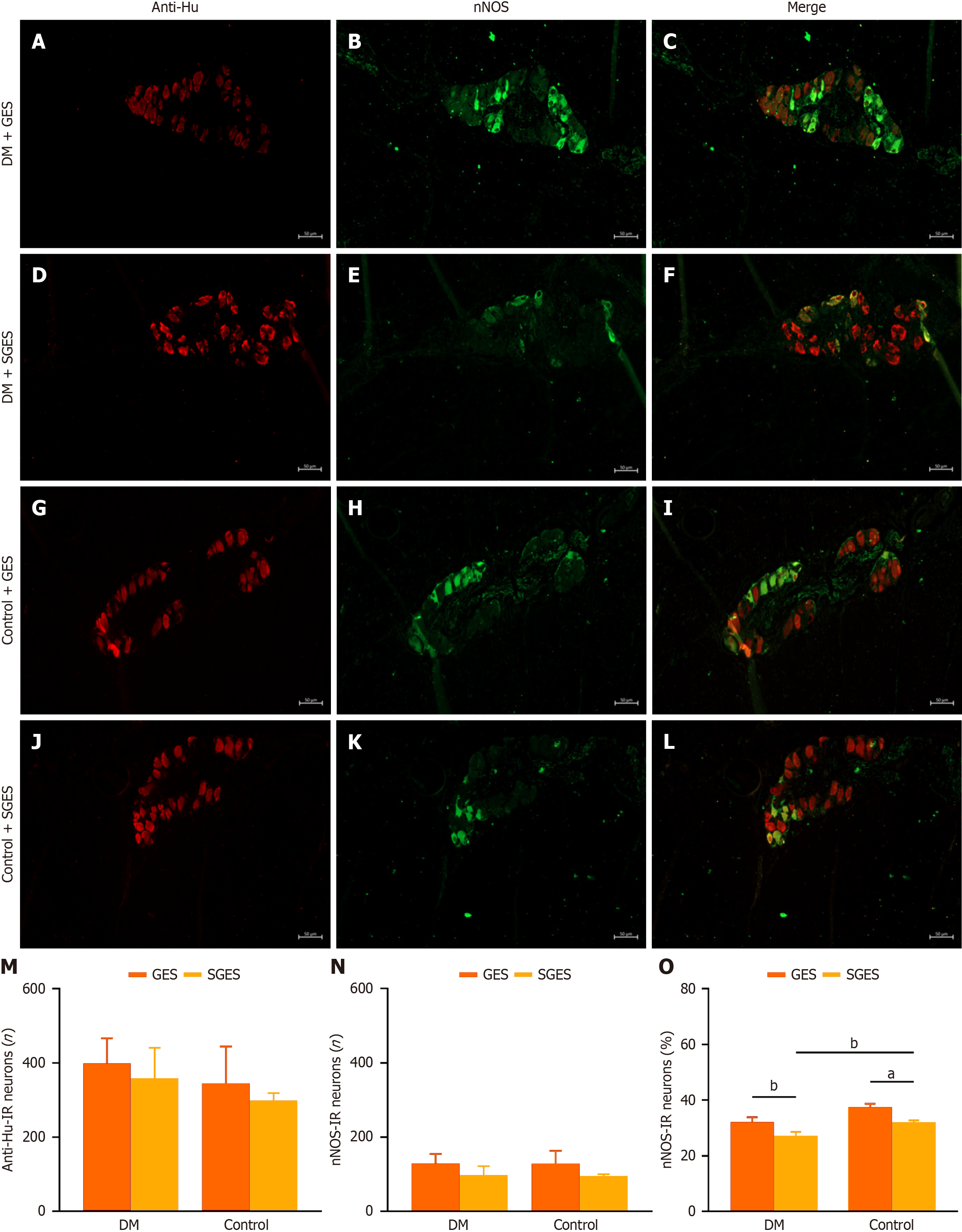
Figure 5 Representative immunofluorescence images of myenteric neuronal nitric oxide synthase-immunoreactive positive neurons in full-thickness sections of canine gastric antrum (200 × magnification, scale bar = 50 μm).
A: Representative images of anti-human neuronal protein HuC/HuD-immunoreactive (anti-Hu-IR) labeled neurons in diabetes mellitus (DM) + gastric electrical stimulation (GES); B: Representative images of neuronal nitric oxide synthase-immunoreactive (nNOS-IR) positive neurons in DM + GES; C: Representative merged images of anti-Hu-IR/nNOS-IR in DM + GES; D: Representative images of anti-Hu-IR labeled neurons in DM + sham GES (SGES); E: Representative images of nNOS-IR positive neurons in DM + SGES; F: Representative merged images of anti-Hu-IR/nNOS-IR in DM + SGES; G: Representative images of anti-Hu-IR labeled neurons in control + GES; H: Representative images of nNOS-IR positive neurons in control + GES; I: Representative merged images of anti-Hu-IR/nNOS-IR in control + GES; J: Representative images of anti-Hu-IR labeled neurons in control + SGES; K: Representative images of nNOS-IR positive neurons in control + SGES; L: Representative merged images of anti-Hu-IR/nNOS-IR in control + SGES; M: Number of anti-Hu-IR positive neurons; N: Number of nNOS-IR positive neurons; O: Proportion of nNOS-IR positive neurons relative to total neurons. The proportion of nNOS-IR neurons was increased in the GES subgroups compared with sham GES in both diabetes mellitus (bP < 0.01) and control canines (aP < 0.05). Within sham-stimulated groups, the proportion of nNOS-IR neurons was less in the diabetes mellitus compared with the controls (bP < 0.01). Anti-Hu: Anti-human neuronal protein HuC/HuD; DM: Diabetes mellitus; GES: Gastric electrical stimulation; nNOS: Neuronal nitric oxide synthase; SGES: Sham gastric electrical stimulation.
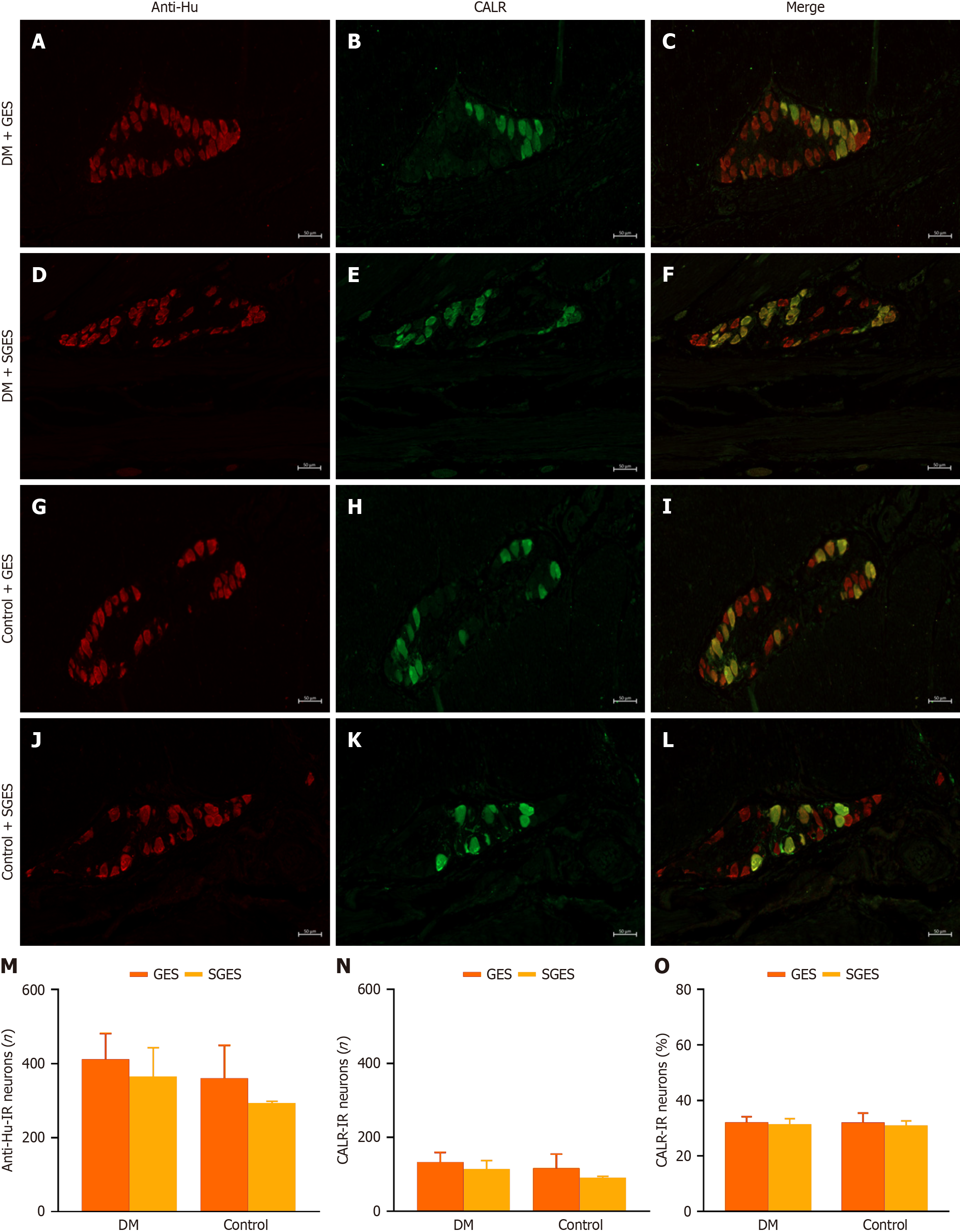
Figure 6 Representative immunofluorescence images of myenteric calretinin-immunoreactive positive neurons in full-thickness sections of canine gastric antrum (200 × magnification, scale bar = 50 μm).
A: Representative images of anti-human neuronal protein HuC/HuD-immunoreactive (anti-Hu-IR) labeled neurons in diabetes mellitus (DM) + gastric electrical stimulation (GES); B: Representative images of calretinin-immunoreactive (CALR-IR) positive neurons in DM + GES; C: Representative merged images of anti-Hu-IR/CALR-IR in DM + GES; D: Representative images of anti-Hu-IR labeled neurons in DM + SGES; E: Representative images of CALR-IR positive neurons in DM + SGES; F: Representative merged images of anti-Hu-IR/CALR-IR in DM + SGES; G: Representative images of anti-Hu-IR labeled neurons in control + GES; H: Representative images of CALR-IR positive neurons in control + GES; I: Representative merged images of anti-Hu-IR/CALR-IR in control + GES; J: Representative images of anti-Hu-IR labeled neurons in control + SGES; K: Representative images of CALR-IR positive neurons in control + SGES; L: Representative merged images of anti-Hu-IR/CALR-IR in control + SGES; M: Number of anti-Hu-IR positive neurons; N: Number of CALR-IR positive neurons; O: Proportion of CALR-IR positive neurons relative to total neurons. Anti-Hu: Anti-human neuronal protein HuC/HuD; CALR: Calretinin; DM: Diabetes mellitus; GES: Gastric electrical stimulation; IR: Immunoreactive; SGES: Sham gastric electrical stimulation.
- Citation: Tang P, Wu X, Xi JR, Fu MY, Xue XW, Jiang Y, Zhao Y, Yang HE, Fei GJ, Li XQ, Hu CH, Fang XC. Gastric electrical stimulation ameliorates antral myenteric neurons in streptozotocin-induced diabetic beagle canines. World J Diabetes 2026; 17(5): 117132
- URL: https://www.wjgnet.com/1948-9358/full/v17/i5/117132.htm
- DOI: https://dx.doi.org/10.4239/wjd.v17.i5.117132