
















©The Author(s) 2025.
World J Diabetes. Dec 15, 2025; 16(12): 112580
Published online Dec 15, 2025. doi: 10.4239/wjd.v16.i12.112580
Published online Dec 15, 2025. doi: 10.4239/wjd.v16.i12.112580
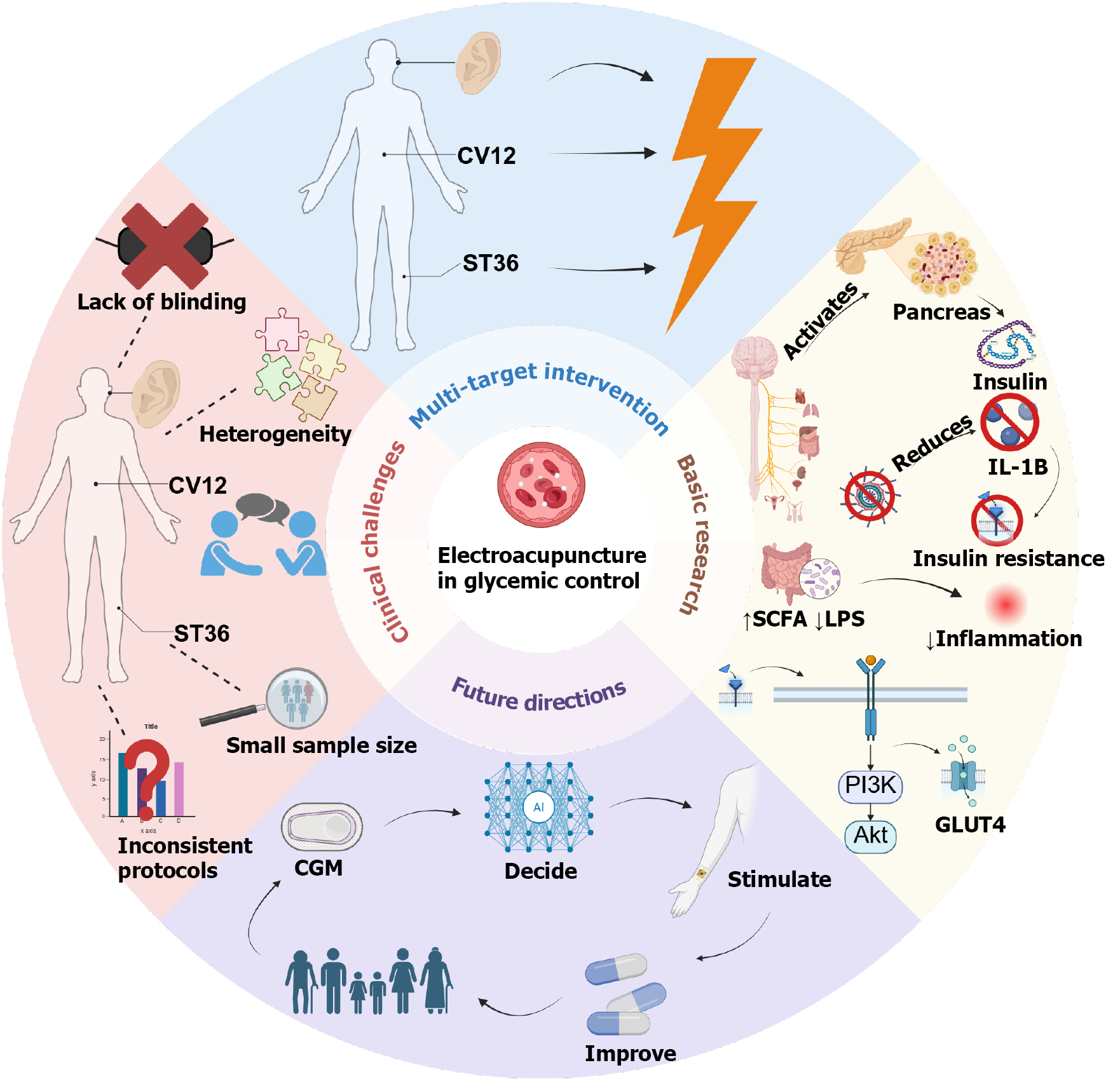
Figure 1 Graphical abstract.
Clinical challenges (left), multi-target stimulation of key acupuncture points (middle), and potential mechanisms involving the nervous system, anti-inflammation, gut microbiota, and insulin signaling pathways (right) ultimately contribute to the development of future closed-loop wearable devices for personalized management. CGM: Continuous glucose monitoring; IL-1β: Interleukin-1β; SCFA: Short-chain fatty acid; LPS: Lipopolysaccharide. Created with biorender.com (Supplementary material).
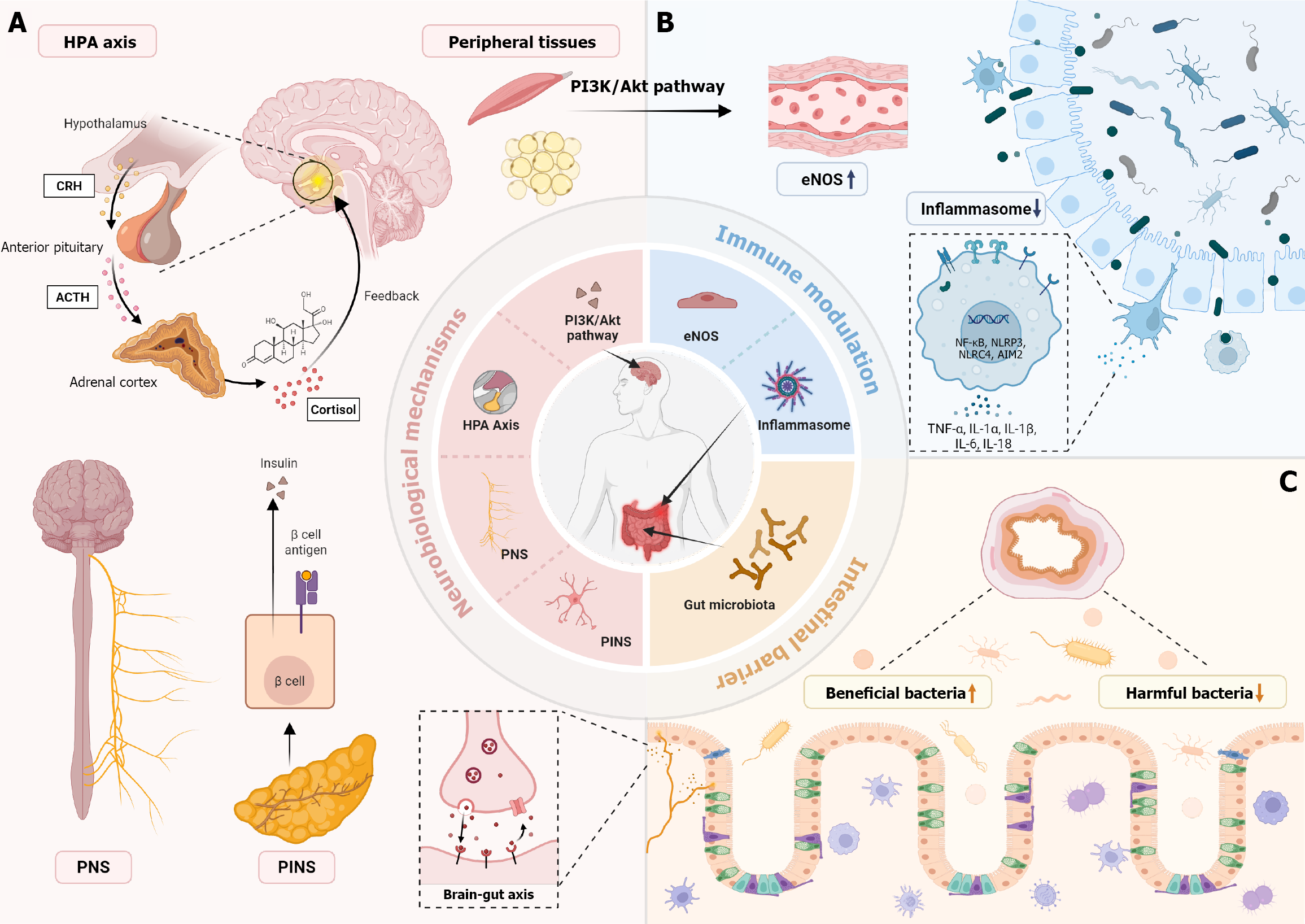
Figure 2 Mechanisms of electroacupuncture in regulating blood glucose.
Electroacupuncture (EA) regulates blood glucose through multidimensional pathways involving the neuro-immune-gut microbiota-insulin signaling axis. A: EA significantly impacts the autonomic nervous system by enhancing parasympathetic activity, particularly through the vagus nerve. This effect leads to improved local tissue blood circulation and enhanced glucose utilization. Moreover, through stimulation of specific acupuncture points, EA can directly modulate pancreatic intrinsic nerves, thereby protecting pancreatic β-cell function and promoting normal insulin secretion, which ultimately helps to reduce blood glucose levels. Furthermore, by regulating the hypothalamic-pituitary-adrenal axis, EA can lower hormone levels, correct endocrine imbalances, and indirectly improve glucose metabolism. EA also activates the PI3K/Akt insulin signaling pathway in peripheral tissues, such as skeletal muscle and adipose tissue, thereby increasing glucose uptake; B: EA inhibits inflammasome activation, reducing the production of pro-inflammatory cytokines such as interleukin-1β, alleviating systemic inflammation, and improving insulin resistance. EA also enhances endothelial function by upregulating the expression of endothelial nitric oxide synthase, thereby alleviating vascular complications associated with diabetes; C: EA may remodel the gut microbiota by altering its composition and function, increasing the abundance of beneficial bacteria while decreasing harmful bacteria and their metabolites. This shift helps reduce systemic inflammation and improve gut barrier function. HPA: Hypothalamic-pituitary-adrenal; PINS: Pancreatic intrinsic nerves; eNOS: Endothelial nitric oxide synthase; TNF-α: Tumor necrosis factor α; IL: Interleukin; GLUT: Glucose transporter. Created with biorender.com (Supplementary material).
- Citation: Wang SY, Deng CX, Huang YN, Tian MX, Zhuang SY, Deng YF, Xu B, Xu TC. Electroacupuncture in glycemic control: Transitioning from clinical controversies to potential basic research. World J Diabetes 2025; 16(12): 112580
- URL: https://www.wjgnet.com/1948-9358/full/v16/i12/112580.htm
- DOI: https://dx.doi.org/10.4239/wjd.v16.i12.112580