
















Copyright: ©Author(s) 2026.
World J Gastrointest Oncol. Jun 15, 2026; 18(6): 118976
Published online Jun 15, 2026. doi: 10.4251/wjgo.v18.i6.118976
Published online Jun 15, 2026. doi: 10.4251/wjgo.v18.i6.118976
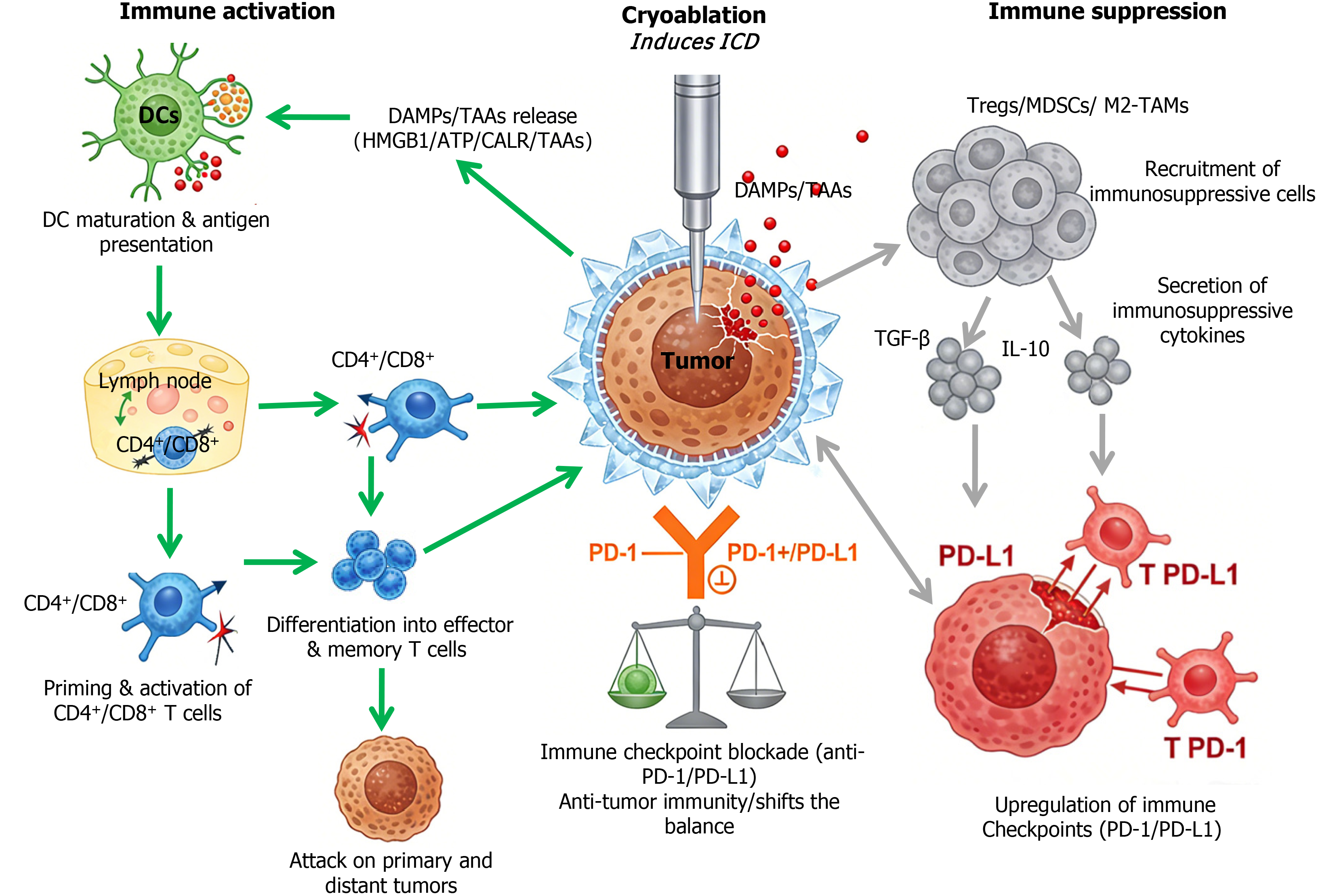
Figure 1 The dual immunomodulatory effects of cryoablation and the rationale for combination with immunotherapy in hepatocellular carcinoma.
Schematic illustration of the dual immunomodulatory effects of cryoablation and the synergistic rationale for its combination with immune checkpoint inhibitors in hepatocellular carcinoma. Central trigger: Cryoablation induces immunogenic cell death in hepatocellular carcinoma cells, leading to the release of damage-associated molecular patterns and tumor-associated antigens. Left panel (immune activation): The released damage-associated molecular patterns/tumor-associated antigens promote dendritic cell maturation and antigen presentation. Mature dendritic cells migrate to draining lymph nodes to prime and activate naïve CD4+ and CD8+ T cells. These activated T cells differentiate into effector and memory subsets, which traffic to and attack both the primary and distant tumor sites. Right panel (concomitant immunosuppression): In parallel, cryoablation can trigger counter-regulatory mechanisms that foster an immunosuppressive tumor microenvironment. These include the recruitment of immunosuppressive cells (e.g., regulatory T cells, myeloid-derived suppressor cells, M2-type tumor-associated macrophages), the secretion of inhibitory cytokines (e.g., transforming growth factor-beta, interleukin-10), and the upregulation of immune checkpoint molecules [e.g., programmed death-ligand 1 (PD-L1)] on tumor and immune cells. Therapeutic intervention and rebalancing (central motif): The centrally placed balance scale symbolizes the dynamic equilibrium between the concurrently induced immune activation and suppression. The administration of immune checkpoint inhibitors (e.g., anti-programmed death-1/PD-L1 antibodies) to block the programmed death-1/PD-L1 pathway acts as a decisive intervention that tips the balance in favor of productive anti-tumor immunity, thereby overcoming resistance and enabling systemic tumor control. ATP: Adenosine triphosphate; CALR: Calreticulin; DAMP: Damage-associated molecular pattern; DC: Dendritic cell; HMGB1: High mobility group box 1; ICD: Immunogenic cell death; IL: Interleukin; MDSC: Myeloid-derived suppressor cell; PD-1: Programmed death-1; PD-L1: Programmed death-ligand 1; TAA: Tumor-associated antigen; TAM: Tumor-associated macrophage; Treg: Regulatory T cell; TGF-β: Transforming growth factor-beta.
- Citation: Xu JJ, Ni CX, Qin LD, Wang P, Xu JJ. Cryoablation remodels the immune microenvironment in hepatocellular carcinoma: From mechanistic insights to clinical translation in combination immunotherapy. World J Gastrointest Oncol 2026; 18(6): 118976
- URL: https://www.wjgnet.com/1948-5204/full/v18/i6/118976.htm
- DOI: https://dx.doi.org/10.4251/wjgo.v18.i6.118976