
















©The Author(s) 2026.
World J Gastrointest Oncol. Feb 15, 2026; 18(2): 113673
Published online Feb 15, 2026. doi: 10.4251/wjgo.v18.i2.113673
Published online Feb 15, 2026. doi: 10.4251/wjgo.v18.i2.113673
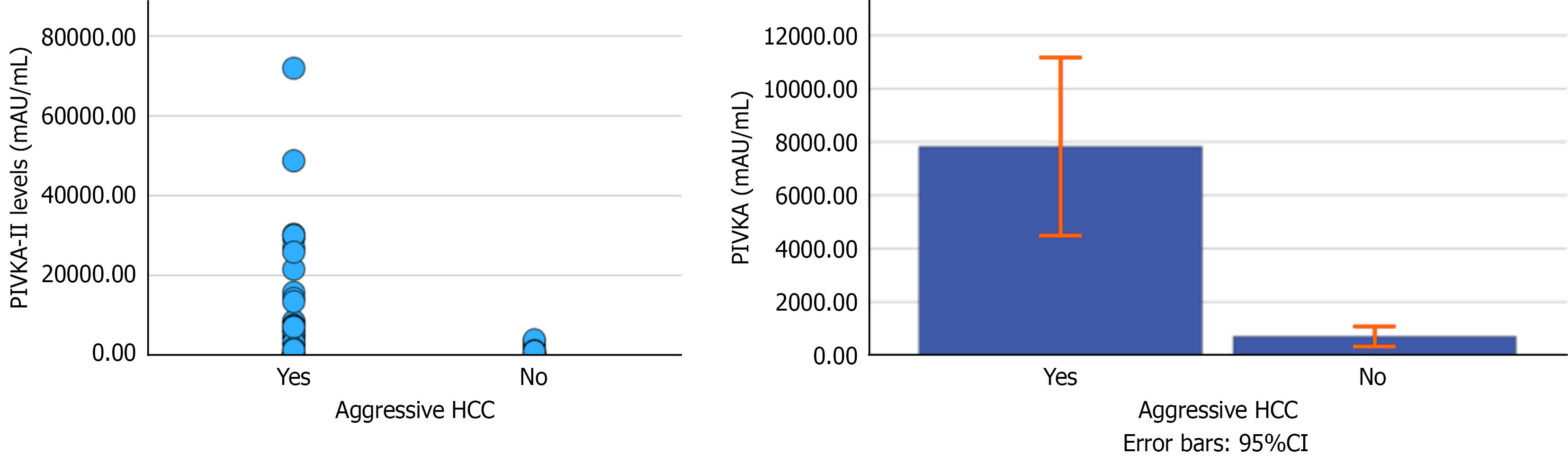
Figure 1 Comparison of protein induced by vitamin K absence levels in patients with aggressive and non-aggressive hepatocellular carcinoma.
PIVKA-II: Protein induced by vitamin K absence/antagonist-II; HCC: Hepatocellular carcinoma; CI: Confidence interval.
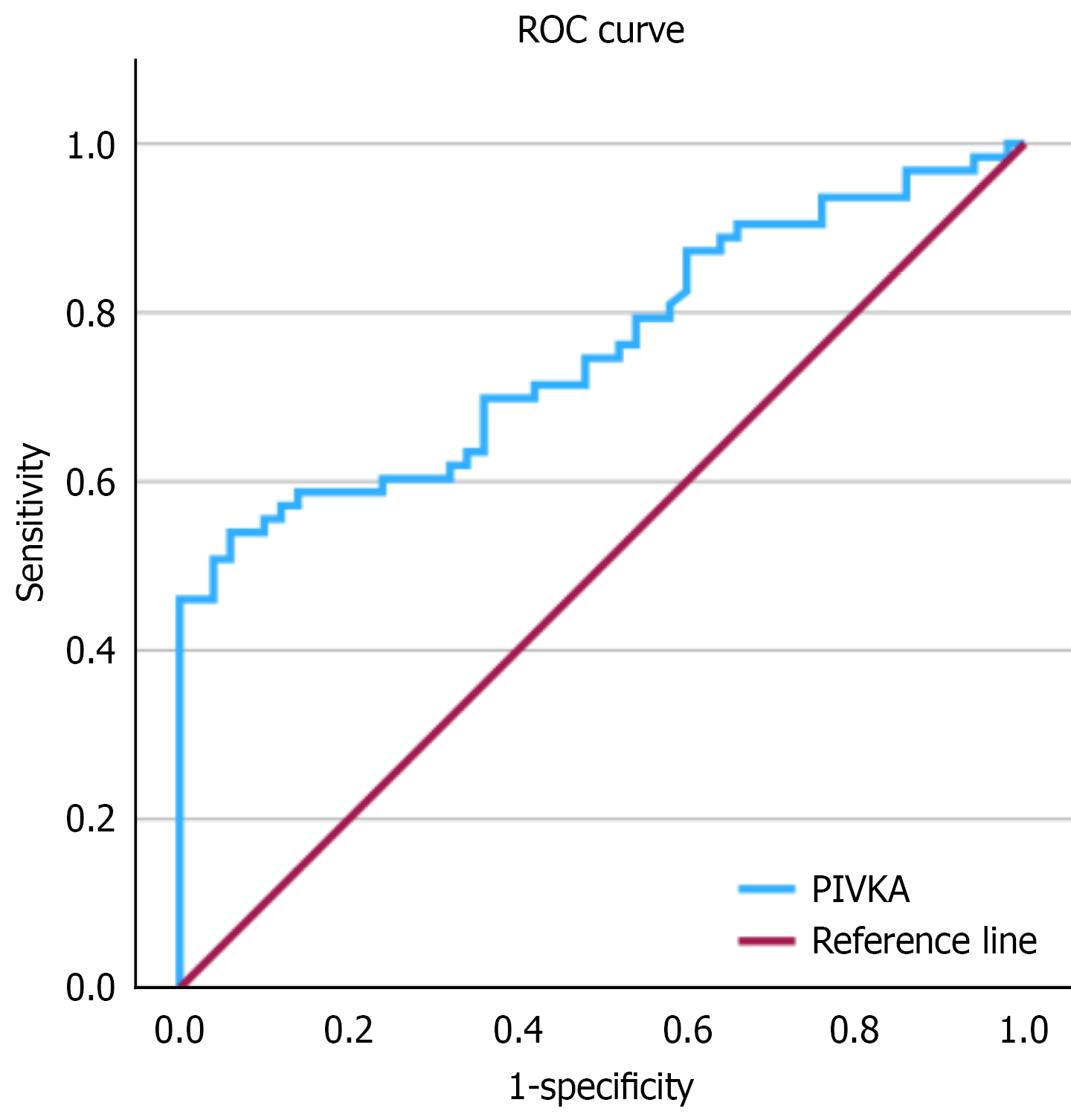
Figure 2 Receiver operating characteristic curve of protein induced by vitamin K absence/antagonist-II values for predicting aggressive hepatocellular carcinoma.
ROC: Receiver operating characteristic; PIVKA: Protein induced by vitamin K absence.
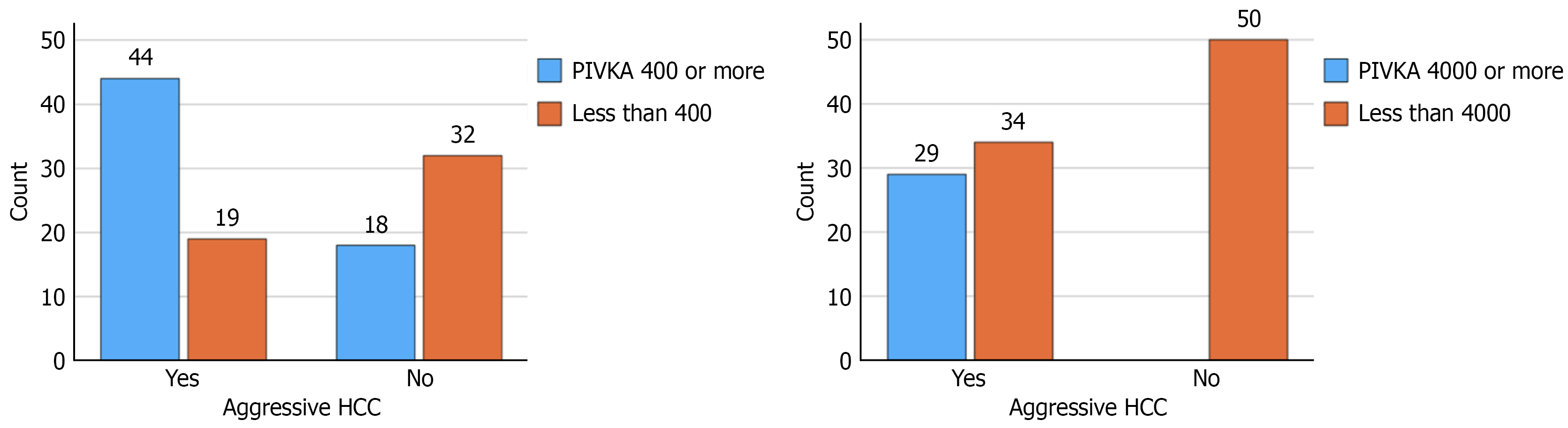
Figure 3 Proportion of aggressive vs non-aggressive tumors at two proteins induced by vitamin K absence/antagonist-II thresholds (> 400 mAU/mL and > 4000 mAU/mL).
All tumors with protein induced by vitamin K absence/antagonist-II > 4000 mAU/mL were aggressive, whereas at > 400 mAU/mL the cohort splits between aggressive and non-aggressive tumors, as shown. PIVKA: Protein induced by vitamin K absence; HCC: Hepatocellular carcinoma.
- Citation: Abbas Z, Gazder DP, Hyder Z, Qadeer MA, Abbas M. Serum protein induced by vitamin K absence or antagonist-II predicts aggressive tumor biology in alpha-fetoprotein-normal hepatocellular carcinoma. World J Gastrointest Oncol 2026; 18(2): 113673
- URL: https://www.wjgnet.com/1948-5204/full/v18/i2/113673.htm
- DOI: https://dx.doi.org/10.4251/wjgo.v18.i2.113673