
















Copyright: ©Author(s) 2026.
World J Gastrointest Endosc. Jun 16, 2026; 18(6): 122027
Published online Jun 16, 2026. doi: 10.4253/wjge.v18.i6.122027
Published online Jun 16, 2026. doi: 10.4253/wjge.v18.i6.122027
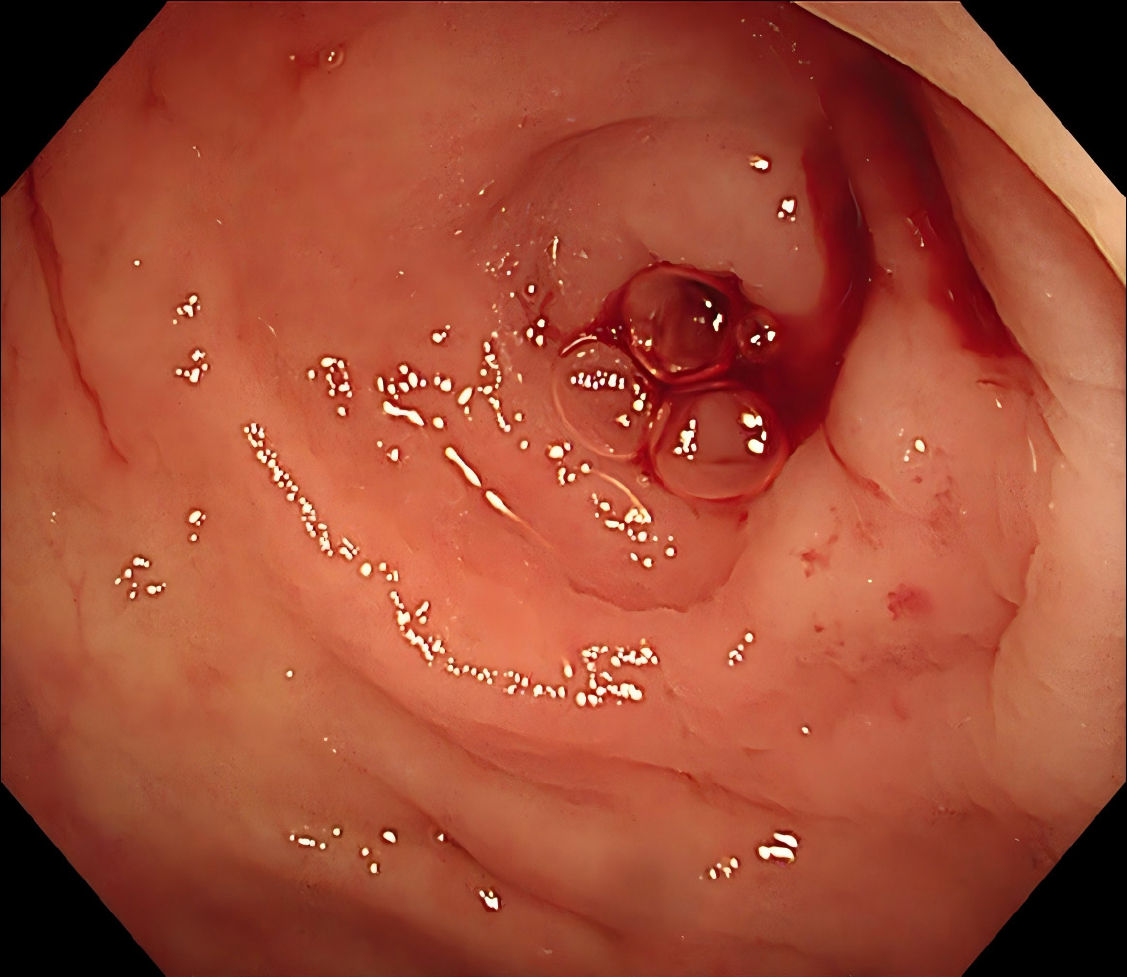
Figure 1 Emergency colonoscopy image.
Colonoscopy revealed dark red blood throughout the intestinal lumen, with visible fresh red bleeding emanating from the appendiceal lumen.
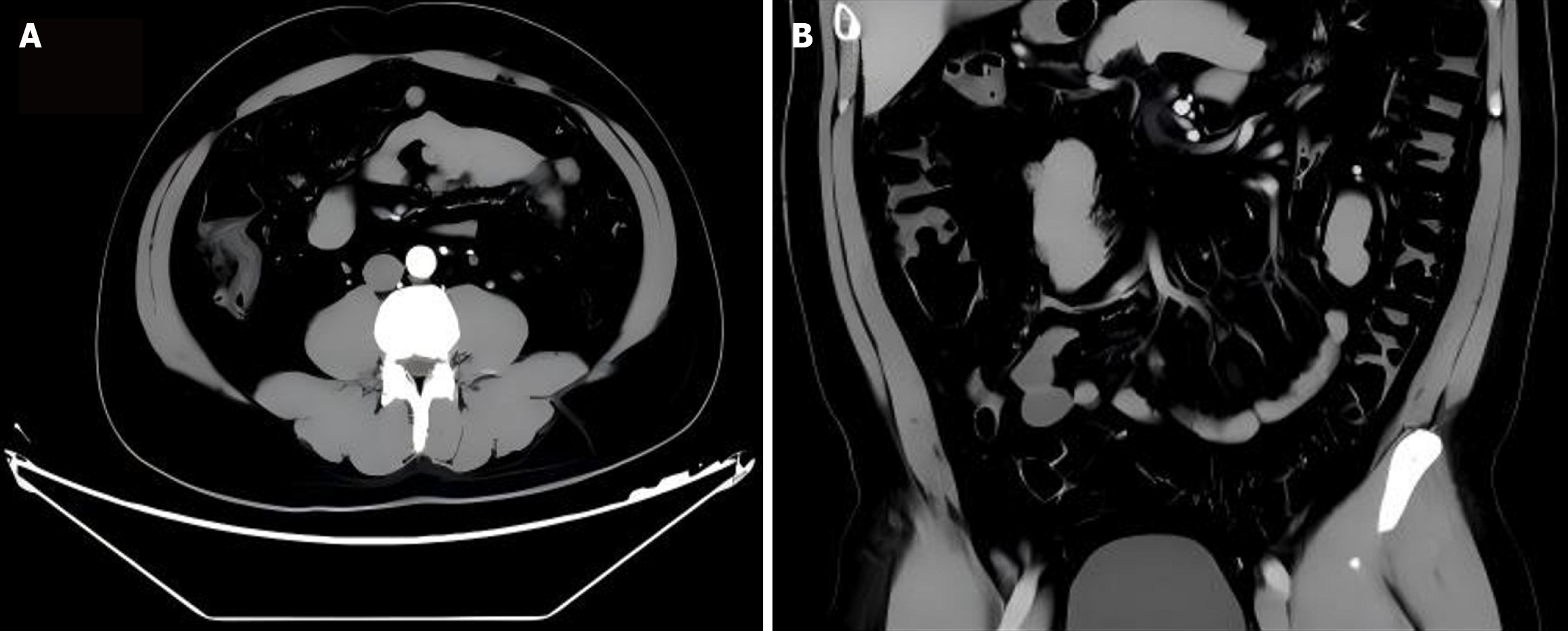
Figure 2 Contrast-enhanced computed tomography of the appendix.
A and B: Computed tomography demonstrated mild luminal dilation, localized wall thickening, and contrast enhancement on dynamic imaging; gas was present within the appendiceal lumen, and the surrounding fat spaces were clear.
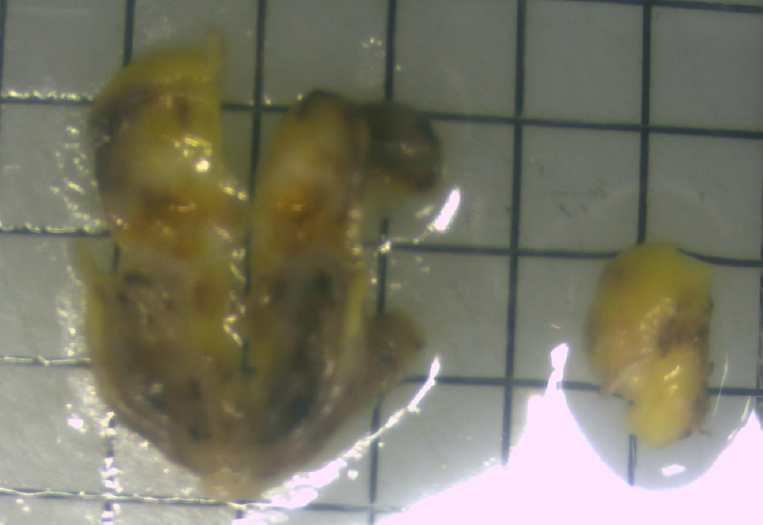
Figure 3 Gross specimen after appendectomy.
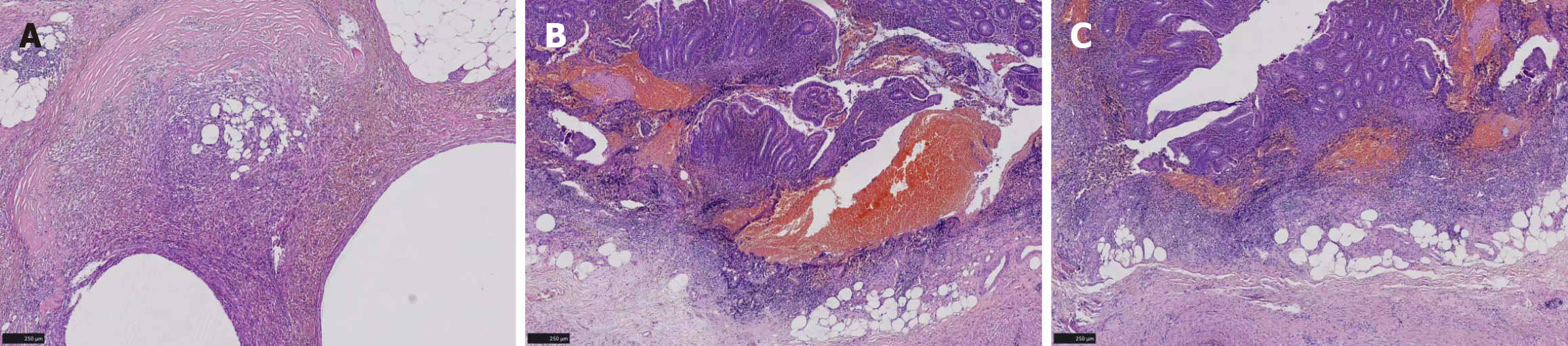
Figure 4 Postoperative pathology.
A-C: Histopathological analysis and haematoxylin and eosin staining. Postoperative pathology suggested vascular dilatation with congestion and bruising, accompanied by ferritin deposition and a peripheral multinucleated giant-cell reaction, as well as mucosal ulceration and hemorrhage, consistent with xanthogranulomatous appendicitis (hematoxylin-eosin staining, 40 ×).
- Citation: Tang BX, Li XD, Li XL. Lower gastrointestinal bleeding attributed to xanthogranulomatous appendicitis: A case report. World J Gastrointest Endosc 2026; 18(6): 122027
- URL: https://www.wjgnet.com/1948-5190/full/v18/i6/122027.htm
- DOI: https://dx.doi.org/10.4253/wjge.v18.i6.122027