
















Copyright: ©Author(s) 2026.
World J Gastrointest Endosc. May 16, 2026; 18(5): 119952
Published online May 16, 2026. doi: 10.4253/wjge.v18.i5.119952
Published online May 16, 2026. doi: 10.4253/wjge.v18.i5.119952
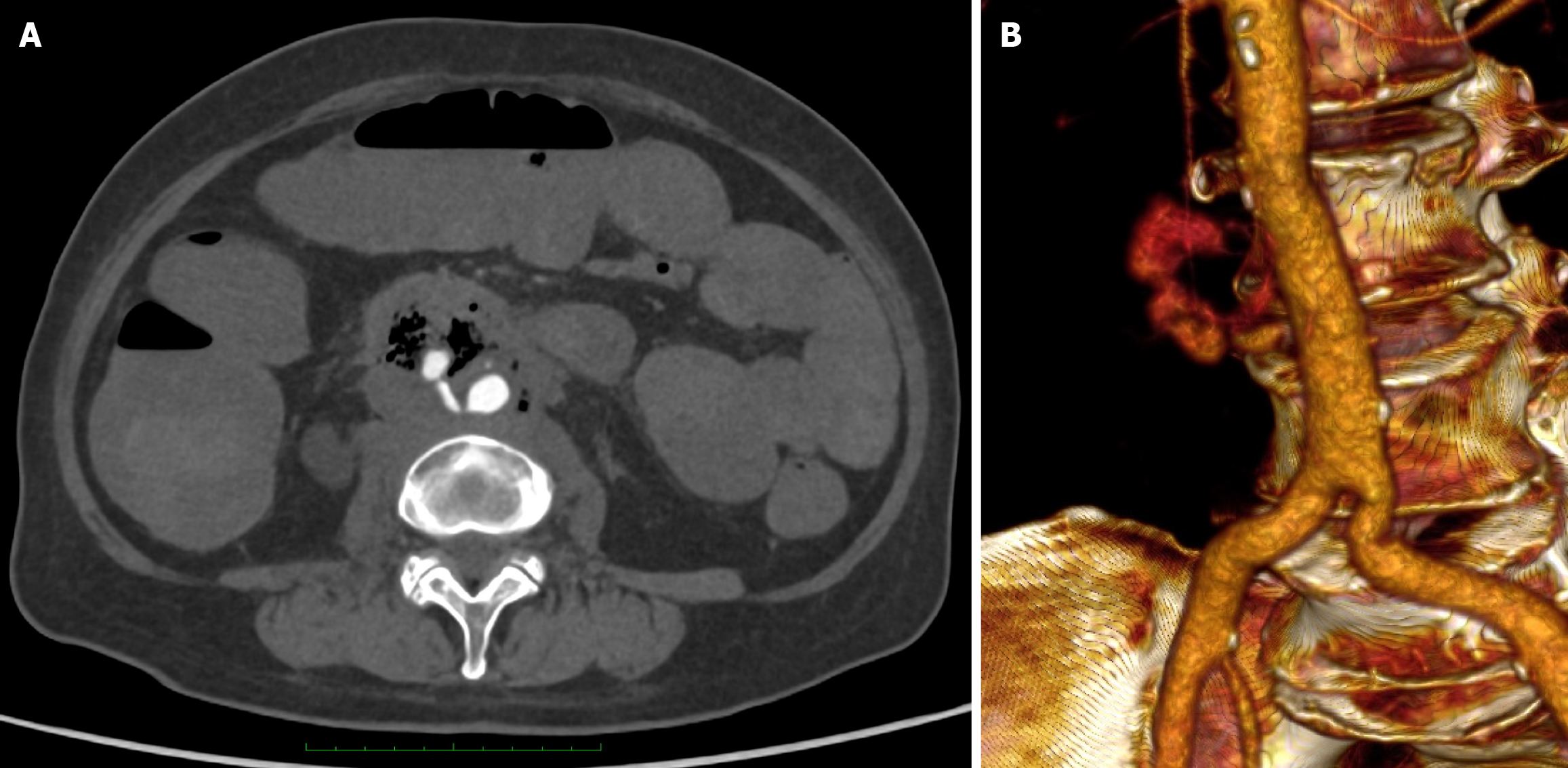
Figure 1 Computed tomography findings.
A: Contrast computed tomography scan showing immediate extravasation of contrast from abdominal aorta at level L4/5 into duodenum. It is associated with the known para-aortic metastatic nodal conglomerates with multiple gas locules noted within, diagnostic of aortoduodenal fistula; B: Three-dimensional reconstruction showing extravasation of contrast from the right lateral wall of the aorta into the 3rd part of the duodenum.
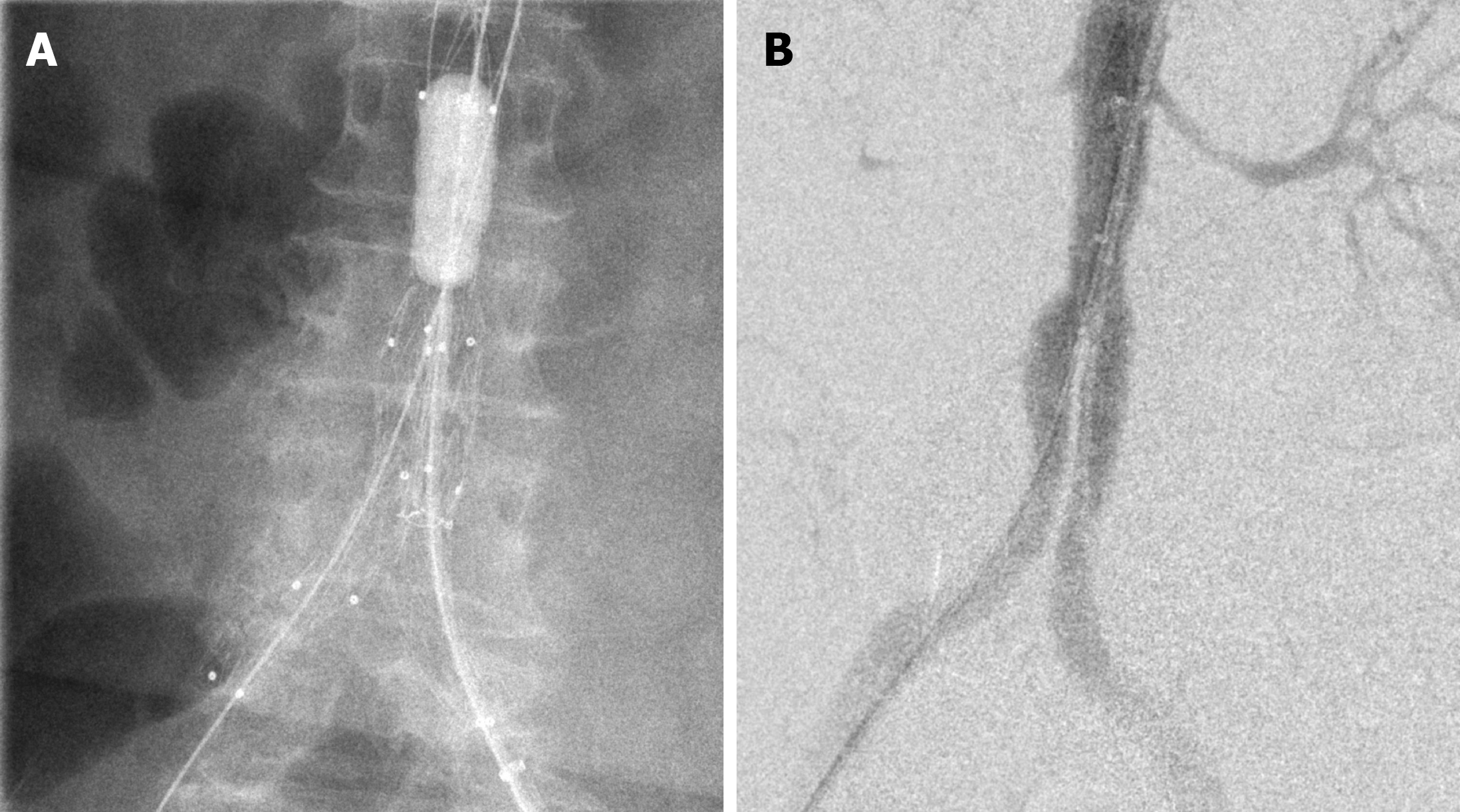
Figure 2 Endovascular aortic repair imaging.
A balloon molding of the smallest bifurcated stent-graft in the narrow aorta, to cover the aortoduodenal fistula; B: Completion angiography showed proper graft placement without extravasation or endoleak.
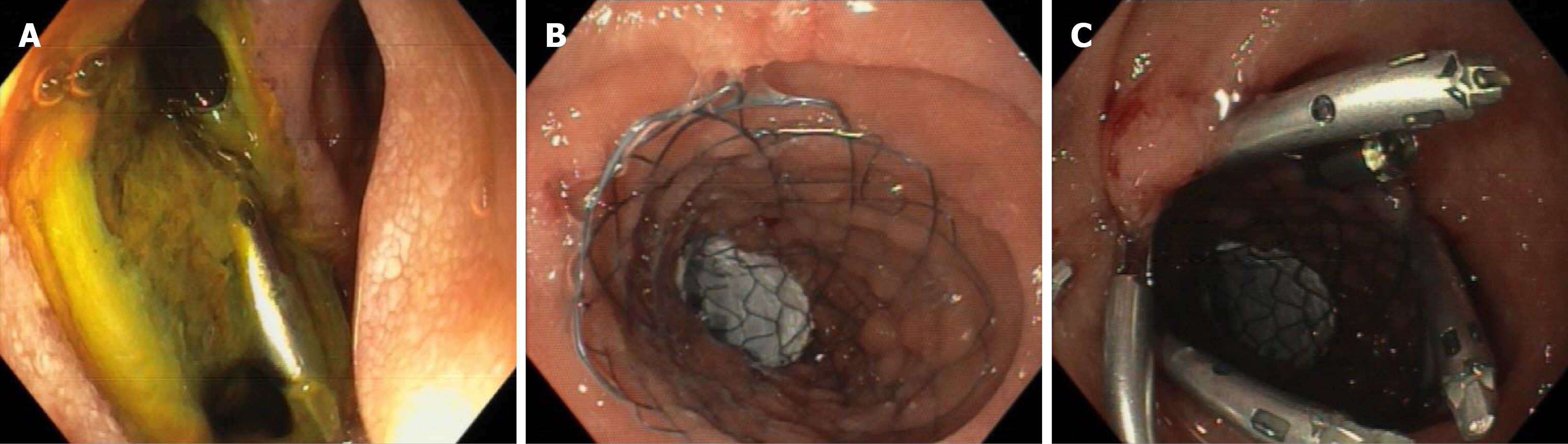
Figure 3 Endoscopic views of aortoduodenal fistula and stenting.
A: Endoscopic intraluminal view of aortoduodenal fistula; B: Partially covered stent allows coverage of duodenal defect whilst not covering the ampulla; C: Stent anchored with endoclips to prevent migration.
- Citation: Chan ST, Lo STW, Cheung VWS, Chu CCW, Pang SYC. Duodenal and aortic stenting for aortoduodenal fistula secondary to malignancy: A case report. World J Gastrointest Endosc 2026; 18(5): 119952
- URL: https://www.wjgnet.com/1948-5190/full/v18/i5/119952.htm
- DOI: https://dx.doi.org/10.4253/wjge.v18.i5.119952