
















Copyright: ©Author(s) 2026.
World J Gastrointest Endosc. Mar 16, 2026; 18(3): 116060
Published online Mar 16, 2026. doi: 10.4253/wjge.v18.i3.116060
Published online Mar 16, 2026. doi: 10.4253/wjge.v18.i3.116060
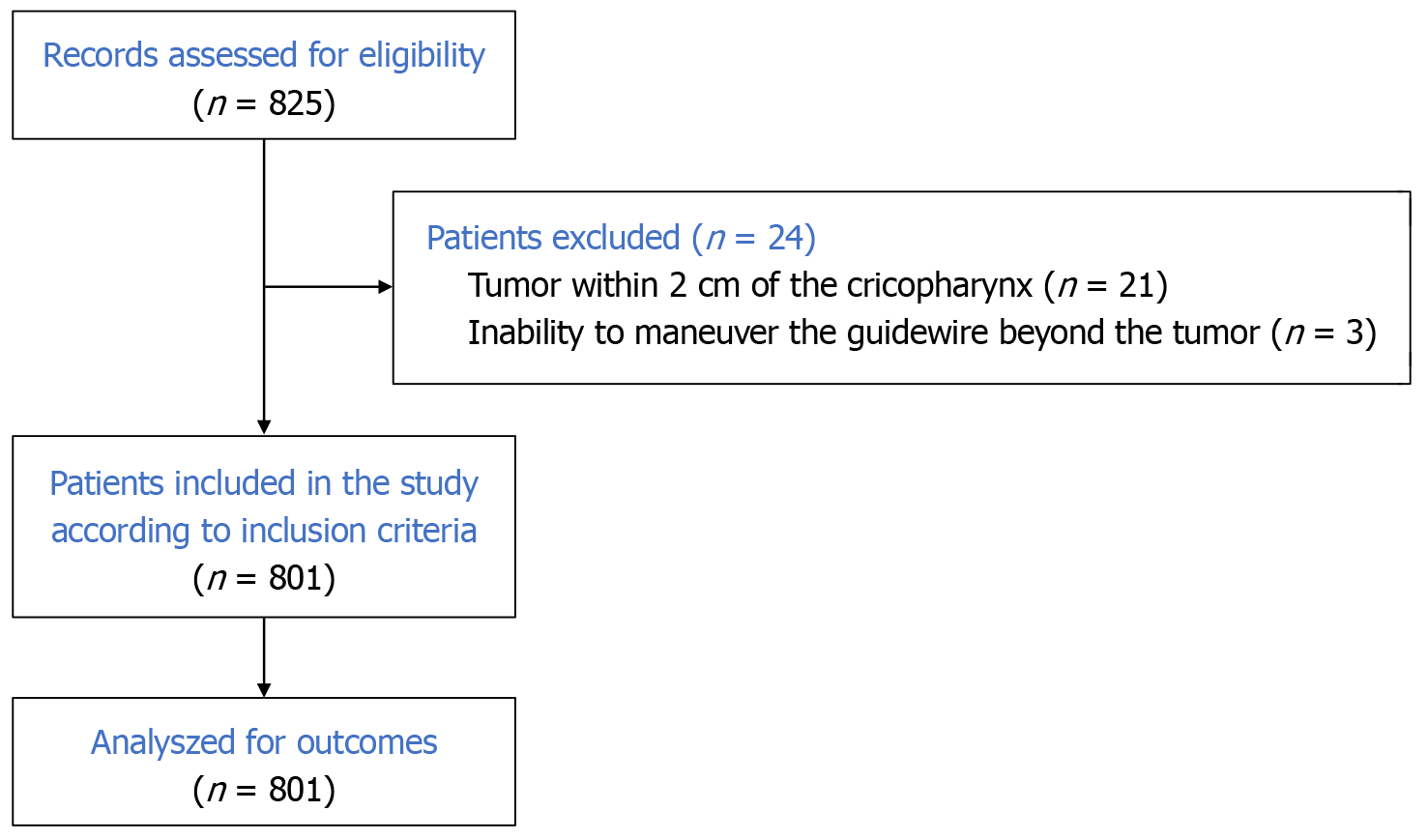
Figure 1
The Strengthening the Reporting of Observational studies in Epidemiology flow diagram illustrating the selection of study participants, including eligibility assessment, exclusions with reasons, and the final cohort included in the analysis.
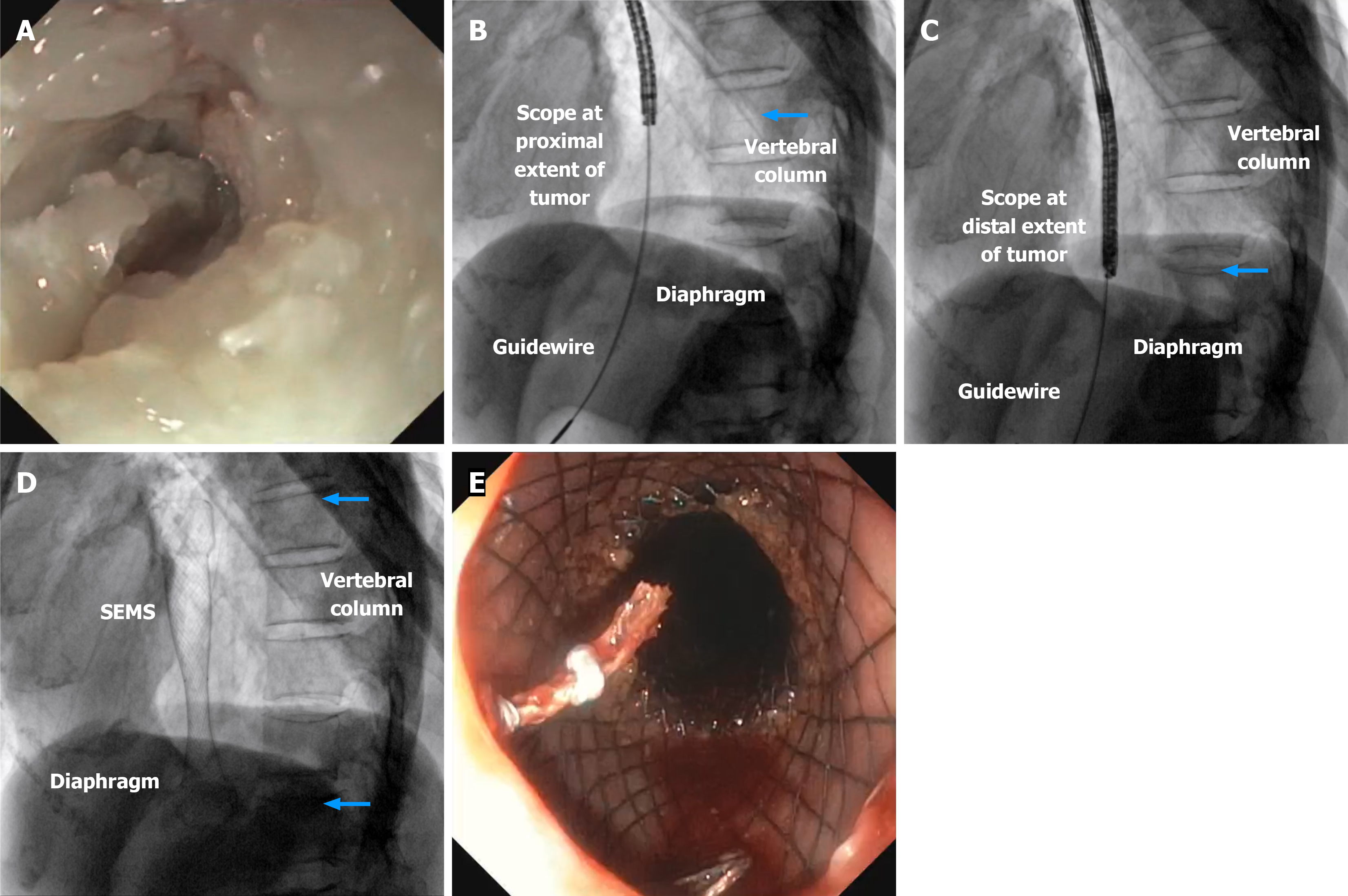
Figure 2 Representative images of self-expandable metallic stent placement utilizing the vertebral column and diaphragm as landmarks in a 62-year-old male with a history of dysphagia and weight loss diagnosed with squamous cell carcinoma with distant metastasis.
A: Endoscopy revealed a circumferential and friable growth 35 cm from the incisors. The gastroesophageal junction was involved at 39 cm, extending to 1 cm of the cardia. An ultrathin gastroscope was passed with resistance. A guidewire was placed into the stomach under endoscopic guidance; B: Fluoroscopic imaging showed the ultrathin gastroscope at the proximal extent of the tumor. The blue arrow indicates the corresponding vertebra in line with the proximal extent of the tumor (i.e., two vertebrae above the diaphragm); C: Fluoroscopic imaging showed the ultrathin gastroscope at the distal extent of the tumor. The blue arrow indicates the corresponding vertebra in line with the distal extent of the tumor just above the diaphragm; D: Fluoroscopic imaging after self-expandable metallic stent (22 mm × 100 mm) placement under the guidance of vertebral markings, after adding one vertebra above and one vertebra below the proximal and distal extent of the tumor. The blue arrows indicate the corresponding vertebrae in line with the proximal and distal ends of the stent (i.e., four vertebrae in total); E: Endoscopic view after self-expandable metallic stent placement showed the proximal end of the stent covering 2 cm of the normal mucosa proximally. SEMS: Self-expandable metallic stent.
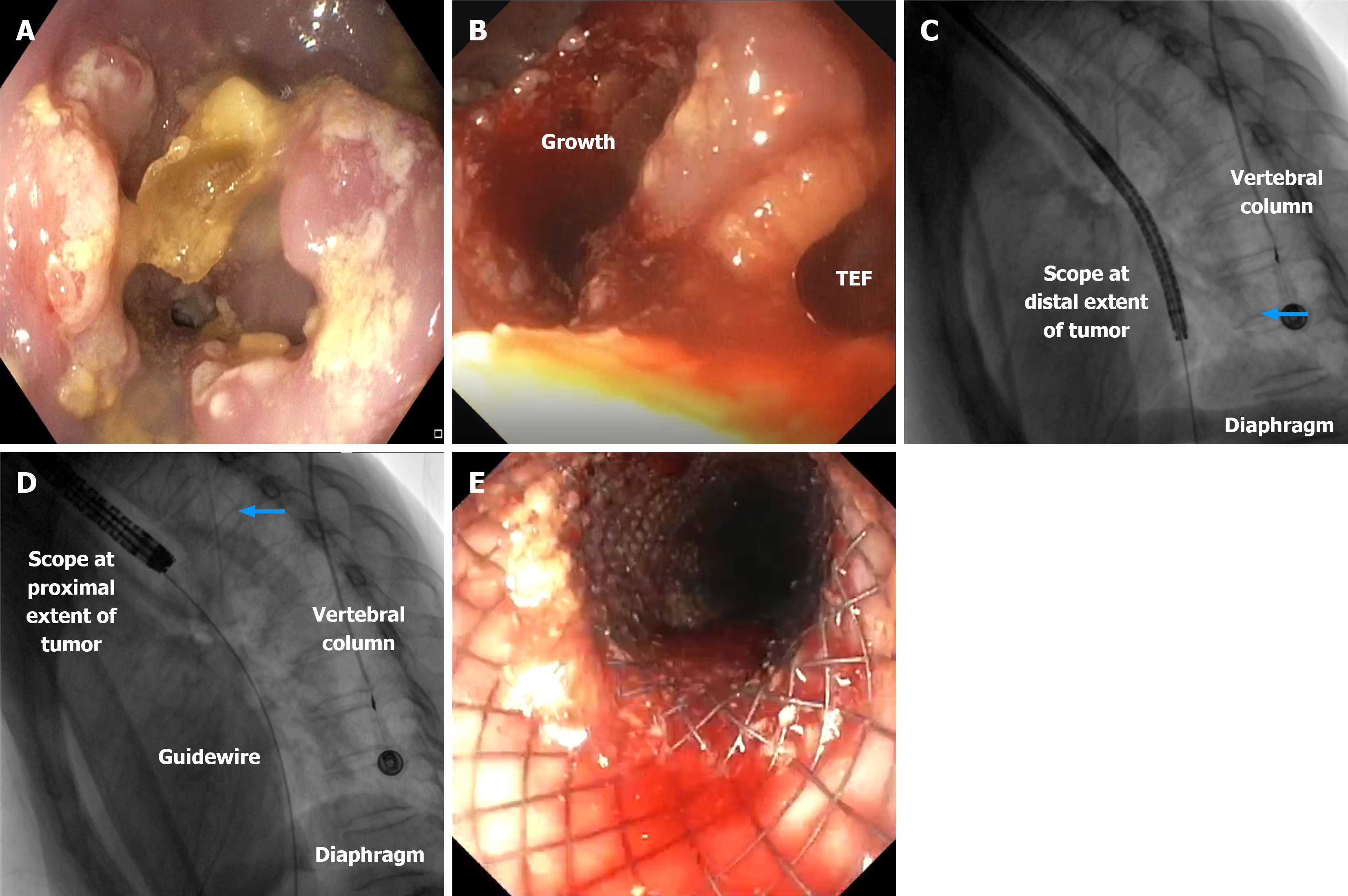
Figure 3 Representative images of self-expandable metallic stent placement utilizing the vertebral column and diaphragm as landmarks in a 70-year-old female with a history of dysphagia, cough, and weight loss diagnosed with squamous cell carcinoma and locally ad
- Citation: Siyal M, Asim M, Qureshi S, Ghazanfar S, Siddiqui AR, Ahmed N, Altaf A, Zakaria N, Yaseen A, Kakar F, Kadir S, Hasan MK, Niaz SK. Navigating self-expandable metallic stent placement in inoperable esophageal malignancies: A landmark-based technique using the vertebral column and diaphragm. World J Gastrointest Endosc 2026; 18(3): 116060
- URL: https://www.wjgnet.com/1948-5190/full/v18/i3/116060.htm
- DOI: https://dx.doi.org/10.4253/wjge.v18.i3.116060