
















Copyright: ©Author(s) 2026.
World J Gastrointest Endosc. Mar 16, 2026; 18(3): 114327
Published online Mar 16, 2026. doi: 10.4253/wjge.v18.i3.114327
Published online Mar 16, 2026. doi: 10.4253/wjge.v18.i3.114327
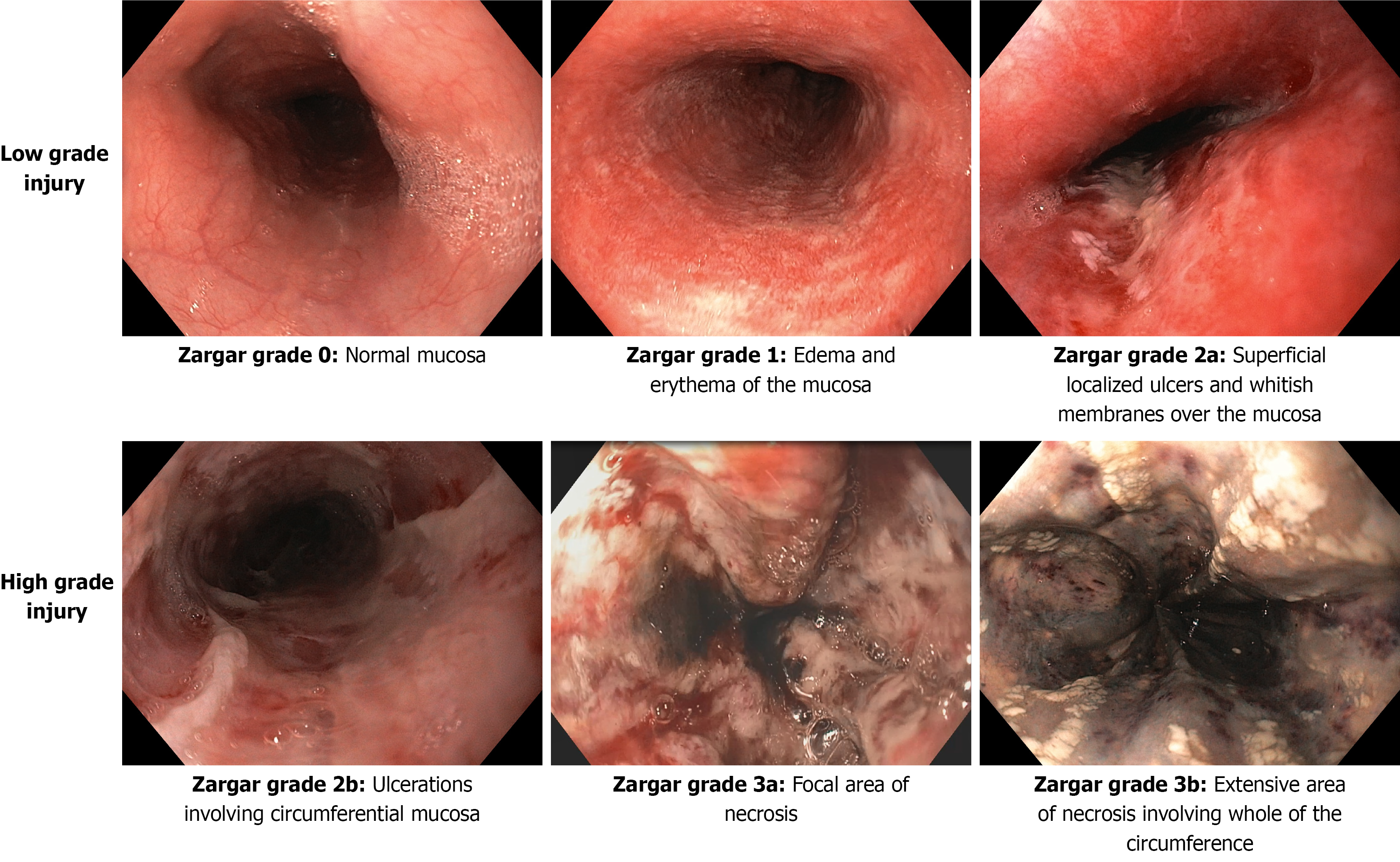
Figure 1
Zargar grade of injury on endoscopic evaluation after caustic ingestion.
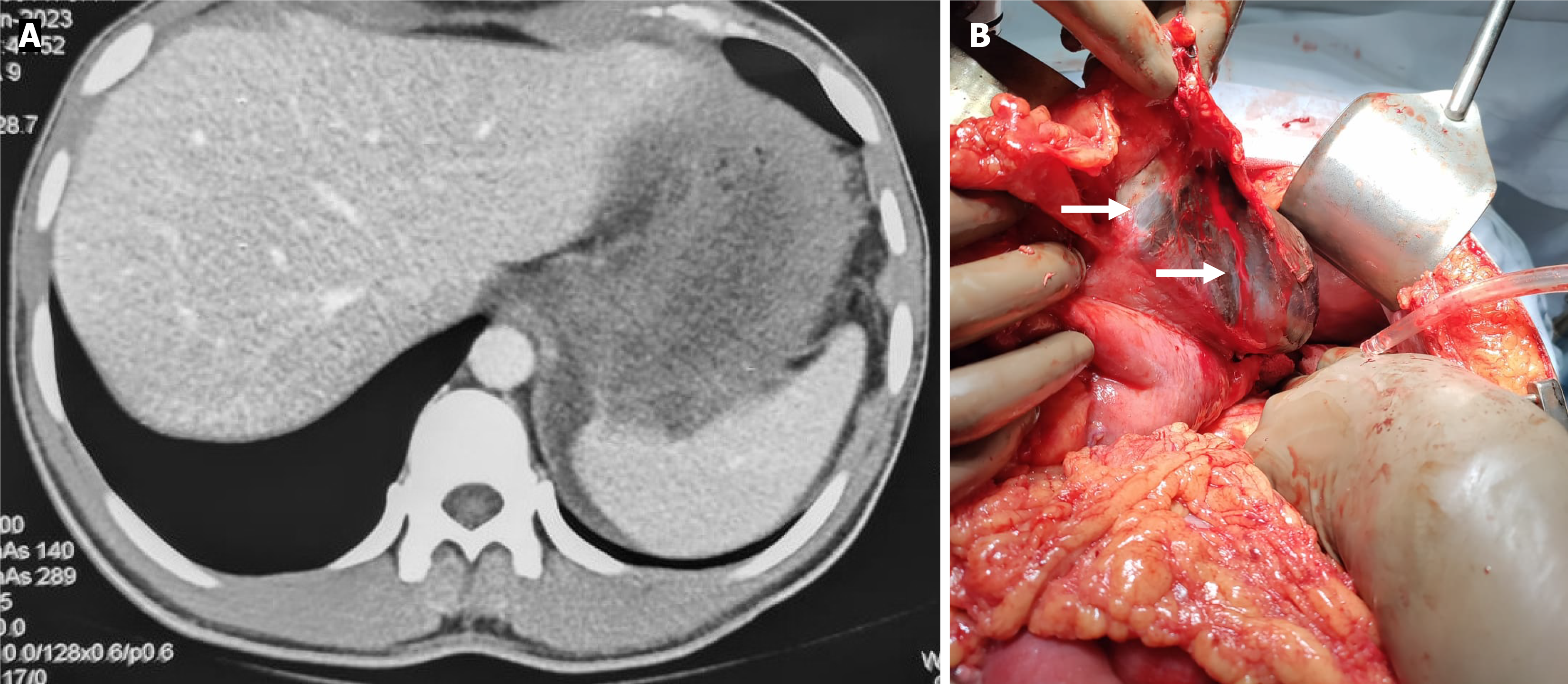
Figure 2 Computed topography in hemodynamically unstable condition for predicting the severe injury.
A: Non-enhancing thickened gastric wall on contrast-enhanced computed tomography in a patient with caustic ingestion; B: Surgical exploration revealed gastric fundal necrosis with impending perforation (white arrows).
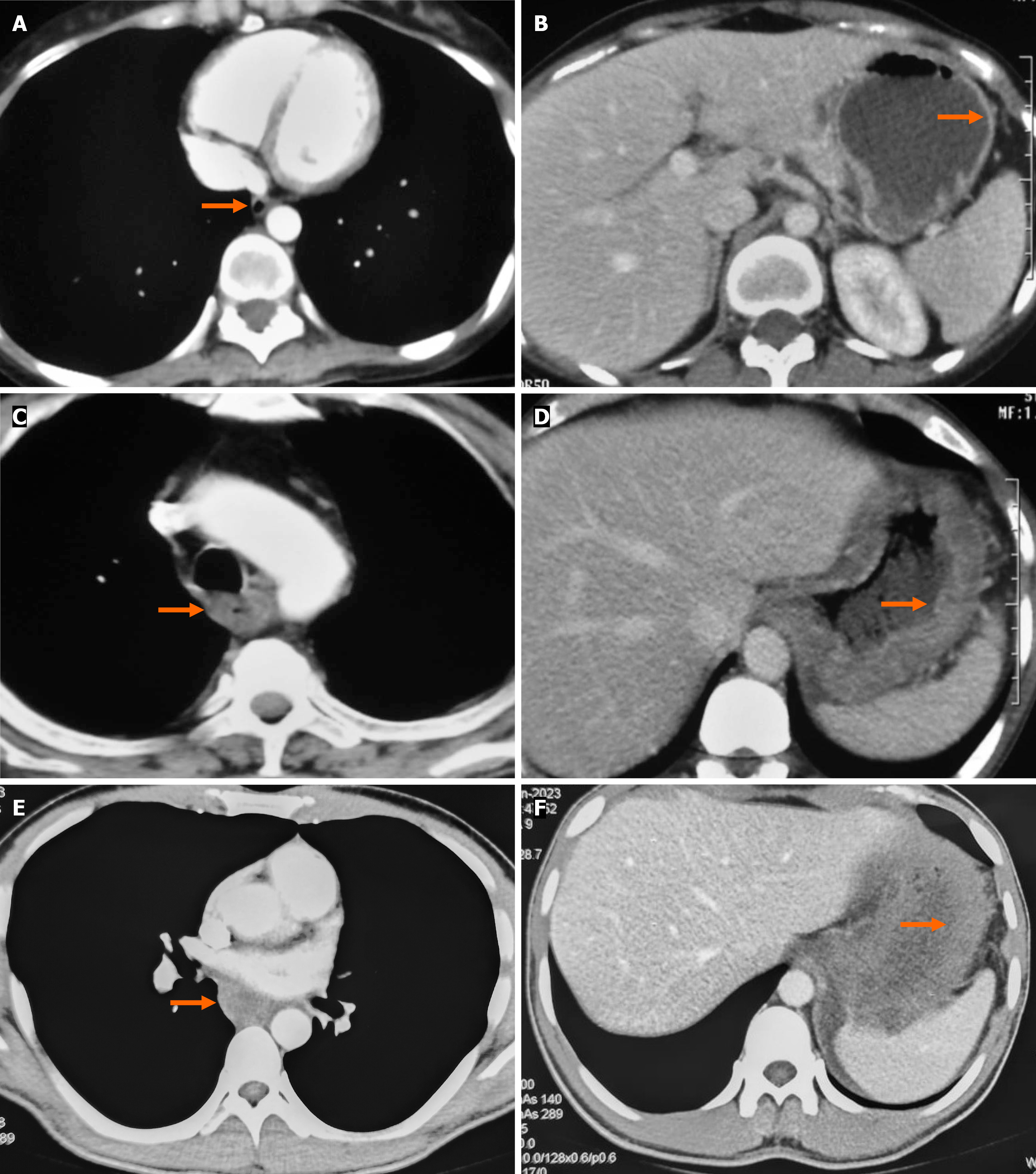
Figure 3 Grade of injuries on contrast-enhanced computed tomography after caustic ingestion.
A and B: Grade 1 normal appearing gas
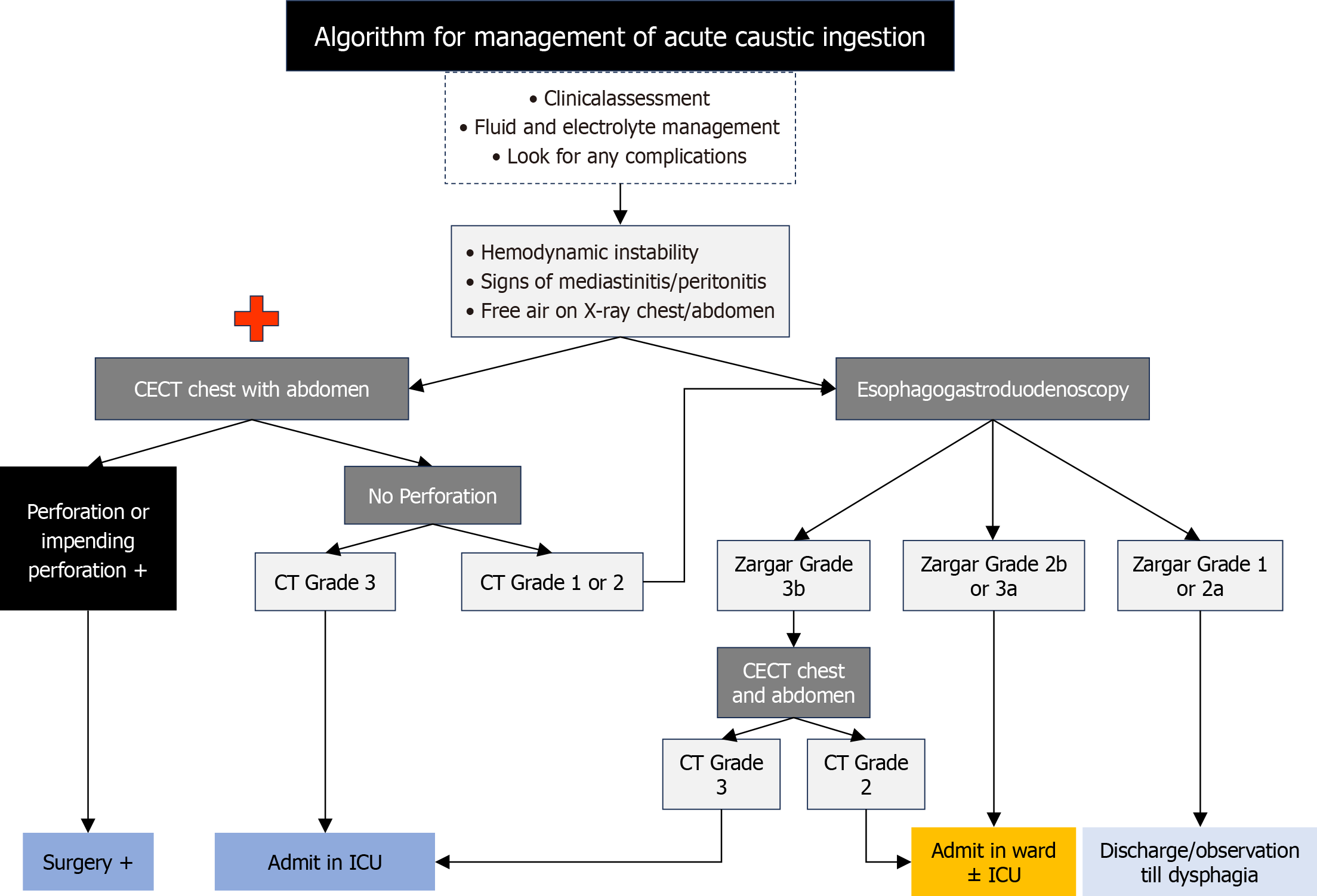
Figure 4 Management protocol of acute caustic injury with complementary role of computed tomography in injury assessment.
CECT: Contrast-enhanced computed tomography; CT: Computed tomography; ICU: Intensive care unit.
- Citation: Singh AK, Birda CL, Kochhar R. Optimizing triage in acute caustic ingestion: Choosing between endoscopy and computed tomography. World J Gastrointest Endosc 2026; 18(3): 114327
- URL: https://www.wjgnet.com/1948-5190/full/v18/i3/114327.htm
- DOI: https://dx.doi.org/10.4253/wjge.v18.i3.114327