
















©The Author(s) 2025.
World J Gastrointest Endosc. Nov 16, 2025; 17(11): 110436
Published online Nov 16, 2025. doi: 10.4253/wjge.v17.i11.110436
Published online Nov 16, 2025. doi: 10.4253/wjge.v17.i11.110436
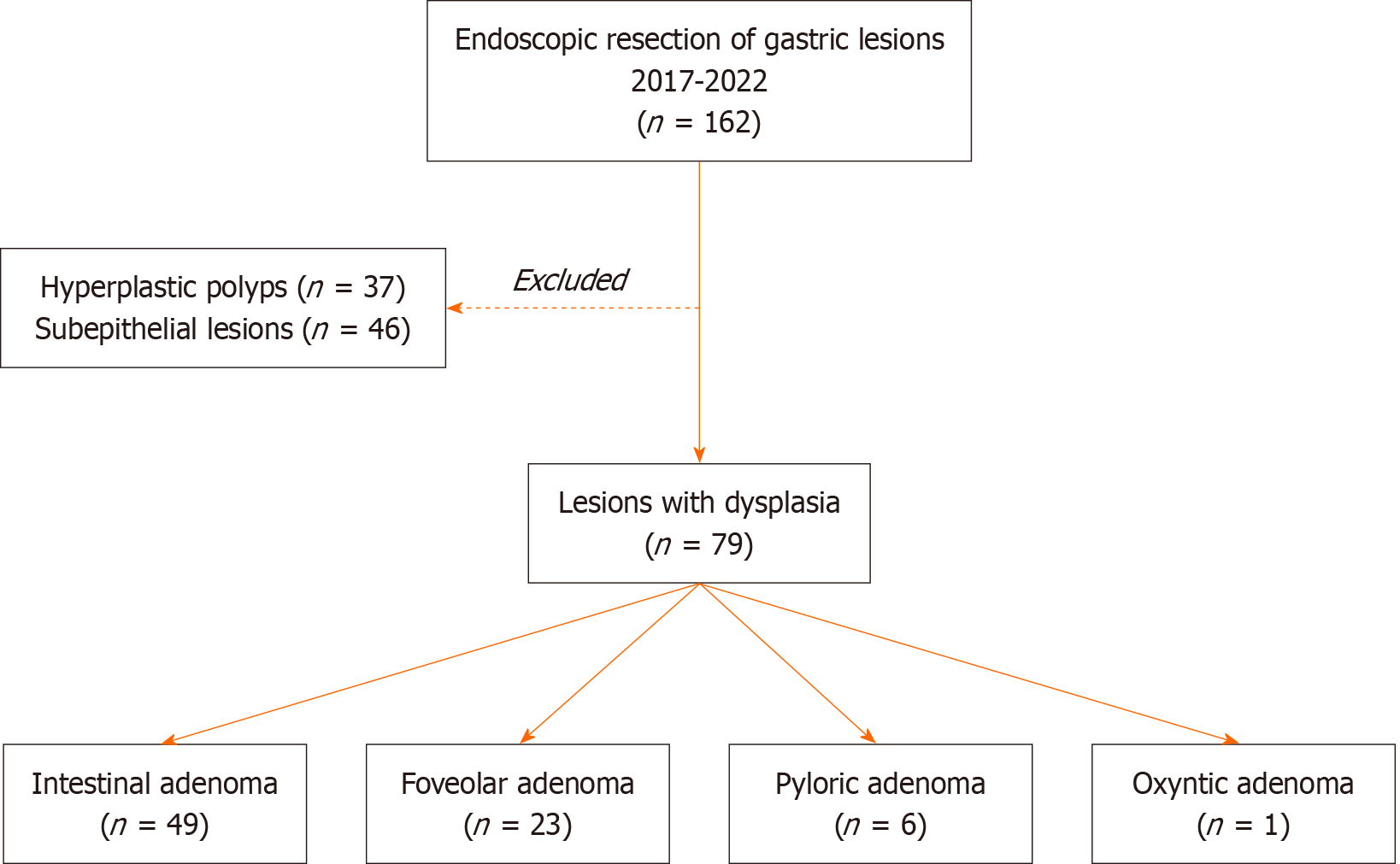
Figure 1
The study flow diagram.
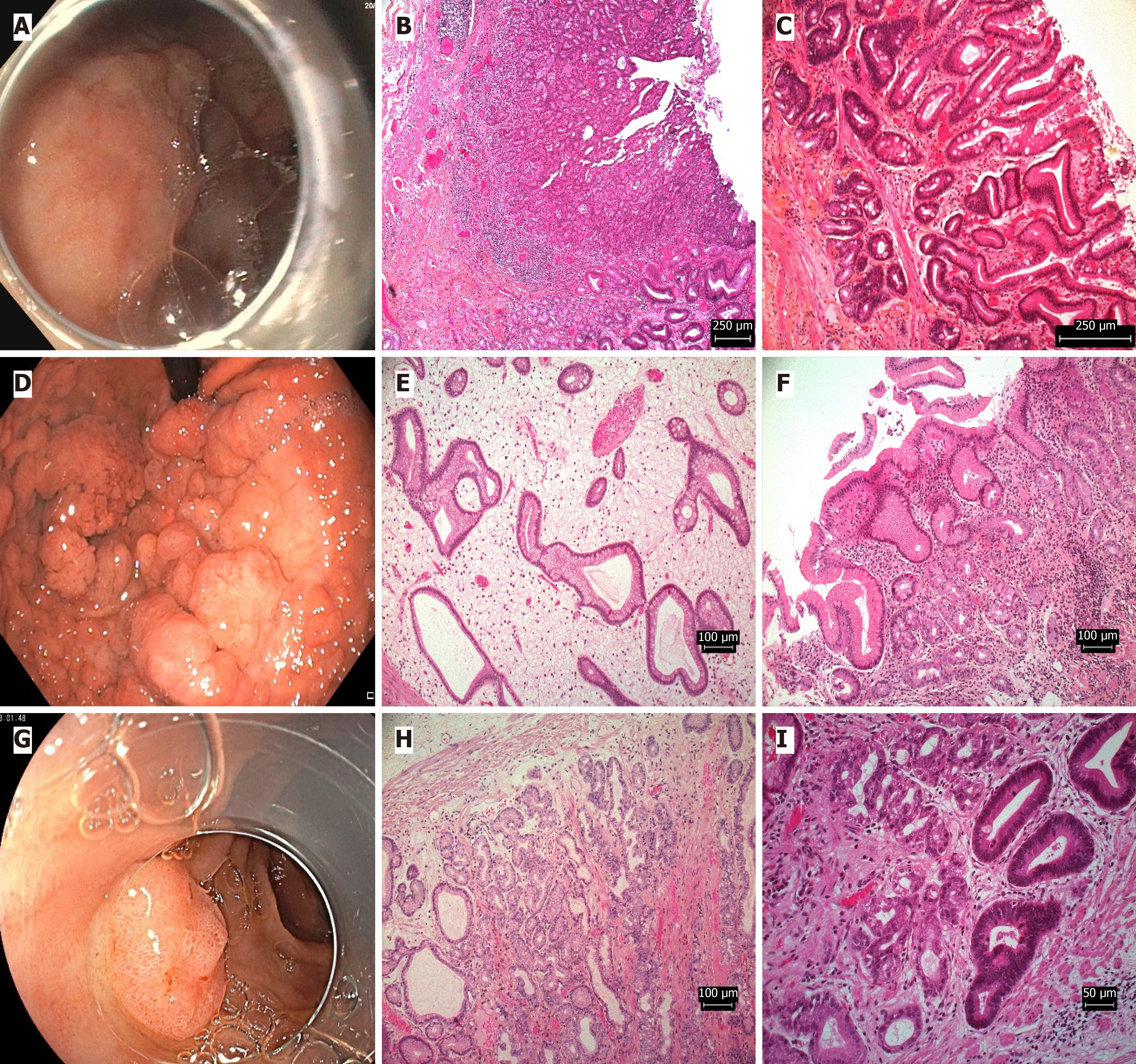
Figure 2 White-light endoscopic and H&E-stained microscopy images of different subtypes of gastric adenomas.
A: Endoscopic image (intestinal adenoma); B: Intestinal metaplasia and intestinal adenoma with intramucosal carcinoma (intestinal adenoma); C: Chronic atrophic gastritis with intestinal metaplasia (intestinal adenoma); D: Endoscopic image (foveolar adenoma); E: Foveolar adenoma; F: Chronic gastritis with foveolar hyperplasia (foveolar adenoma); G: Endoscopic image (pyloric adenoma); H: Pyloric adenoma; I: Low-grade dysplasia with intestinal metaplasia (pyloric adenoma).
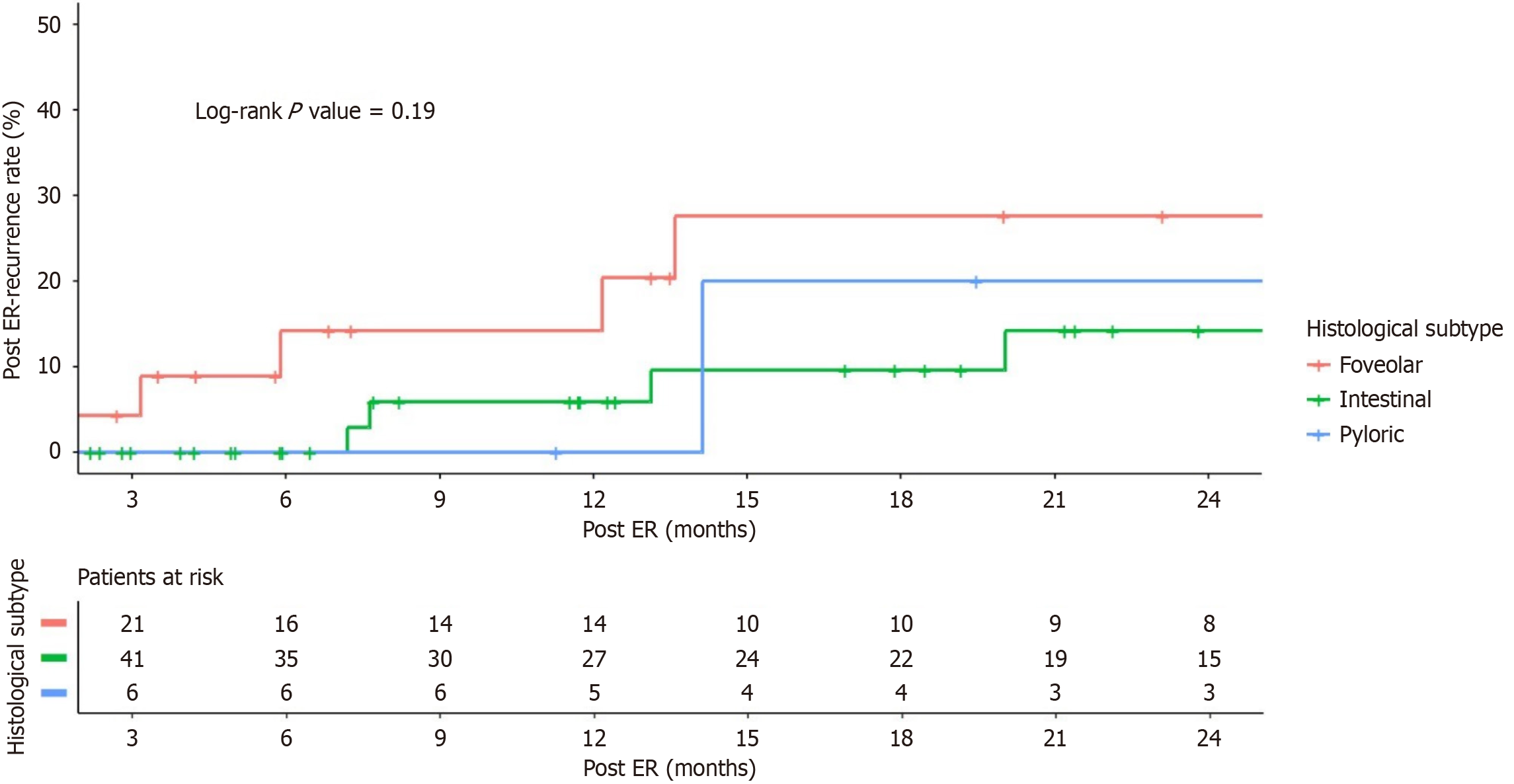
Figure 3 Postendoscopic resection recurrence rates according to each subtype of gastric adenoma.
A high postendoscopic resection recurrence rate was observed in the foveolar group (20% at 1 year, 28% at 2 years) compared with the pyloric group (0% at 1 year, 20% at 2 years) and the intestinal group (0% at 1 year, 14% at 2 years); however, the difference was not statistically significant (log rank P = 0.19). ER: Endoscopic resection.
- Citation: El-Domiaty N, Beuvon F, Carpentier-Pourquier M, Ibrahim W, Oumrani S, Doumbe-Mandengue P, Belle A, Chaussade S, Pellat A, Shiha G, Coriat R, Barret M. Subtype-specific risk factors for gastric adenomas and independent predictors of recurrence after endoscopic resection. World J Gastrointest Endosc 2025; 17(11): 110436
- URL: https://www.wjgnet.com/1948-5190/full/v17/i11/110436.htm
- DOI: https://dx.doi.org/10.4253/wjge.v17.i11.110436