
















Copyright: ©Author(s) 2026.
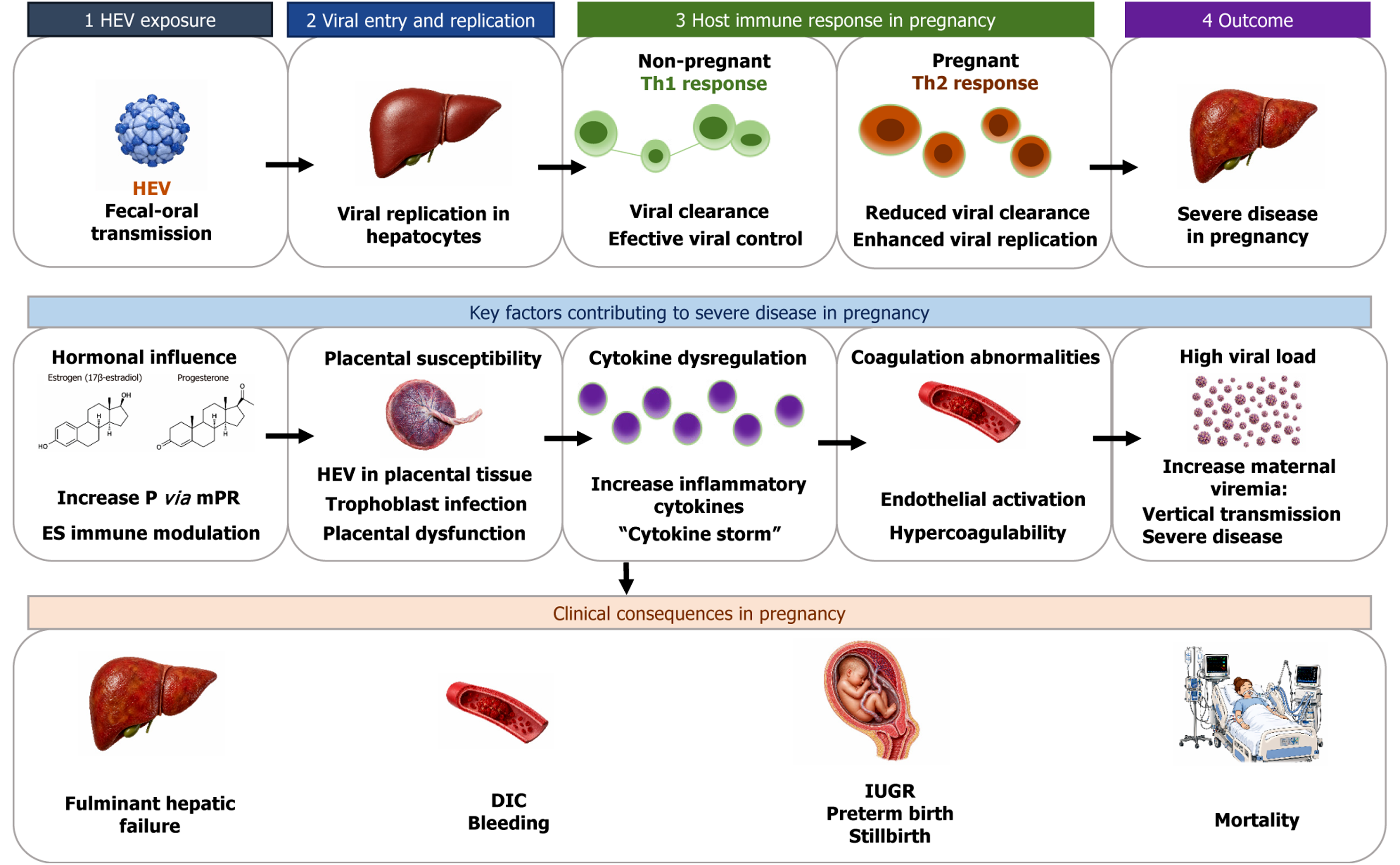
Figure 1 Immunopathogenesis and clinical spectrum of hepatitis E virus infection in pregnancy.
The figure summarizes how hepatitis E virus exposure and hepatic replication may progress to severe disease during pregnancy through pregnancy-associated immune modulation, hormonal effects, placental susceptibility, cytokine dysregulation, coagulation abnormalities, and high viral load. These mechanisms contribute to major maternal and fetal complications, including fulminant hepatic failure, disseminated intravascular coagulation, intrauterine growth restriction, preterm birth, stillbirth, and maternal or neonatal mortality. HEV: Hepatitis E virus; Th: T helper cell; P: Progesterone; ES: Estrogen; mPR: Mutated progesterone receptor; DIC: Disseminated intravascular coagulation; IUGR: Intrauterine growth restriction.
- Citation: Sharma K, Pandey MK, Singh AK, Sikenis M, Prajapati B, Jothish A, Bhukya PL, Vyas AK, Simovic Markovic BJ, Corovic IF, Nema RK. Maternal hepatitis E virus infection: Immunopathogenesis, genotype-specific severity, and vertical transmission dynamics. World J Hepatol 2026; 18(9): 122717
- URL: https://www.wjgnet.com/1948-5182/full/v18/i9/122717.htm
- DOI: https://dx.doi.org/10.4254/wjh.122717