
















Copyright: ©Author(s) 2026.
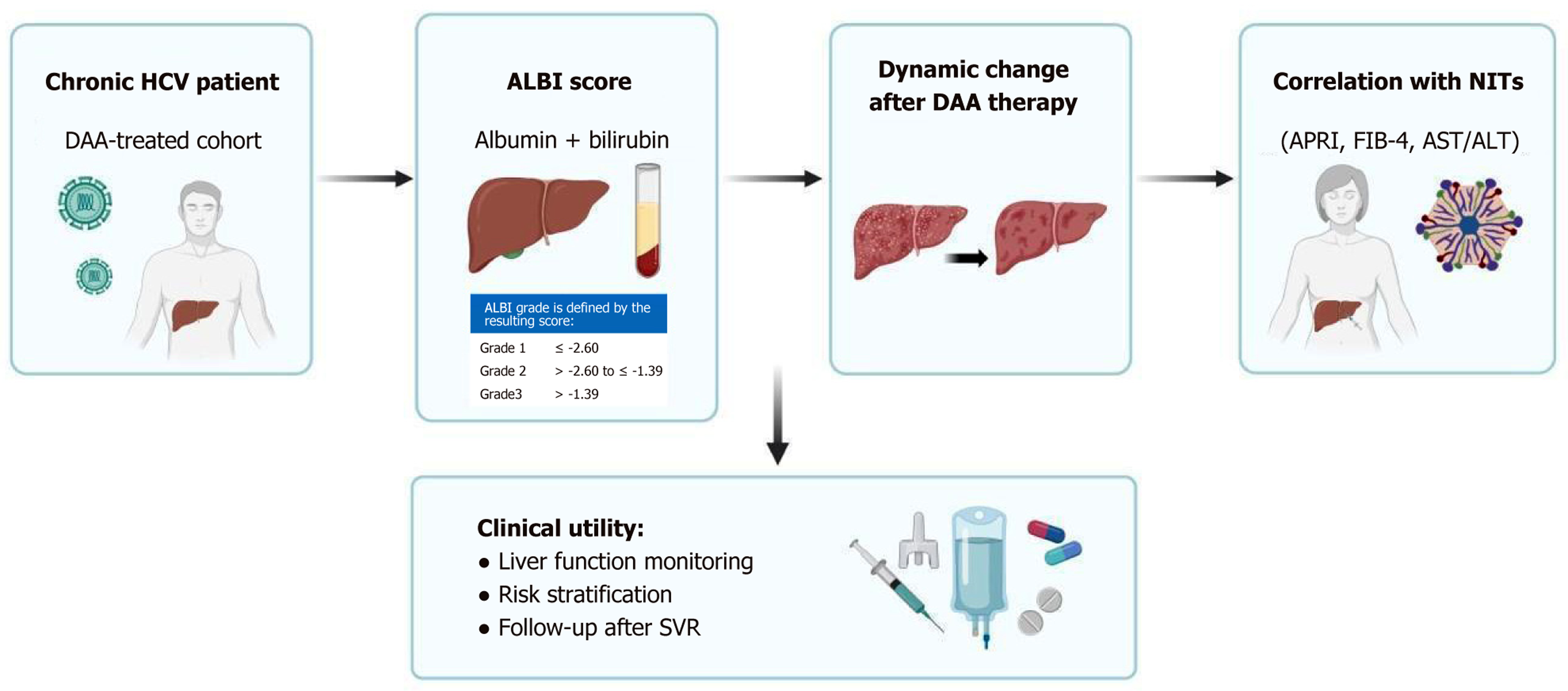
Figure 1 Albumin-bilirubin score as a non-invasive marker of liver fibrosis in chronic hepatitis c virus patients treated with direct-acting antivirals.
Summary of the retrospective cohort study by Ewid et al[10], including 231 patients with chronic hepatitis C virus infection treated with direct-acting antivirals (DAAs) and followed for 2 years. It shows that the albumin-bilirubin (ALBI) score improved after DAA therapy with greater changes observed in patients with advanced fibrosis (F3-F4). Positive correlations were observed between the ALBI score and standard noninvasive tests (aspartate aminotransferase-to-platelet ratio index, aspartate aminotransferase/alanine aminotransferase ratio, and fibrosis-4 index), and receiver operating characteristic analysis demonstrated its predictive value for advanced fibrosis. Together, these findings highlight the ALBI score as a feasible and cost-effective marker of liver function and fibrosis monitoring in patients with chronic hepatitis C virus during and after DAA therapy. ALBI: Albumin-bilirubin; APRI: Aspartate aminotransferase-to-platelet ratio index; AST/ALT: Aspartate aminotransferase/alanine aminotransferase; DAA: Direct-acting antiviral; FIB-4: Fibrosis-4; HCV: Hepatitis C virus; SVR: Sustained virological response.
- Citation: Jiménez-Cuevas EA, Montoya-López M, Martínez-Díaz FM, Ramírez-Mejía MM, Méndez-Sánchez N. Albumin-bilirubin score: Monitoring hepatic function in patients with chronic hepatitis C virus infection. World J Hepatol 2026; 18(7): 114187
- URL: https://www.wjgnet.com/1948-5182/full/v18/i7/114187.htm
- DOI: https://dx.doi.org/10.4254/wjh.114187