
















Copyright: ©Author(s) 2026.
World J Hepatol. Oct 27, 2026; 18(10): 125487
Published online Oct 27, 2026. doi: 10.4254/wjh.125487
Published online Oct 27, 2026. doi: 10.4254/wjh.125487
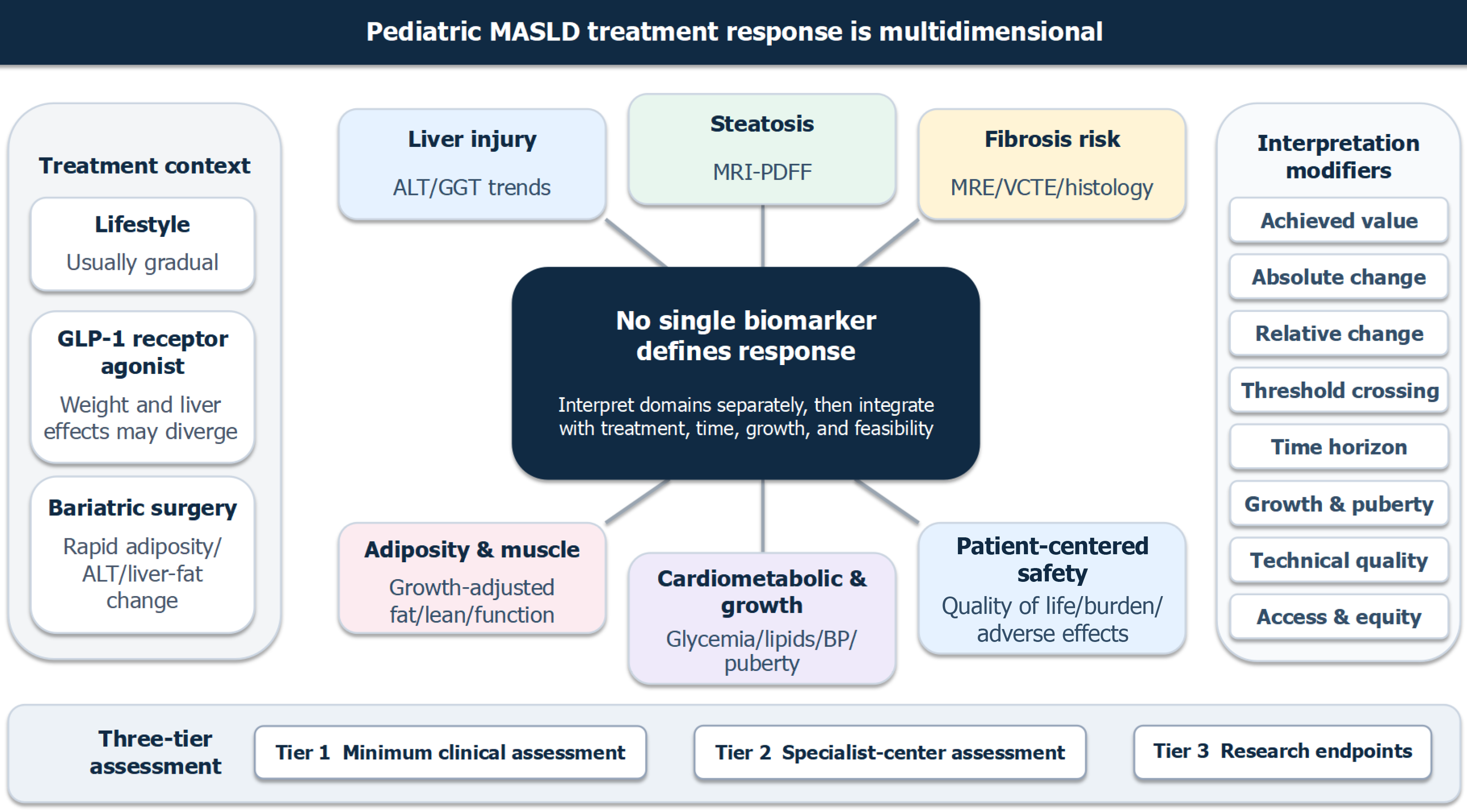
Figure 1 Multidimensional, treatment-aware framework for assessing response in pediatric metabolic dysfunction-associated steatotic liver disease.
No single biomarker defines response. Liver injury, steatosis, fibrosis risk, adiposity and muscle, cardiometabolic and growth outcomes, and patient-centered safety outcomes should be interpreted separately, with attention to treatment modality, time horizon, growth and puberty, technical conditions, feasibility, and equity. A three-tier approach aligns minimum clinical assessment, specialist-center assessment, and research endpoints. The framework and reassessment timing shown are author-proposed pragmatic guidance and have not been externally validated. MASLD: Metabolic dysfunction-associated steatotic liver disease; ALT: Alanine aminotransferase; GGT: Gamma-glutamyl transferase; MRI-PDFF: Magnetic resonance imaging proton density fat fraction; MRE: Magnetic resonance elastography; VCTE: Vibration-controlled transient elastography; GLP-1: Glucagon-like peptide-1; BP: Blood pressure.
- Citation: Yodoshi T. Treatment response in pediatric metabolic dysfunction-associated steatotic liver disease: Noninvasive endpoints and body composition. World J Hepatol 2026; 18(10): 125487
- URL: https://www.wjgnet.com/1948-5182/full/v18/i10/125487.htm
- DOI: https://dx.doi.org/10.4254/wjh.125487