
















Copyright: ©Author(s) 2026.
World J Hepatol. Oct 27, 2026; 18(10): 124997
Published online Oct 27, 2026. doi: 10.4254/wjh.124997
Published online Oct 27, 2026. doi: 10.4254/wjh.124997
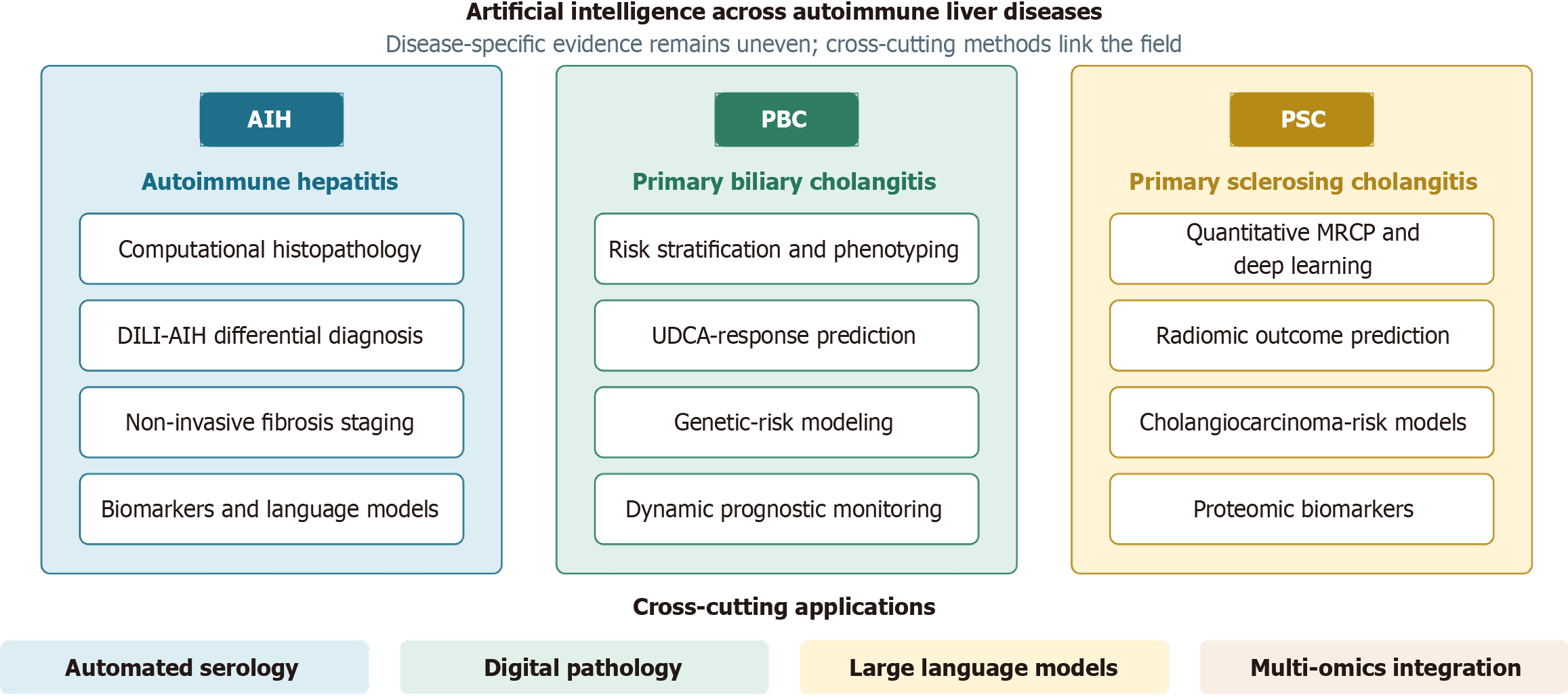
Figure 1 Artificial intelligence applications across the three autoimmune liver diseases.
Representative applications are shown for autoimmune hepatitis (computational histopathology, differential diagnosis, non-invasive fibrosis staging, and biomarker- and language-model-based tools), primary biliary cholangitis (risk stratification and sub-phenotyping, treatment-response prediction, genetic-risk modeling, and prognostic and dynamic monitoring), and primary sclerosing cholangitis (quantitative and artificial intelligence-enhanced imaging, radiomic and topological prognostication, cholangiocarcinoma-risk modeling, and proteomic biomarkers). Cross-cutting applications (automated serological interpretation, digital pathology, large language models, and multi-omics integration) apply across all three diseases. AIH: Autoimmune hepatitis; PBC: Primary biliary cholangitis; PSC: Primary sclerosing cholangitis; DILI: Drug-induced liver injury; MRCP: Magnetic resonance cholangiopancreatography; UDCA: Ursodeoxycholic acid.
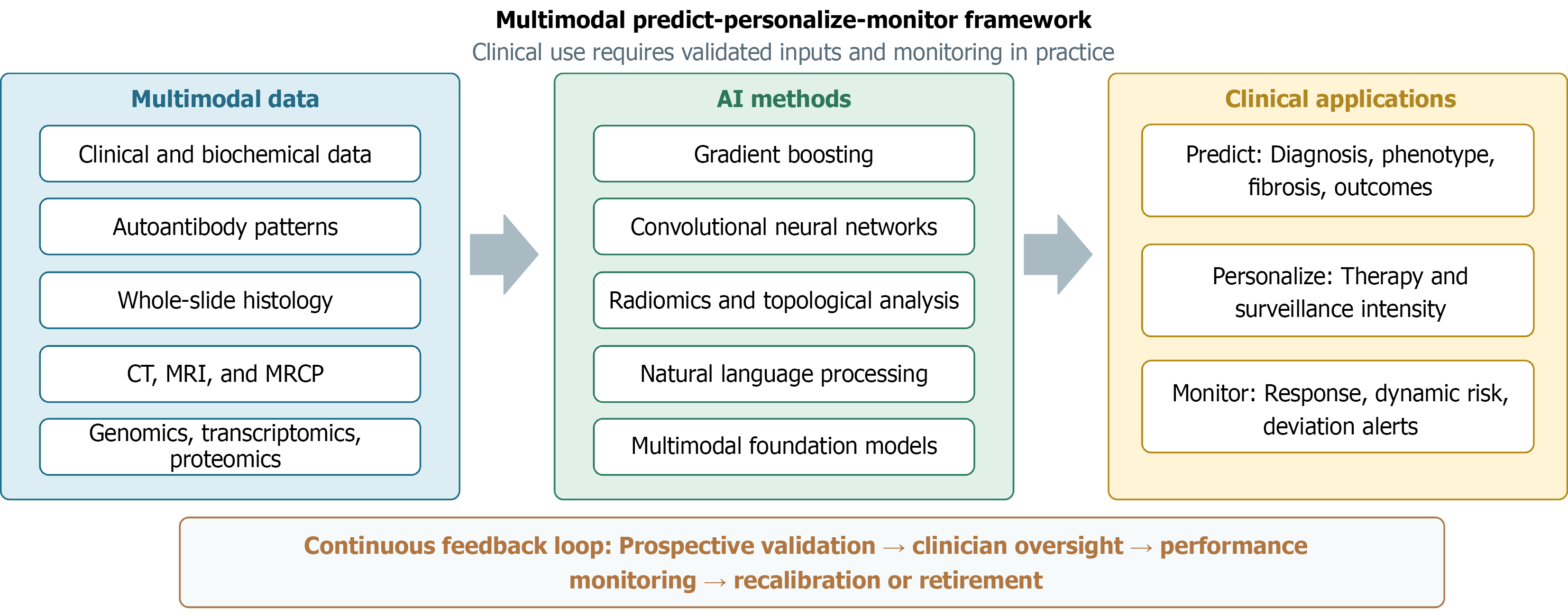
Figure 2 A multimodal, predict-personalize-monitor framework for artificial intelligence in autoimmune liver disease.
Multimodal patient data (clinical and biochemical variables, autoantibody patterns, digitized whole-slide histology, cross-sectional and magnetic resonance cholangiographic imaging, and multi-omics) are integrated by machine learning and deep learning methods, including gradient boosting, convolutional neural networks, radiomics, natural language processing and large language models, and emerging multimodal foundation models. The resulting clinical applications are grouped as prediction (diagnosis and differential diagnosis, disease sub-phenotype, fibrosis stage, and outcome and cancer risk), personalization (choice and intensity of therapy, immunosuppression duration in autoimmune hepatitis, second-line therapy timing in primary biliary cholangitis, and surveillance intensity in primary sclerosing cholangitis), and monitoring (dynamic risk updating, treatment-response tracking and deviation alerts). The feedback loop denotes continuous monitoring and model updating. AI: Artificial intelligence; CT: Computed tomography; MRCP: Magnetic resonance cholangiopancreatography; MRI: Magnetic resonance imaging.
- Citation: Salman A. Artificial intelligence in autoimmune liver diseases: Diagnosis, risk stratification, and personalized care. World J Hepatol 2026; 18(10): 124997
- URL: https://www.wjgnet.com/1948-5182/full/v18/i10/124997.htm
- DOI: https://dx.doi.org/10.4254/wjh.124997