










Copyright: ©Author(s) 2026.
World J Gastroenterol. Dec 21, 2026; 32(47): 122664
Published online Dec 21, 2026. doi: 10.3748/wjg.122664
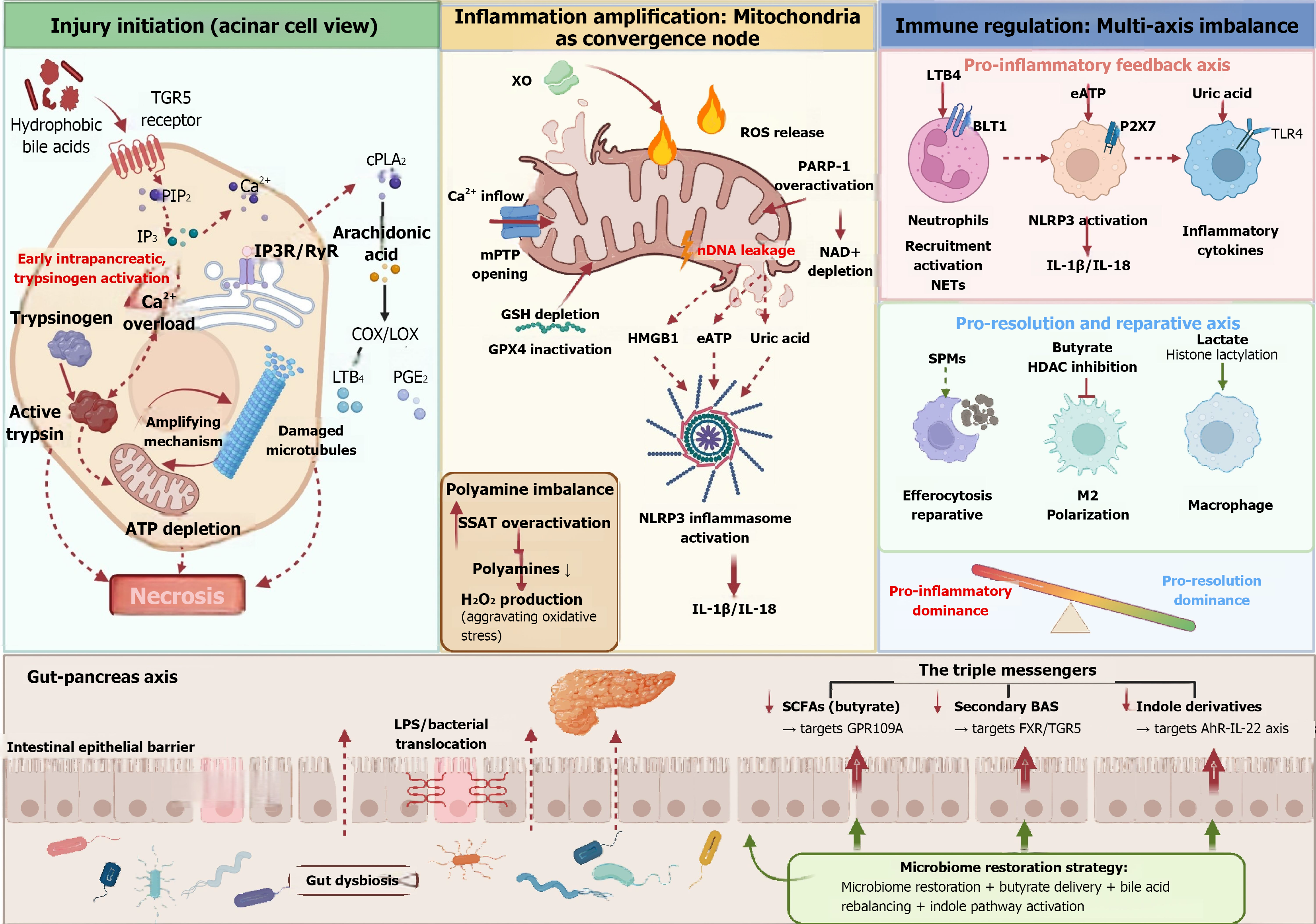
Figure 1 An integrated view of pathological cascades in the metabolic network of acute pancreatitis.
This pathological network can be conceptualized into four sequential cascade phases: Injury initiation, inflammatory amplification, immune dysregulation, and gut-pancreatic axis dysregulation. Bile acids induce calcium overload and premature trypsinogen activation, concurrently triggering arachidonic acid release and mitochondrial injury. Functioning as a critical hub, the mitochondrion further amplifies inflammation via mitochondrial permeability transition pore opening, reactive oxygen species attack, and nicotinamide adenine dinucleotide depletion, which collectively drive NOD-like receptor thermal protein domain associated protein 3 inflammasome activation. At the im munoregulatory level, an imbalance emerges between pro-inflammatory mediators (leukotriene B4 and extracellular adenosine triphosphate) and pro-resolving factors (specialized pro-resolving mediators and butyrate). Multiple metabolic pathways cooperatively dictate the macrophage phenotype, establishing these cells as the central node of metabolic-immune crosstalk. Regarding the gut-pancreatic axis, gut dysbiosis leads to the simultaneous depletion of three distinct classes of microbial metabolites short-chain fatty acids, secondary bile acids, and indole derivatives subsequently triggering lipopolysaccharide translocation and fueling a vicious pathological cycle. TGR5: Takeda G protein-coupled receptor 5; PIP2: Phosphatidylinositol 4,5-bisphosphate; IP3: Inositol 1,4,5-trisphosphate; cPLA2: Cytosolic phospholipase A2; COX: Cyclooxygenase; LOX: Lipoxygenase; Ca2+: Calcium ion; IP3R/RyR: Inositol 1,4,5-trisphosphate receptor/ryanodine receptor; LTB4: Leukotriene B4; PGE2: Prostaglandin E2; ATP: Adenosine triphosphate; XO: Xanthine oxidase; ROS: Reactive oxygen species; PARP-1: Poly-adenosine diphosphate ribose polymerase 1; nDNA: Nuclear DNA; NAD+: Nicotinamide adenine dinucleotide; mPTP: Mitochondrial permeability transition pore; GSH: Glutathione; GPX4: Glutathione peroxidase 4; HMGB1: High mobility group box 1; eATP: Extracellular adenosine triphosphate; SSAT: Spermidine/spermine N1-acetyltransferase; H2O2: Hydrogen peroxide; NLRP3: NOD-like receptor thermal protein domain associated protein 3; IL: Interleukin; BLT1: Block lipid transport-1; NET: Neutrophil extracellular trap; P2X7: P2X purinoceptor 7; TLR4: Toll-like receptor 4; SPMs: Specialized pro-resolving mediators; HDAC: Histone deacetylase; LPS: Lipopolysaccharide; SCFA: Short-chain fatty acid; FXR: Farnesoid X receptor; AhR: Aryl hydrocarbon receptor.
- Citation: Lu X, Zeng Y, Li L, Liu JQ, Zhou X, Jin XN, Jiang CL, Li Z. Endogenous metabolites as active drivers of acute pancreatitis: Mechanisms and advances in targeted therapy. World J Gastroenterol 2026; 32(47): 122664
- URL: https://www.wjgnet.com/1007-9327/full/v32/i47/122664.htm
- DOI: https://dx.doi.org/10.3748/wjg.122664