
















Copyright: ©Author(s) 2026.
World J Gastroenterol. Dec 14, 2026; 32(46): 124166
Published online Dec 14, 2026. doi: 10.3748/wjg.124166
Published online Dec 14, 2026. doi: 10.3748/wjg.124166
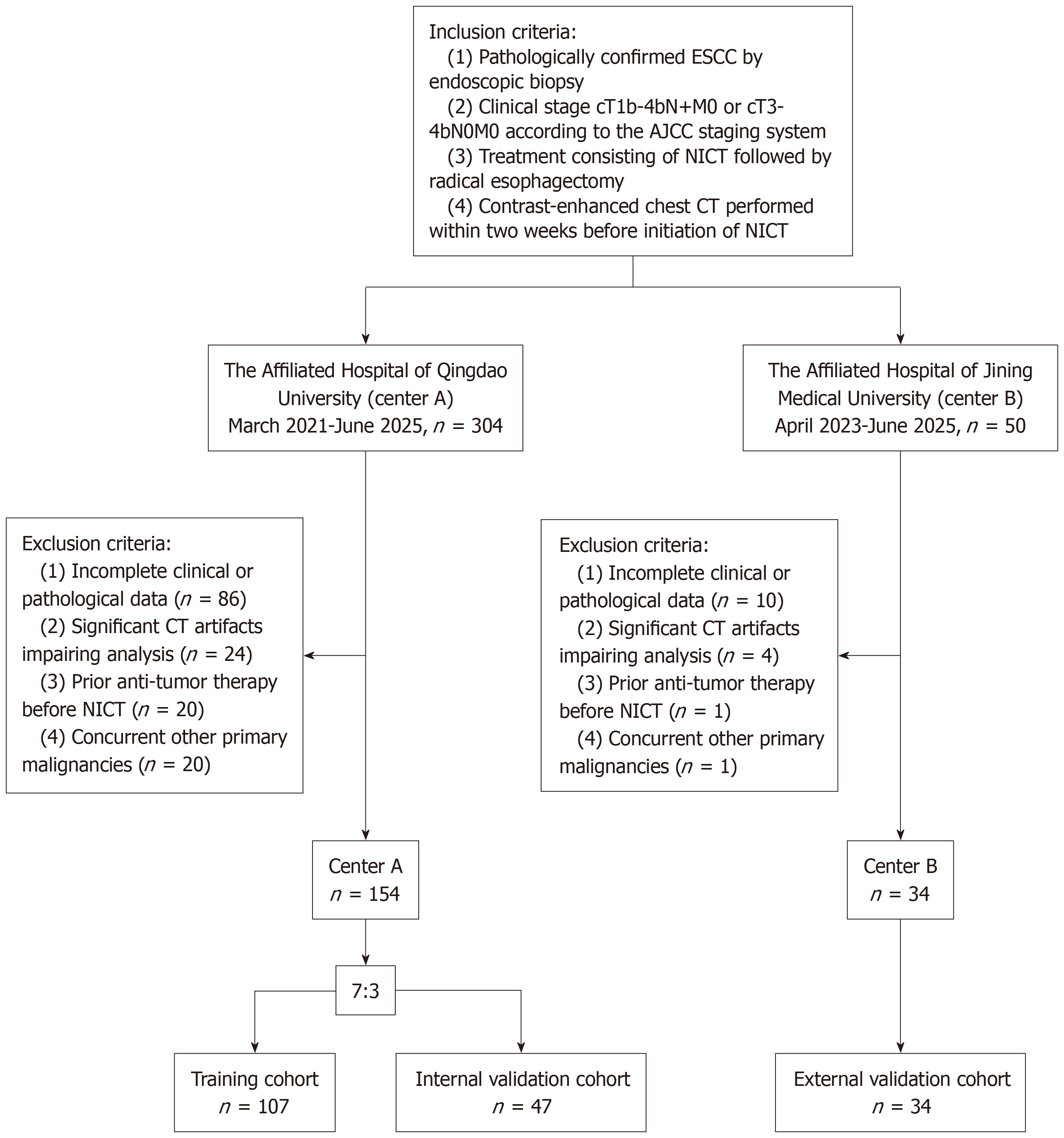
Figure 1 Patient enrollment process.
ESCC: Esophageal squamous cell carcinoma; AJCC: American Joint Committee on Cancer; NICT: Neoadjuvant immunochemotherapy; CT: Computed tomography.
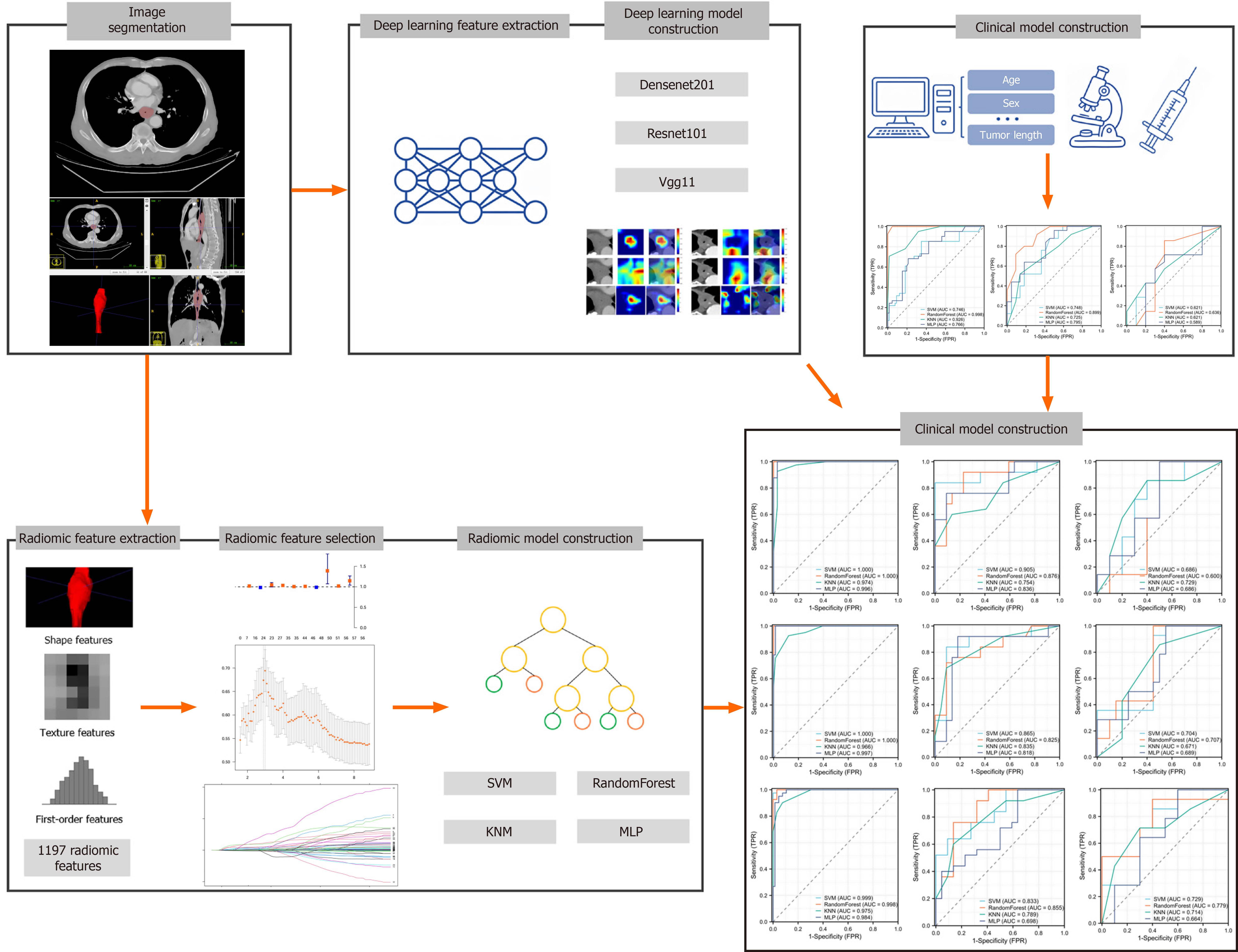
Figure 2 Study workflow.
SVM: Support Vector Machine; KNN: K-Nearest Neighbors; MLP: Multilayer Perceptron; AUC: Area under the curve; TPR: True positive rate; FPR: False positive rate.
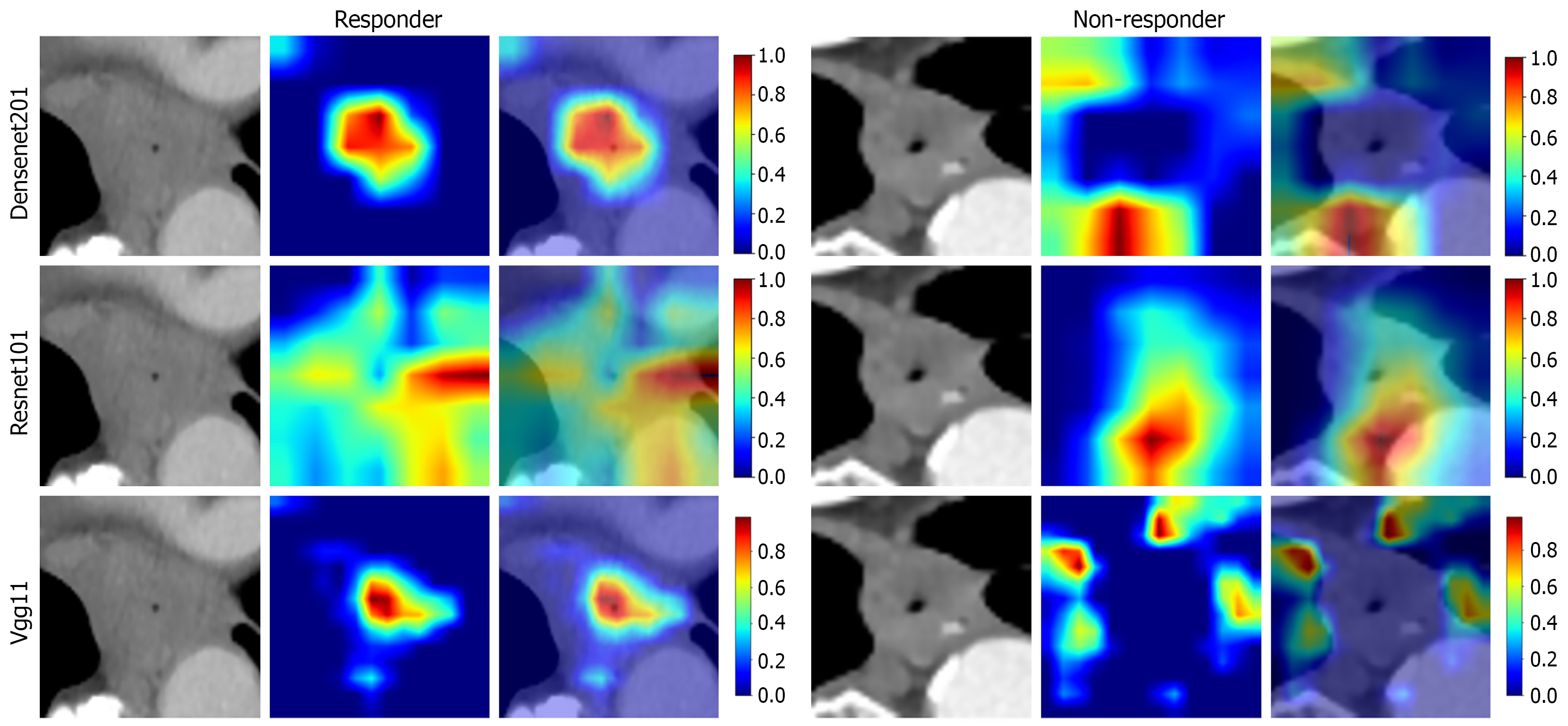
Figure 3
Representative gradient-weighted class activation mapping heatmaps of deep learning models for predicting neoadjuvant immunochemotherapy response.
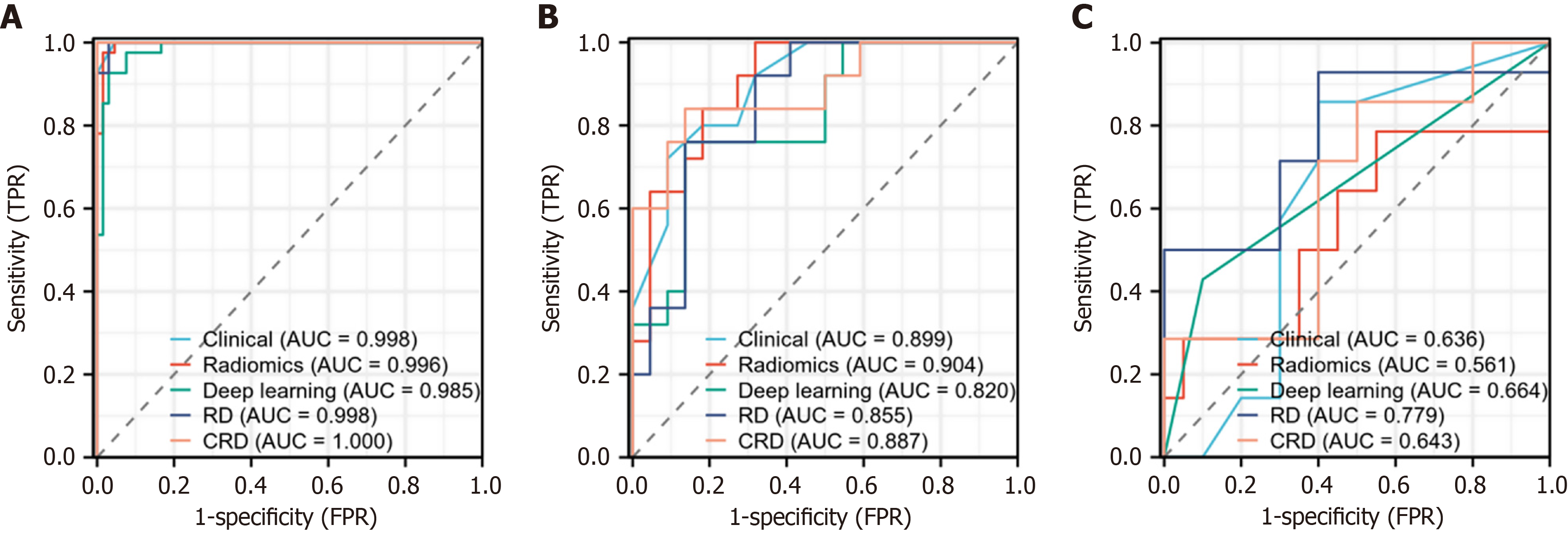
Figure 4 Receiver operating characteristic curves of the best performing models across different feature types in training, internal validation, and external validation cohort.
A: Training; B: Internal validation; C: External validation cohort. RD: Radiomics-deep learning; CRD: Clinical-radiomics-deep learning; AUC: Area under the curve; TPR: True positive rate; FPR: False positive rate.
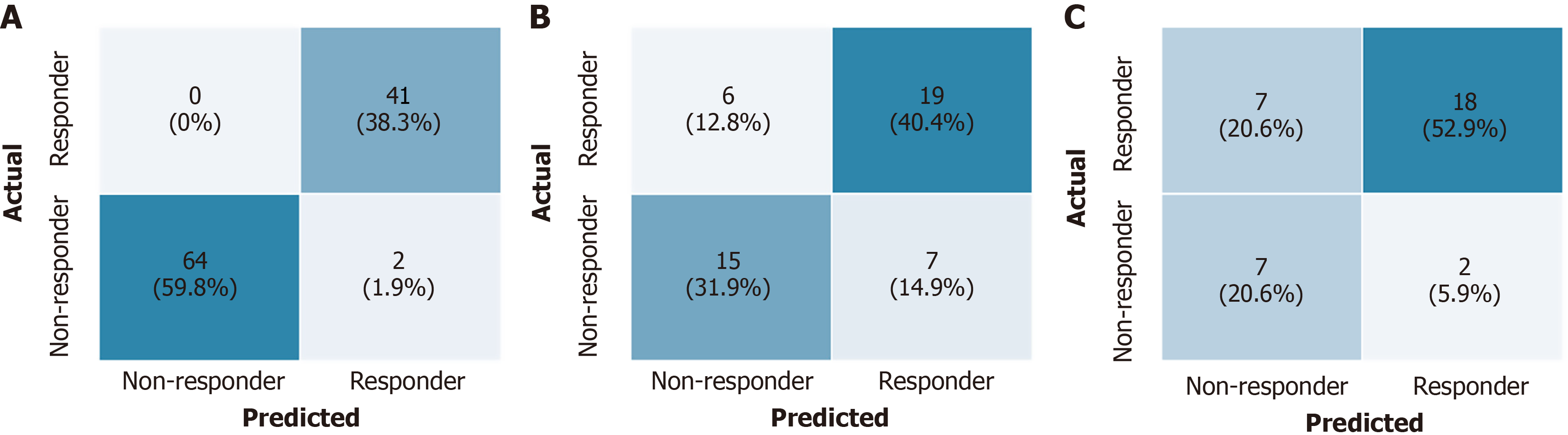
Figure 5 Confusion matrices of the radiomics-deep learning model in the training, internal validation, and external validation cohorts at the Youden-derived threshold of 0.
4173. A: Training; B: Internal validation; C: External validation. Values are presented as counts (percentages of the cohort).
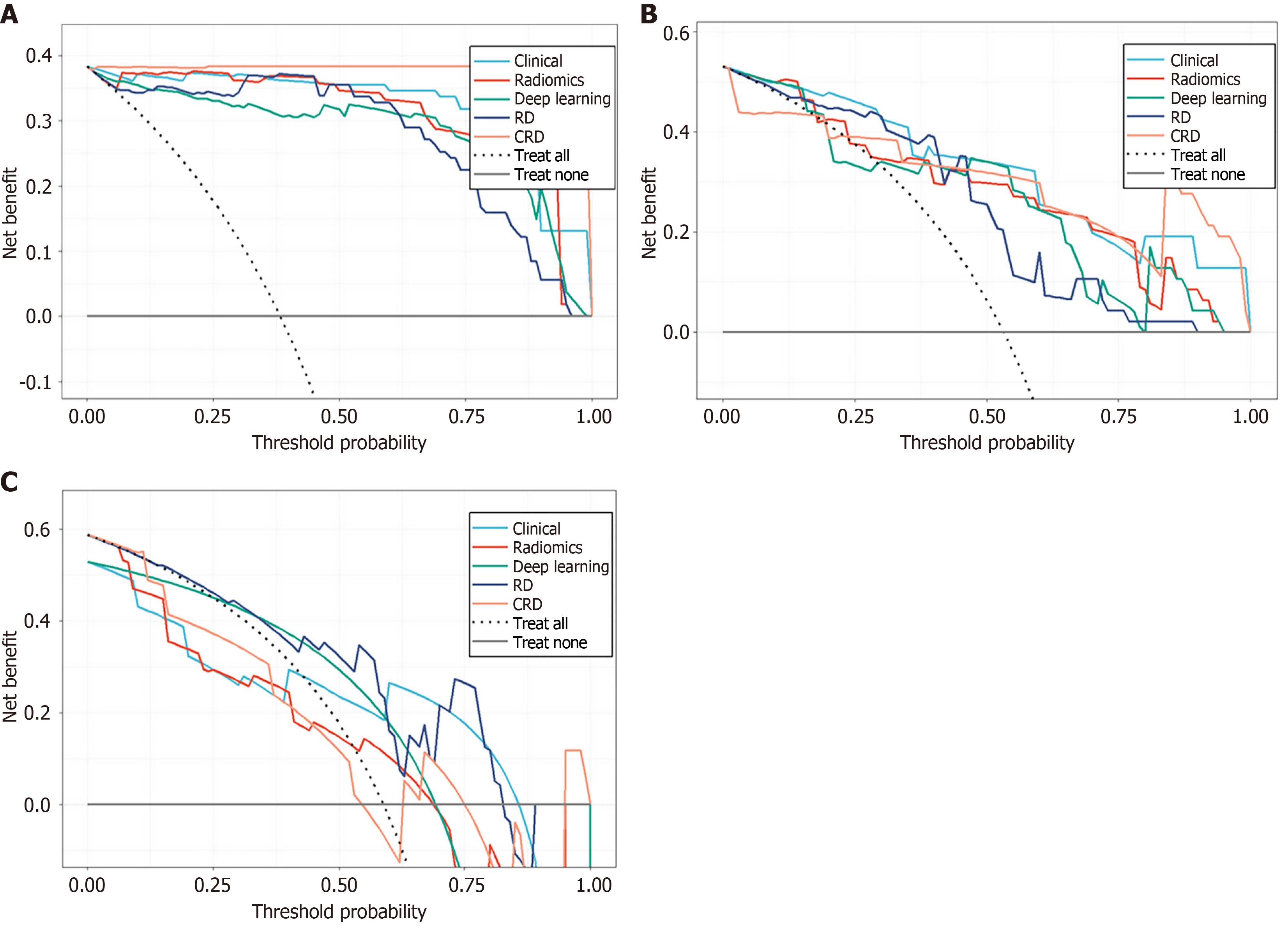
Figure 6 Decision curve analysis of the best-performing models across different feature types in the training, internal validation, and external validation cohorts.
A: Training; B: Internal validation; C: External validation. RD: Radiomics-deep learning; CRD: Clinical-radiomics-deep learning.
- Citation: Zhao BX, Zhang M, Fu WQ, Li XY, Han ML, Zhang J, Gao W, Guo TH, Li HY, Ai SW, Wang HJ, Zhang BY, Wang Q. Radiomics and deep learning predict neoadjuvant immunochemotherapy response in locally advanced esophageal squamous cell carcinoma. World J Gastroenterol 2026; 32(46): 124166
- URL: https://www.wjgnet.com/1007-9327/full/v32/i46/124166.htm
- DOI: https://dx.doi.org/10.3748/wjg.124166