
















©The Author(s) 2026.
World J Gastroenterol. Jan 28, 2026; 32(4): 114560
Published online Jan 28, 2026. doi: 10.3748/wjg.v32.i4.114560
Published online Jan 28, 2026. doi: 10.3748/wjg.v32.i4.114560
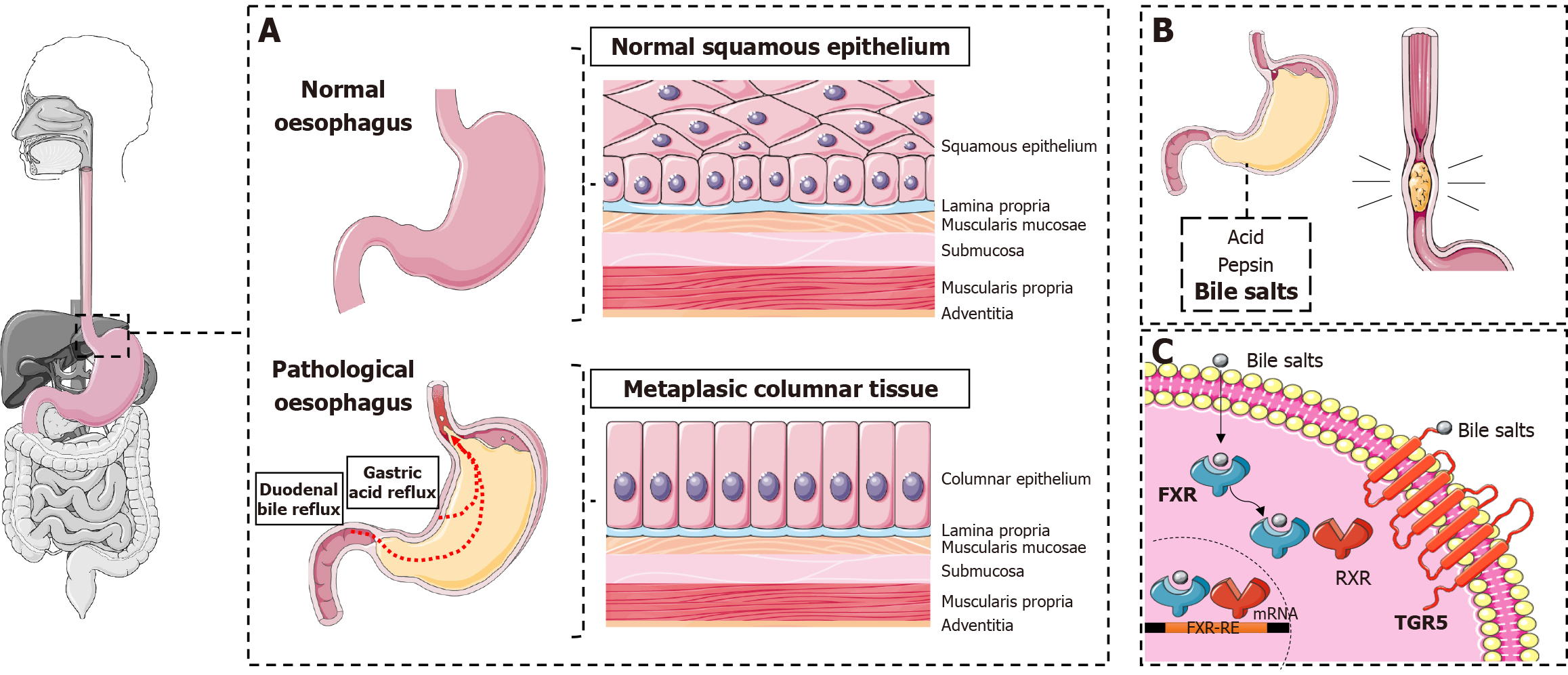
Figure 1 Schematic representation of some parameters of the pathophysiology of gastroesophageal reflux disease and its complications.
A: Normal oesophageal epithelium, of the stratified squamous type, can be replaced by intestinal columnar epithelium in response to oesophageal injury, specifically due to duodenum gastroesophageal reflux, which occurs in Barrett’s oesophagus and can progress to oesophageal adenocarcinoma; B: This reflux has as its main constituents’ acid, pepsin, and bile acids, the latter being associated with malignancy of the lesions and possibly oesophageal motility dysfunction; C: Bile acids can act through specific signalling pathways, activating nuclear farnesoid X receptor and plasma-membrane-bound G protein-coupled bile acid receptors, and also likely through the interaction between these receptors. The coupling of G protein-coupled bile acid receptor to the stimulatory protein Gs leads to activation of adenylate cyclase, intracellular cAMP accumulation and protein kinase A activation, directly impacting on smooth muscle contractile activity. FXR: Farnesoid X receptor; TGR5: Takeda G protein-coupled bile acid receptor 5; RXR: Retinoid X receptor; FXR-RE: Farnesoid X receptor response element.
- Citation: Gadelha KKL, Santos AA, Correia-de-Sá P, Magalhães PJC, da Silva MTB. Can bile salts affect the contractile oesophageal activity associated with gastroesophageal reflux disease? World J Gastroenterol 2026; 32(4): 114560
- URL: https://www.wjgnet.com/1007-9327/full/v32/i4/114560.htm
- DOI: https://dx.doi.org/10.3748/wjg.v32.i4.114560