
















Copyright: ©Author(s) 2026.
World J Gastroenterol. Oct 7, 2026; 32(37): 119222
Published online Oct 7, 2026. doi: 10.3748/wjg.119222
Published online Oct 7, 2026. doi: 10.3748/wjg.119222
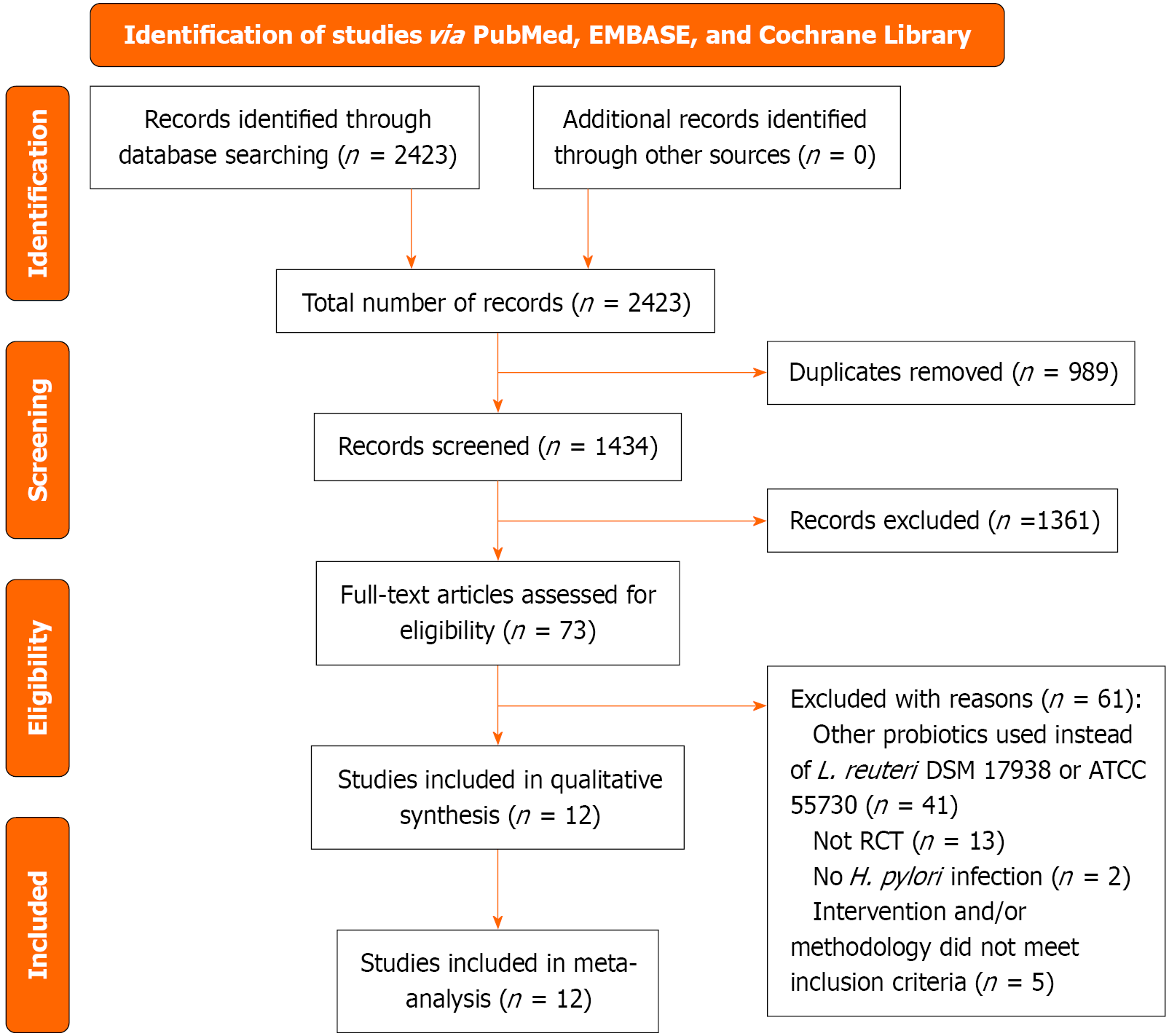
Figure 1 Preferred reporting items for systematic reviews and meta-analyses 2020 flow diagram illustrating the study selection process.
Twelve studies were included in both the qualitative and quantitative synthesis. RCT: Randomized controlled trial; H. pylori: Helicobacter pylori; L. reuteri: Limosilactobacillus reuteri.
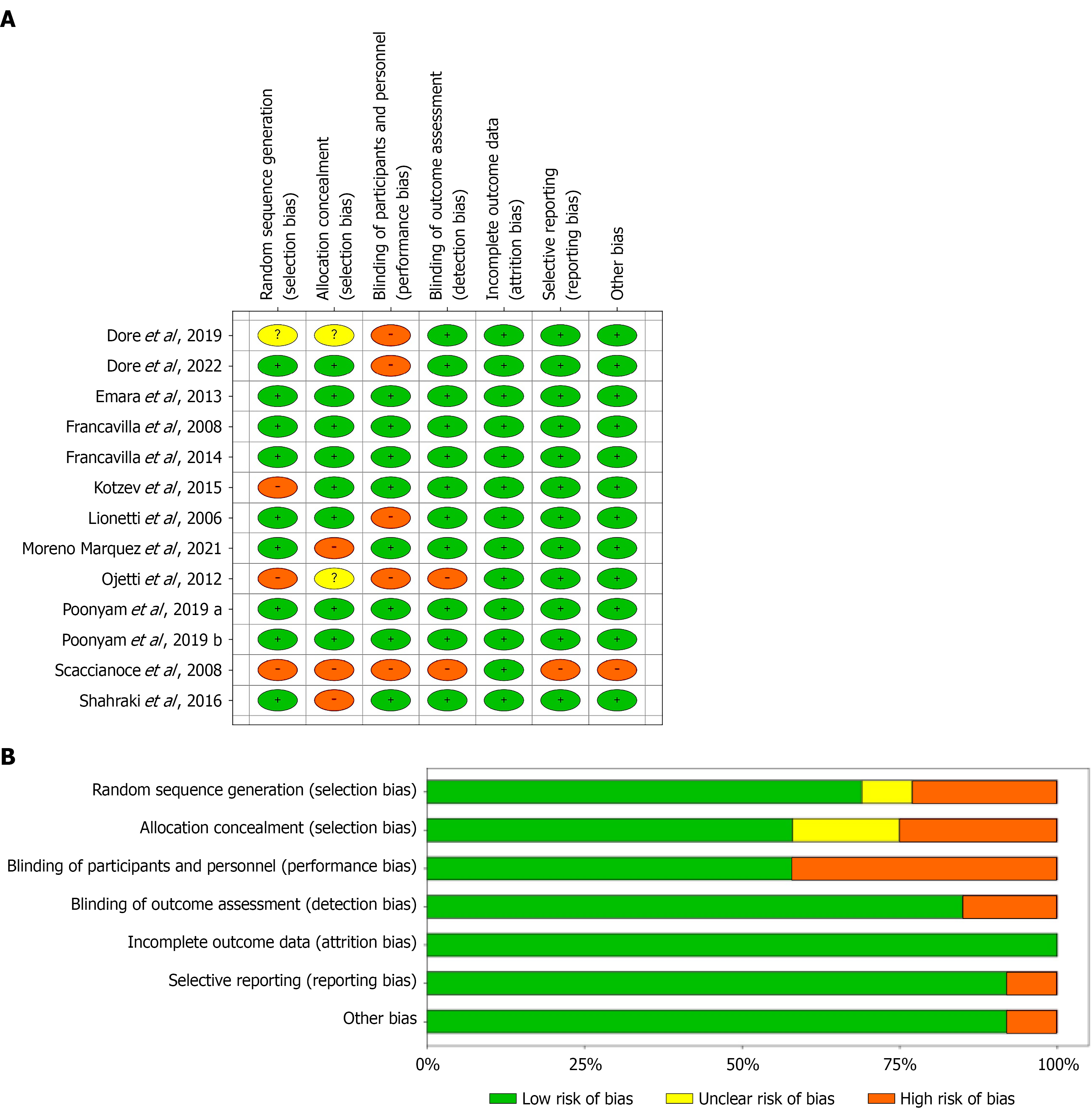
Figure 2 Risk of bias assessment for the randomized controlled trials included in the meta-analysis.
A: Summary of review authors’ judgments across seven domains of the Cochrane Risk of Bias tool for each included study. Green circles indicate low risk of bias, yellow circles indicate unclear risk, and red circles indicate high risk; B: Proportion of studies rated as low, unclear, or high risk of bias for each domain. Most studies showed a low risk of bias in domains related to outcome data and selective reporting. Higher or unclear risk was observed primarily in domains related to blinding and allocation concealment.
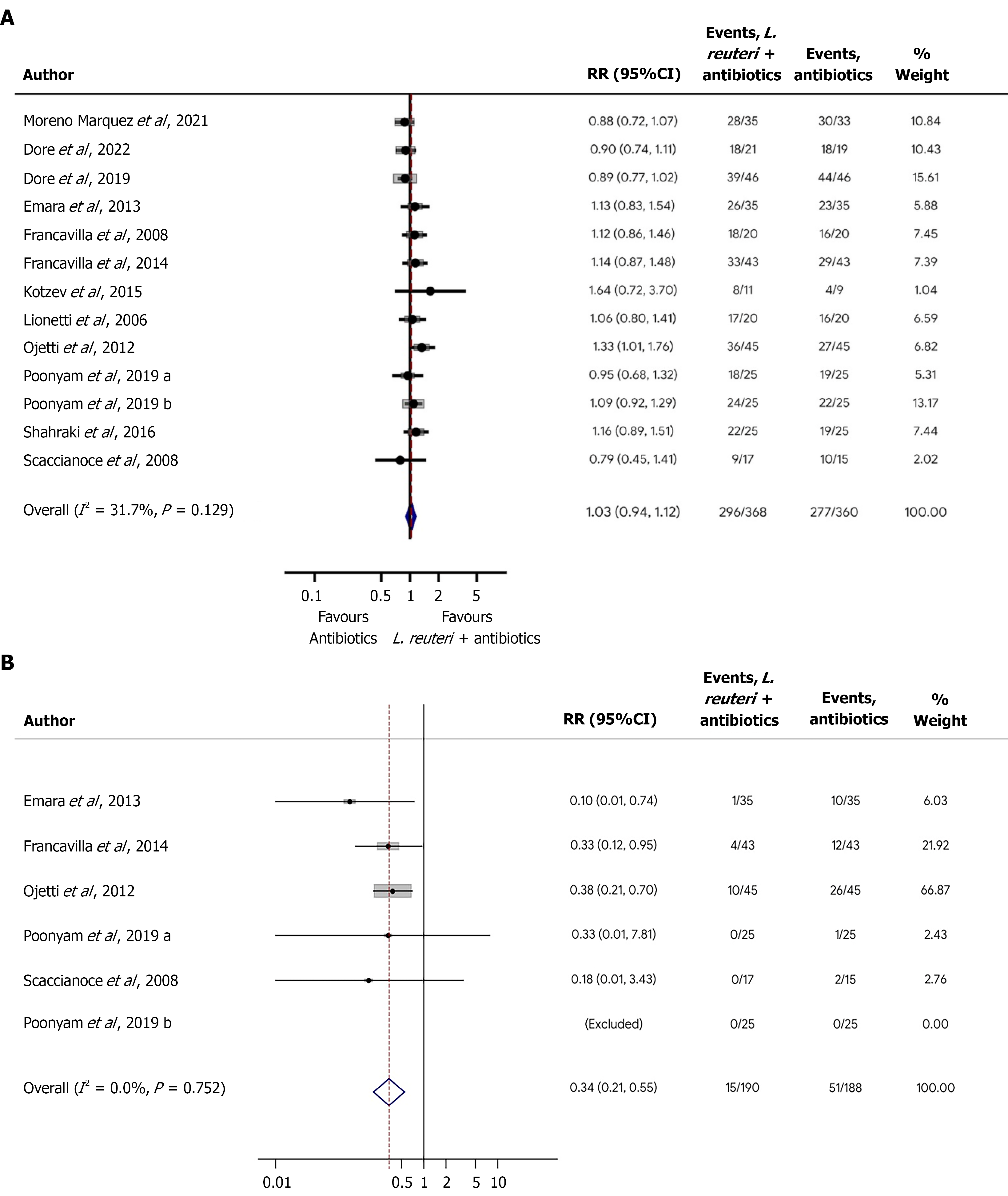
Figure 3 Forest plot.
A: Forest plot of randomized controlled trials evaluating Helicobacter pylori (H. pylori) eradication rates in patients treated with standard antibiotic therapy with or without Limosilactobacillus reuteri (L. reuteri) supplementation. The analysis includes 13 comparisons derived from 12 randomized controlled trials with a total of 368 patients in the L. reuteri plus antibiotics group and 360 patients in the antibiotics-only group; B: Forest plot of randomized controlled trials evaluating the incidence of diarrhea in patients undergoing H. pylori eradication therapy with or without L. reuteri supplementation. The analysis includes six comparisons, with one study (Poonyam et al[26]-b) excluded due to zero events in both groups. The pooled risk ratio for diarrhea was 0.34 (95% confidence interval: 0.21-0.55), indicating a statistically significant reduction in risk associated with L. reuteri supplementation. Heterogeneity across studies was negligible (I2 = 0.0%; P = 0.752), supporting the consistency of this protective effect. RR: Risk ratio; CI: Confidence interval; L. reuteri: Limosilactobacillus reuteri.
- Citation: Francavilla R, Iannone A, Cristofori F, Cafforio A, Dargenio VN, La Grasta G, Brindicci VF, Castellaneta SP, Barone M. Limosilactobacillus reuteri DSM 17938 and PTA 6475 as adjunct in Helicobacter pylori therapy: Systematic review and meta-analysis. World J Gastroenterol 2026; 32(37): 119222
- URL: https://www.wjgnet.com/1007-9327/full/v32/i37/119222.htm
- DOI: https://dx.doi.org/10.3748/wjg.119222