
















Copyright: ©Author(s) 2026.
World J Gastroenterol. Sep 14, 2026; 32(34): 118762
Published online Sep 14, 2026. doi: 10.3748/wjg.118762
Published online Sep 14, 2026. doi: 10.3748/wjg.118762
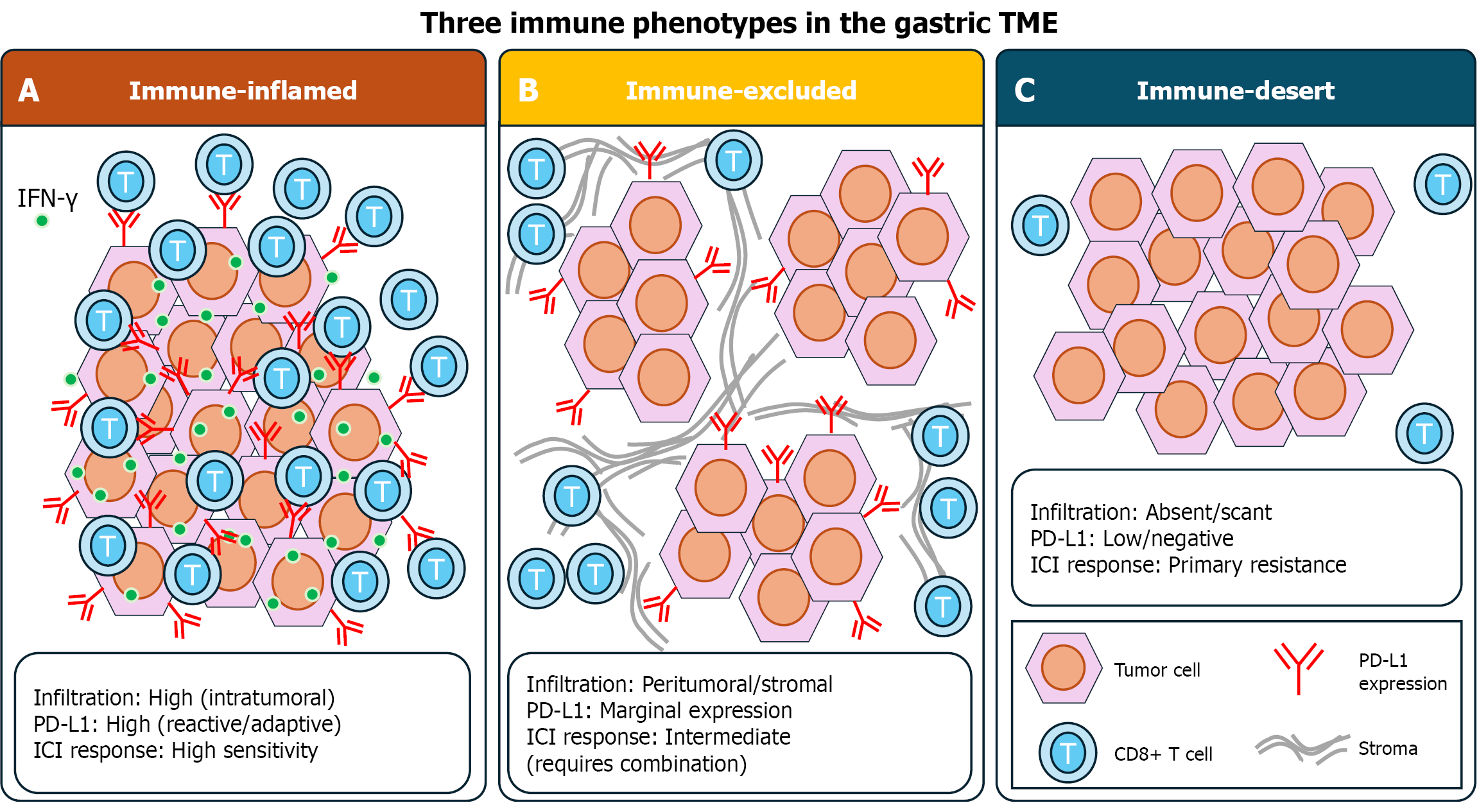
Figure 1 Conceptual schematic of the three immune phenotypes in the gastric tumor microenvironment.
A: Immune-inflamed: Characterized by high CD8+ T-cell infiltration and reactive programmed death-ligand 1 expression driven by interferon-gamma. This phenotype typically predicts favorable immune checkpoint inhibitor benefit; B: Immune-excluded: T cells are present in the stroma but are prevented from infiltrating tumor nests, often by a dense extracellular matrix; C: Immune-desert: Characterized by a lack of significant T-cell infiltration and low programmed death-ligand 1 expression, signaling primary resistance to immune checkpoint inhibitor monotherapy. TME: Tumor microenvironment; PD-L1: Programmed death-ligand 1; IFN-γ: Interferon-gamma; ICI: Immune checkpoint inhibitor; CD8+: Cluster of differentiation 8-positive.
- Citation: Takahashi K. Stage-dependent prognostic value of programmed death ligand-1 expression in gastric cancer: Implications for personalized immunotherapy. World J Gastroenterol 2026; 32(34): 118762
- URL: https://www.wjgnet.com/1007-9327/full/v32/i34/118762.htm
- DOI: https://dx.doi.org/10.3748/wjg.118762