
















Copyright: ©Author(s) 2026.
World J Gastroenterol. Sep 7, 2026; 32(33): 121284
Published online Sep 7, 2026. doi: 10.3748/wjg.121284
Published online Sep 7, 2026. doi: 10.3748/wjg.121284
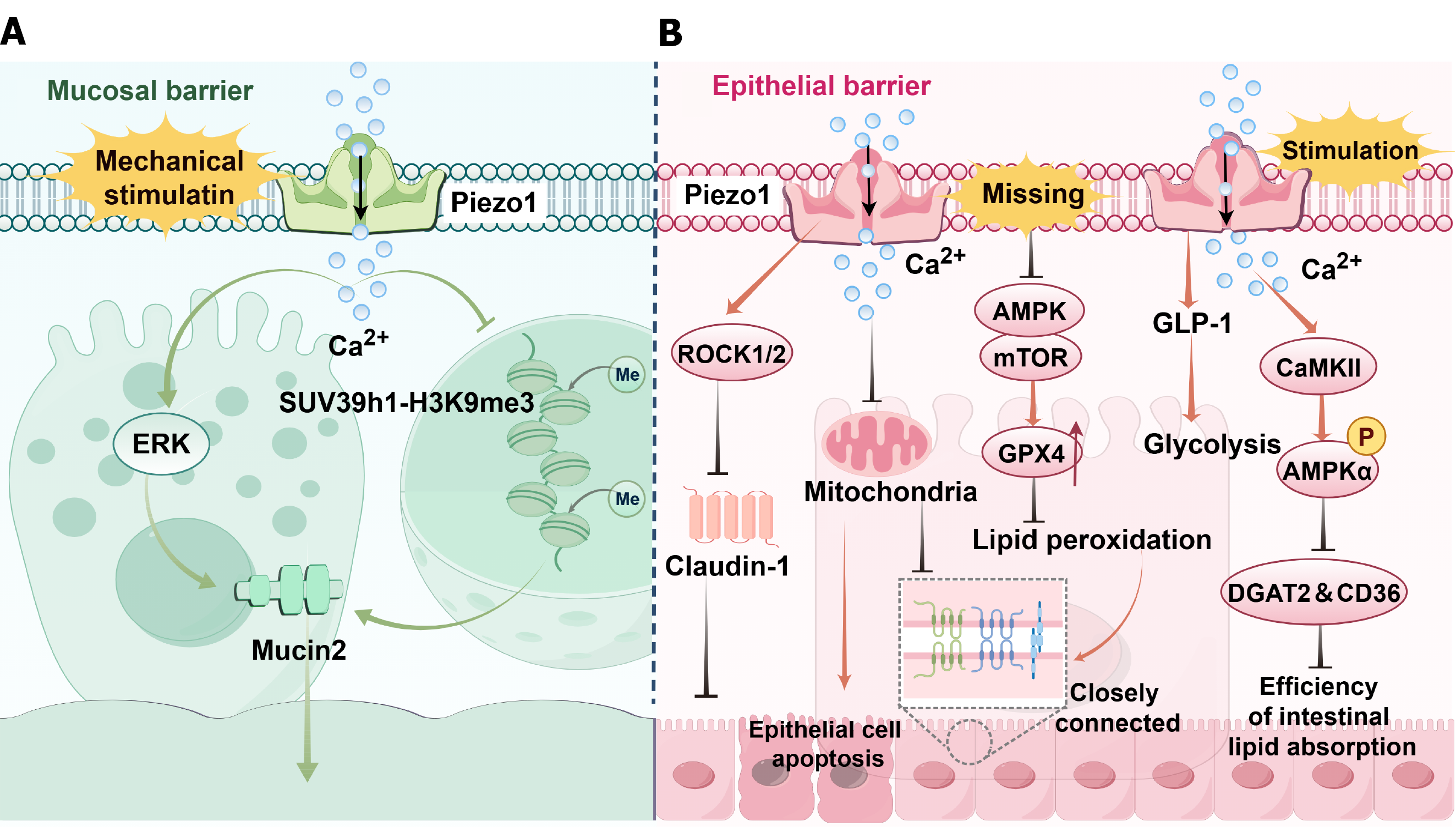
Figure 1 Piezo regulates intestinal mucosal and epithelial barrier through multiple signaling pathways.
A: In the mucosal barrier, Piezo1 promotes Mucin2 secretion via the extracellular signal-regulated kinase/Ca2+ pathway and inhibits the suppressor of variegation 3-9 homolog 1-histone H3 lysine 9 trimethylation pathway; B: In the epithelial barrier, Piezo1 suppresses Claudin-1 expression through Rho-associated coiled-coil containing protein kinase 1/2, mediates Ca2+ influx-induced mitochondrial dysfunction, and inhibits the adenosine monophosphate-activated protein kinase/mechanistic target of rapamycin pathway in its absence. Besides, it enhances glucagon-like peptide-1 synthesis to maintain blood glucose levels and reduces dietary lipid absorption efficiency via calmodulin-dependent protein kinase II. ERK: Extracellular signal-regulated kinase; Me: Methyl group; SUV39h1-H3K9me3: Suppressor of variegation 3-9 homolog 1-histone H3 lysine 9 trimethylation; ROCK1/2: Rho-associated coiled-coil containing protein kinase 1/2; AMPK: Adenosine monophosphate-activated protein kinase; mTOR: Mechanistic target of rapamycin; GPX4: Glutathione peroxidase 4; GLP-1: Glucagon-like peptide-1; DGAT2: Diacylglycerol O-acyltransferase 2; CaMKII: Calmodulin-dependent protein kinase II; AMPKα: Adenosine monophosphate-activated protein kinase alpha subunit; CD36: Cluster of differentiation 36.
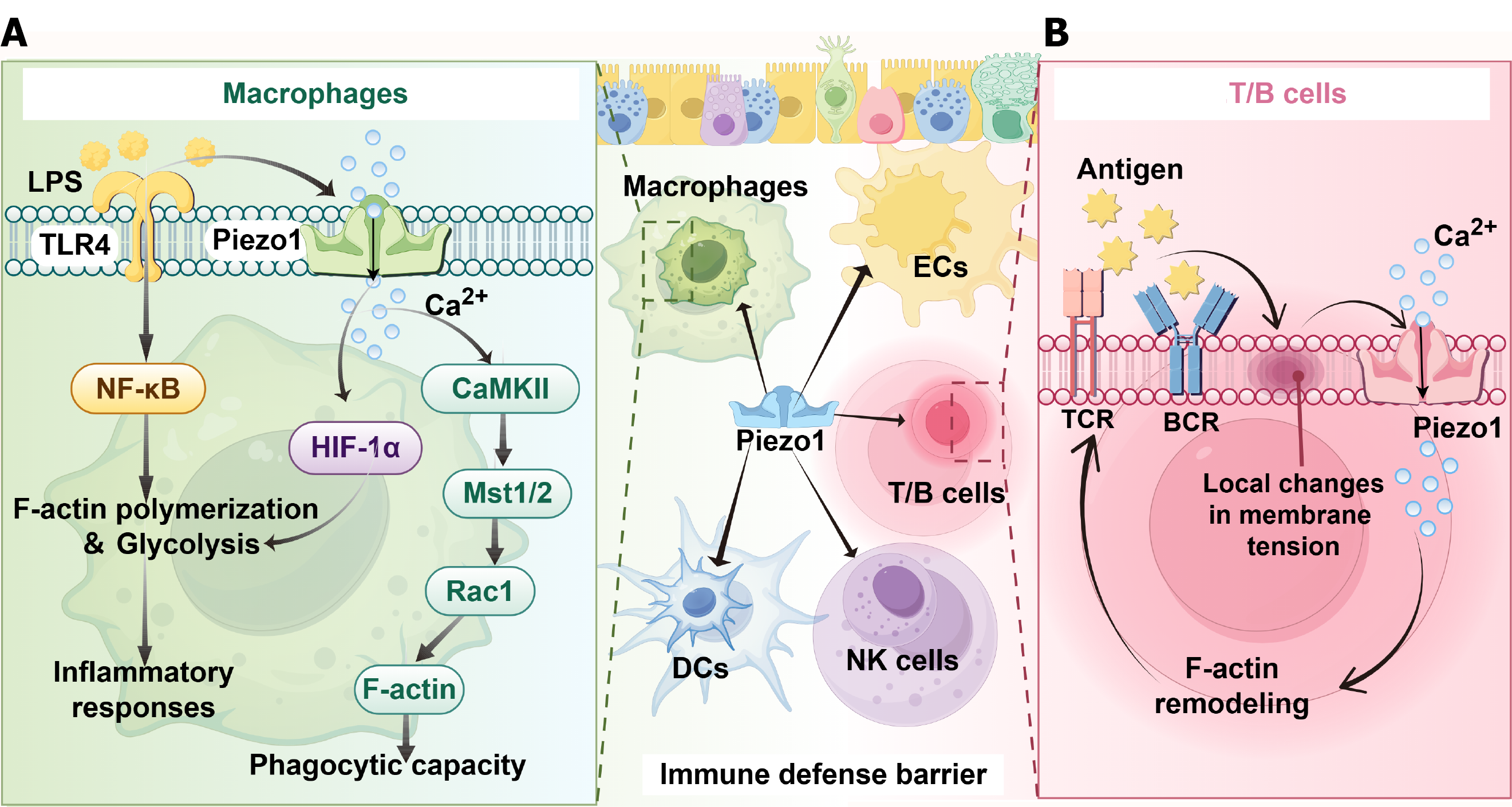
Figure 2 Piezo regulates immune responses by coordinating macrophages and T/B cells.
A: Piezo1 remodels F-actin via the Ca2+/calmodulin-dependent protein kinase II- mammalian sterile 20-like kinase 1/2-Ras-related C3 botulinum toxin substrate 1 signaling axis and enhances macrophage inflammation through calmodulin-dependent protein kinase II-hypoxia-inducible factor 1-alpha and nuclear factor kappa-light-chain-enhancer of activated B cells; B: When activated by localized membrane tension, Piezo1 induces Ca2+ influx, activating calcium-dependent proteases and promoting reorganization of the cortical actin cytoskeleton, thereby preventing excessive immune responses in T and B cells. LPS: Lipopolysaccharide; TLR4: Toll-like receptor 4; NF-κB: Nuclear factor kappa-light-chain-enhancer of activated B cells; HIF-1α: Hypoxia-inducible factor 1-alpha; CaMKII: Calmodulin-dependent protein kinase II; Mst1/2: Mammalian sterile 20-like kinase 1/2; Rac1: Ras-related C3 botulinum toxin substrate 1; F-actin: Filamentous actin; DCs: Dendritic cells; ECs: Enterochromaffin cells; NK cells: Natural killer cells; T/B cells: T lymphocytes and B lymphocytes; TCR: T cell receptor; BCR: B cell receptor.
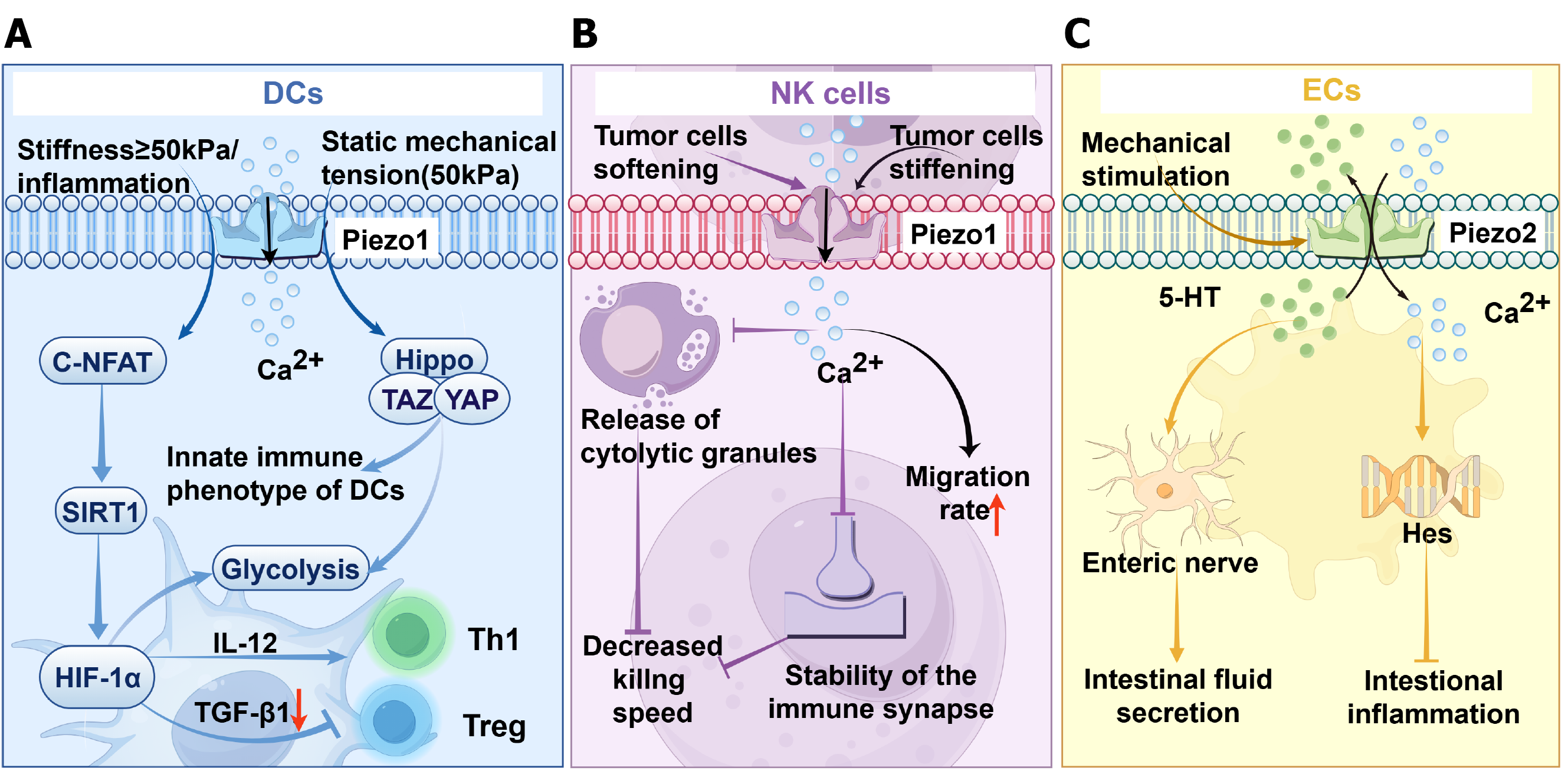
Figure 3 Piezo regulates immune responses by coordinating dendritic cells, natural killer cells, and enterochromaffin cells.
A: Piezo1 drives the activation of the calcium-dependent calcineurin-nuclear factor of activated T-cells pathway, activates the sirtuin 1-hypoxia-inducible factor 1-alpha axis to enhance glycolytic gene expression, promotes interleukin-12 production to amplify T helper type 1 cells, downregulates transforming growth factor β1 to inhibit regulatory T cell differentiation, and, in collaboration with the Hippo pathway effectors transcriptional co-activator with PDZ-binding motif/yes-associated protein, directly upregulates key glycolytic genes, thereby enhancing the innate immune phenotype of dendritic cells; B: Piezo1 reduces the killing efficiency of natural killer cells during tumor cell softening and shortens the killing time of natural killer cells during tumor cell hardening; C: Enterochromaffin cells sense mechanical forces through the Piezo2 channel. When Piezo2 is activated, it releases 5-hydroxytryptamine, which further activates enteric neurons, promotes intestinal fluid secretion, and maintains the oscillation of the transcription factor hairy and enhancer of split 1 through calcium signaling, thereby inhibiting intestinal inflammation. DCs: Dendritic cells; C-NFAT: Calcineurin nuclear factor of activated T-cells; TAZ: Transcriptional co-activator with PDZ-binding motif; YAP: Yes-associated protein; SIRT1: Sirtuin 1; HIF-1α: Hypoxia-inducible factor 1-alpha; IL-12: Interleukin 12; TGF-β1: Transforming growth factor β1; Th1: T helper type 1; Treg: Regulatory T cell; NK cells: Natural killer cells; ECs: Enterochromaffin cells; 5-HT: 5-hydroxytryptamine; Hes1: Hairy and enhancer of split 1.
- Citation: Bu YY, Li X, Zhou TY, Gu JH, Zhu JN, Li JL, Zeng BB, Zu WB, Tang D. Piezo mechanosensitive channels: A biological hub for intestinal barrier homeostasis and an emerging target for disease intervention. World J Gastroenterol 2026; 32(33): 121284
- URL: https://www.wjgnet.com/1007-9327/full/v32/i33/121284.htm
- DOI: https://dx.doi.org/10.3748/wjg.121284