
















Copyright: ©Author(s) 2026.
World J Gastroenterol. Jul 28, 2026; 32(28): 118993
Published online Jul 28, 2026. doi: 10.3748/wjg.118993
Published online Jul 28, 2026. doi: 10.3748/wjg.118993
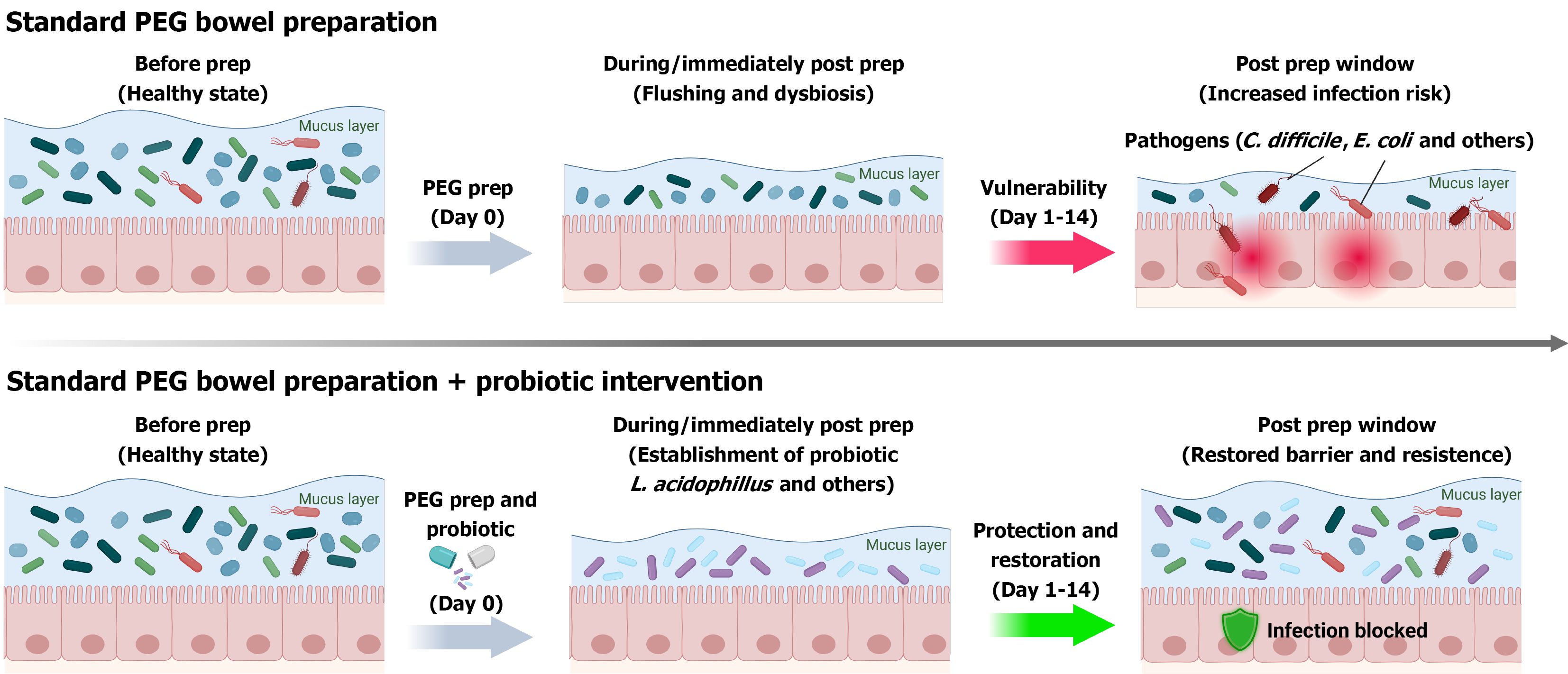
Figure 1 Schematic diagram illustrating the polyethylene glycol bowel preparation-induced infection window and the protective efficacy of probiotics.
Created using the BioRender. The illustration contrasts the biological impact of standard bowel preparation against a probiotic-assisted protocol. The rapid evacuation of luminal content during standard polyethylene glycol preparation leads to dysbiosis and barrier defects, creating a 14-day vulnerability window characterized by impaired colonization resistance and increased pathogen susceptibility. Intervention with Lactobacillus acidophilus restores microbial homeostasis, reinforces the mucosal barrier and prevents pathogen invasion. PEG: Polyethylene glycol; C. difficile: Clostridioides difficile; E. coli: Escherichia coli; L. acidophilus: Lactobacillus acidophilus.
- Citation: Fu Y. Letter to the Editor: Probiotics counteract polyethylene glycol bowel preparation dysbiosis and infection risk. World J Gastroenterol 2026; 32(28): 118993
- URL: https://www.wjgnet.com/1007-9327/full/v32/i28/118993.htm
- DOI: https://dx.doi.org/10.3748/wjg.118993